
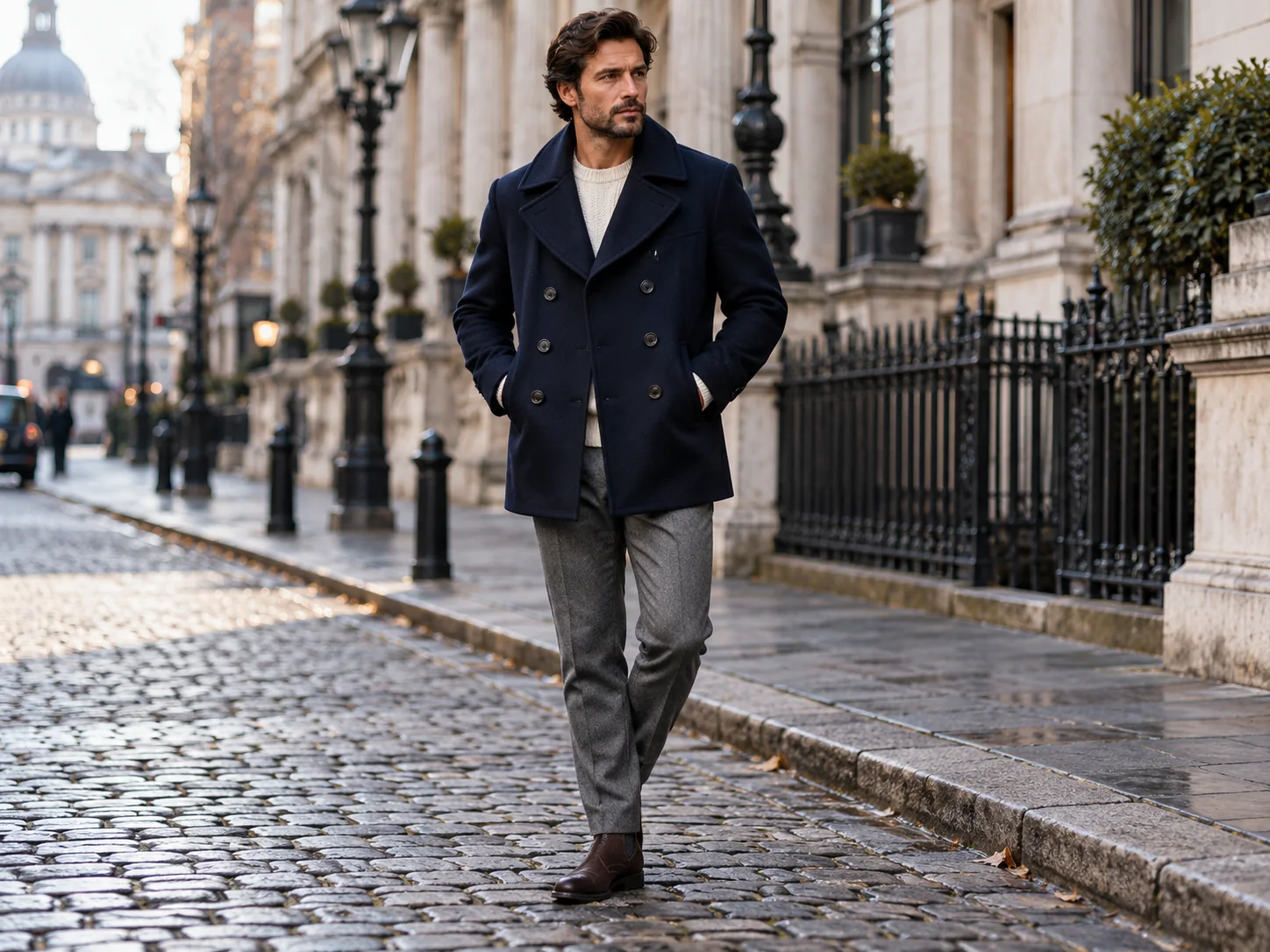
Quick answer: A pea coat is a short, double-breasted coat, traditionally made from heavy wool and originally worn by sailors. Its wide lapels, two rows of buttons and practical pockets distinguish it from a longer overcoat. For men, a navy pea coat is a versatile winter layer that works with jeans, knitwear or tailored trousers.
If you’re asking what is a pea coat and whether it belongs in a modern UK wardrobe, this guide explains the features, fabric, length, fit and practical styling choices without confusing the garment with a trench coat or a full-length overcoat.
Table of Contents
What makes a pea coat different from an ordinary jacket?
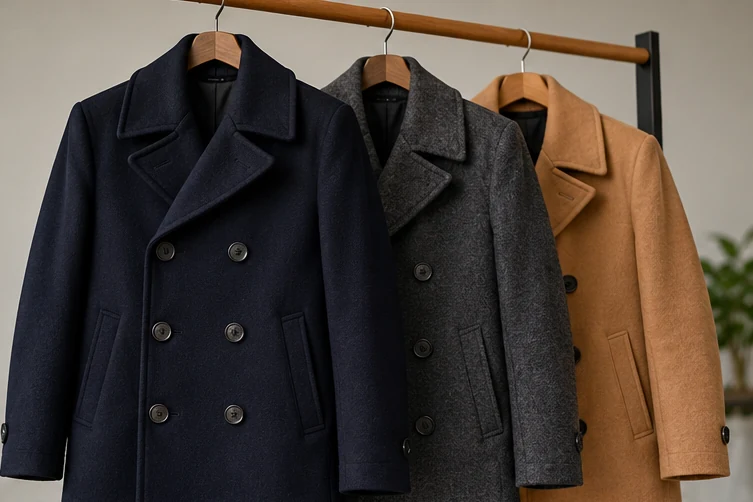
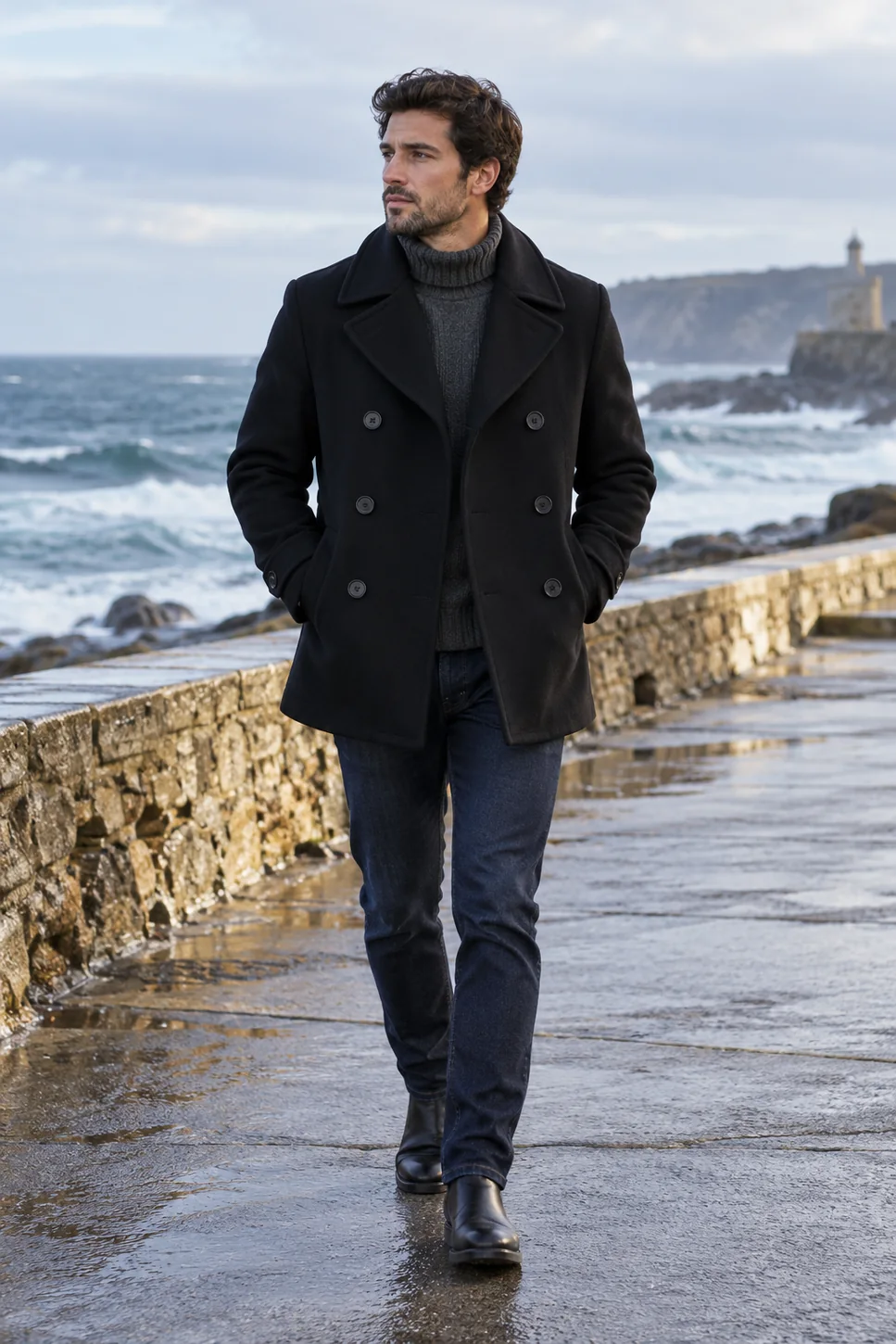
The defining combination is short length, heavy wool, broad lapels and a double-breasted fastening. Classic versions sit around the hips or upper thighs, with two parallel rows of large buttons and pockets placed where your hands naturally rest. Navy is the traditional color, but charcoal, black and camel versions also exist.
The design has naval roots: sailors wore short, substantial coats that allowed more movement than long outerwear and protected against chilly wind. The exact history of the name is debated, so it is safer to recognize the construction than to rely on a single origin story.
Some modern fashion coats borrow the lapels and buttons without using heavy wool. That can still look attractive, but it will not necessarily deliver the warmth associated with a classic navy pea coat. Look at the fabric composition, weight, lining, and cut together.
How to recognize the classic double-breasted style
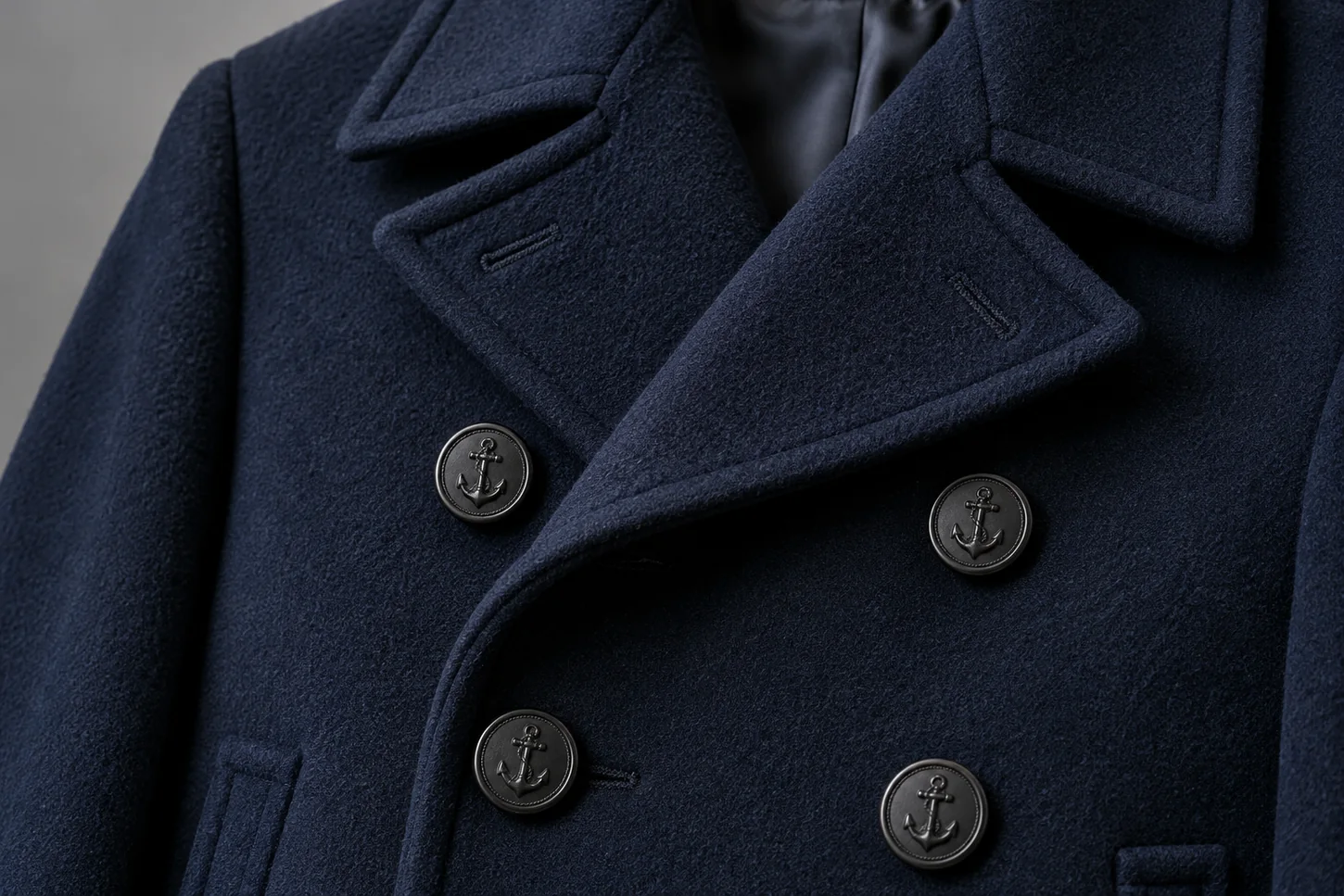
A traditional double-breasted pea coat usually has a six- or eight-button front, substantial overlapping panels, wide lapels that can turn up, and two slanted or vertical hand pockets. Some versions feature anchor-motif buttons, recalling the coat’s maritime origins.
The most useful quick check: if a coat is long enough to cover most of your thighs and knees, it may be an overcoat or a longer naval-inspired design rather than a classic short pea coat. Designers frequently modify the silhouette, so don’t treat every variation as a separate historical category.
A longer naval-style coat is sometimes called a bridge coat, particularly in military terminology, while a reefer jacket refers to a related naval design. In everyday shops, terms are often used less precisely. Always check the garment’s actual length rather than relying on the product name.
Which material is best for a pea coat?
Traditional pea coats are made of substantial wool cloth. Melton wool is a popular choice because its densely finished surface feels sturdy, blocks some wind, and holds its shape well. Historical naval clothing also used other heavy wool fabrics. Today’s versions may use wool blends, recycled wool, cashmere blends or synthetic materials.
For most UK winter use, start with a coat with a substantial proportion of wool, then assess its weight and how it fits over your usual layers. A high wool percentage alone doesn’t guarantee better performance: dense cloth, stitching, lining, and the amount of room around your chest all matter.
| Material | What to expect | What to check |
|---|---|---|
| Dense wool or Melton | Traditional structured feel, good cold-weather versatility | Comfort, weight, surface finish |
| Wool blend | Potentially lighter or easier to maintain; quality varies | Actual fibre mix, warmth and pilling |
| Wool and cashmere blend | Softer hand-feel in some designs | Durability, price and care label |
| Predominantly synthetic | May recreate the appearance at lower cost | Breathability and construction |
A wool pea coat may resist a brief light shower, but it is not automatically waterproof. For sustained UK rain, wear genuinely weather-resistant outerwear instead. Our men’s trench coat guide explains how a rain-oriented coat fills a different role.
Pea coat vs overcoat vs trench coat
The easiest distinction is length and purpose. A classic pea coat is relatively short and structured for cool-weather layering. An overcoat is usually longer, often worn over tailoring. A trench coat is generally longer and belt-fastened, designed to protect from rain rather than provide the heavy insulation of wool.
| Coat type | Typical cut | Best use |
|---|---|---|
| Pea coat | Hip to upper-thigh; double-breasted | Smart everyday winter outfits |
| Overcoat | Mid-thigh to below the knee; often longer | Wearing over a business suit |
| Trench coat | Longer, commonly belted | Changeable or wet weather |
These are conventions, not universal manufacturing rules. There are short trenches, longer pea coats and wool overcoats with similar lapels. The garment’s fabric and function tell you more than the name alone.
How should a men’s pea coat fit?
Try it with the layers you will actually wear. A pea coat that fits perfectly over a T-shirt can pull across the chest when worn over a substantial jumper. The shoulders should sit naturally, the front should close without a large X-shaped tension mark, and you should be able to move your arms without fighting the fabric.
- Shoulders: check for excess overhang and obvious wrinkling near the upper sleeve.
- Chest: button the coat fully over a knit or shirt; leave space to breathe and sit.
- Length: traditional styles finish near the upper thigh; very long styles create a different silhouette.
- Sleeves: they should comfortably cover your shirt cuff and wrist when standing normally.
- Movement: raise your arms and sit down; a handsome coat is not useful if it restricts normal activity.
If the coat feels boxy, do not automatically size down. The traditional silhouette has room for layering. Compare the actual chest, shoulder, and sleeve measurements with your preferred jacket rather than relying on labels alone.
Three easy ways to style a navy pea coat
1. Smart office commute
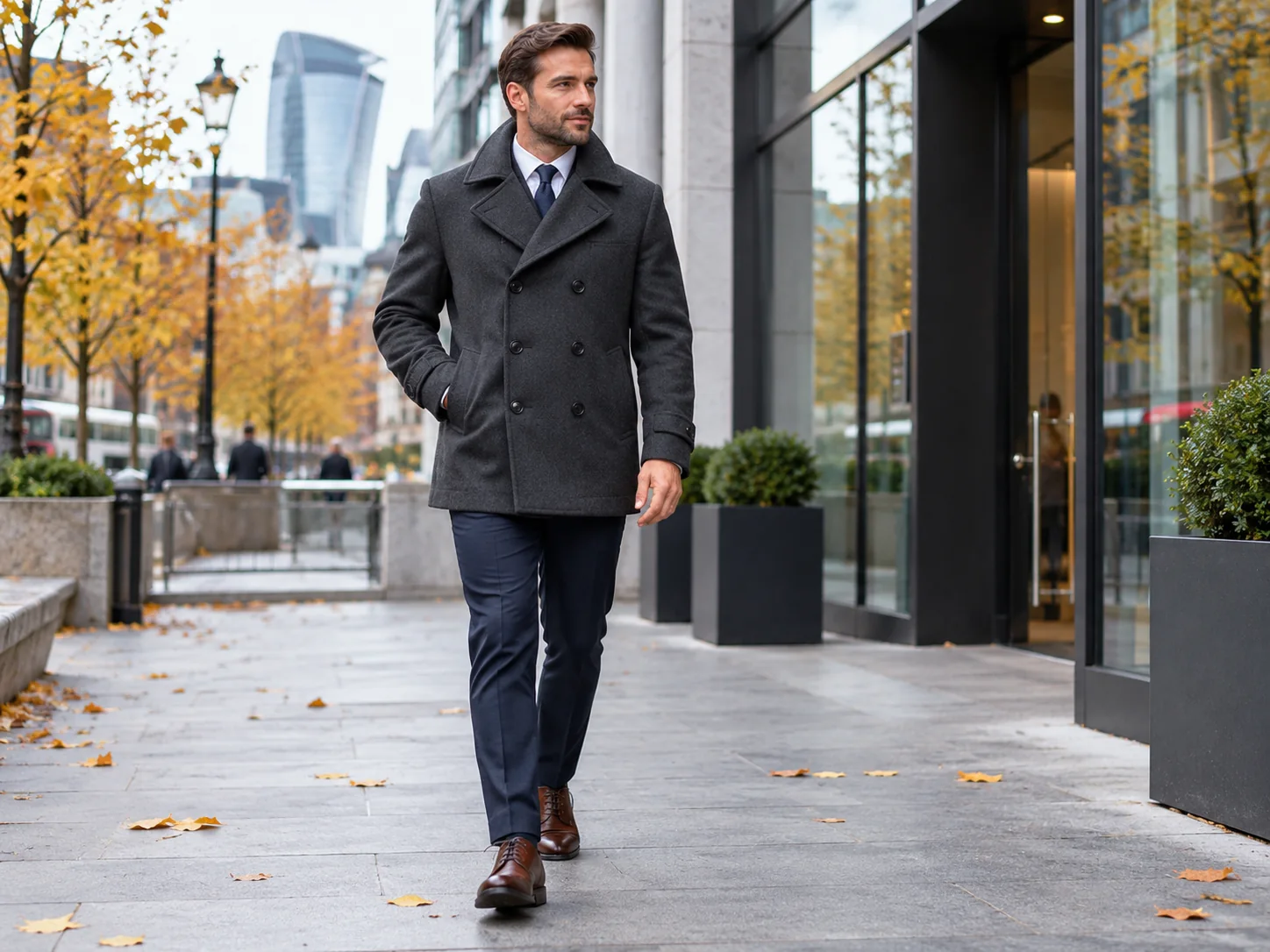
Wear a navy pea coat over a pale-blue shirt, fine charcoal jumper, grey tailored trousers and dark leather boots. The short coat looks intentional with streamlined trousers, but a longer overcoat is often more practical if you need to fully cover your suit jacket. Explore our winter business casual for men guide for other office layering ideas.
2. Everyday weekend outfit
Combine the coat with a cream roll-neck or cable knit, dark indigo jeans and Chelsea boots. Keep accessories quiet: a plain scarf is enough. A densely woven navy coat and off-white jumper create contrast without needing logos or bold patterns. For more knit options, browse our guide to men’s sweater styles.
3. Relaxed smart-casual evening
Layer a black or charcoal pea coat over a white Oxford shirt and a fine-gauge jumper, then add dark chinos and polished loafers or boots. This works for many dinner outings, but it is still outerwear—not a replacement for a suit if an invitation requires business formal attire.
Choosing between chinos and jeans depends on the setting. For a clear trouser comparison, see chinos versus khakis and our men’s smart casual guide.
How to choose a pea coat that is worth buying
Check the silhouette first, then inspect construction and care. In the shop, button the coat, turn up the collar and test the pockets. Look for secure stitching, an even hem, strong buttons and enough shoulder room for a winter layer.
Examine the label rather than trusting a phrase such as “premium wool look”. Compare fiber composition, lining, cleaning instructions and whether spare buttons are included. Wool quality matters, but an expensive coat that fits badly isn’t automatically a good purchase.
Navy is typically the most adaptable first color for men who want a timeless coat. Charcoal is another practical option; camel makes a bigger statement. Decide what you wear most often before buying: a navy coat plays well with grey and olive trousers, blue denim and brown footwear. Compare our men’s capsule wardrobe guide for a disciplined way to choose versatile outerwear.
For further menswear background, Percival’s guide to men’s pea coats describes the coat’s recognizable short, double-breasted silhouette and its contrast with longer overcoats.
Pea coat care, storage and UK winter weather
Let a damp wool coat air-dry on a broad, supportive hanger, away from direct radiator heat. Brush away loose dust or lint with a clothing brush and follow the care label for stain treatment. Many tailored wool coats require professional dry cleaning, but always check the instructions for your specific garment.
Avoid squeezing a damp heavy coat into a cramped wardrobe. Store it clean and dry between seasons, with room around the shoulders to protect the shape. For neat cold-weather accessories, see our guide to tying a scarf. If your climate is wet rather than especially cold, you may be better served by alternating the pea coat with a proper raincoat.
For footwear that works with this winter silhouette, see our smart and casual men’s shoes guide. For knitwear that fits easily under the coat, our half-zip jumper styling guide offers another layering option.
Frequently asked questions
What is a pea coat?
A pea coat is a short, typically woolen, double-breasted outer coat with broad lapels and two rows of buttons. It developed from naval outerwear and is now a classic choice for smart winter dressing.
What is a navy pea coat?
It is the traditional dark-blue version of this coat, referencing its maritime heritage. Modern navy designs vary in fabric, button style, lining, and length.
What is another name for a pea coat?
Peacoat and pea jacket are common alternative spellings or names. Reefer jacket is a related naval term, although historical uniform definitions are more specific.
What is a long pea coat called?
Modern retailers may call it a “long pea coat.” In naval history, a bridge coat is a longer related design. A knee-length wool garment may also simply be an overcoat, depending on its construction.
Is a double-breasted pea coat suitable over a suit?
Sometimes, particularly with a slimmer tailored outfit, but its shorter length may leave the suit jacket visible. A longer overcoat is often a better choice for traditional business dress.
Not sure what to wear?
Use our Men's Outfit & Dress Code Generator to get a personalised outfit based on your occasion, workplace and weather.
Try the Outfit Generator →