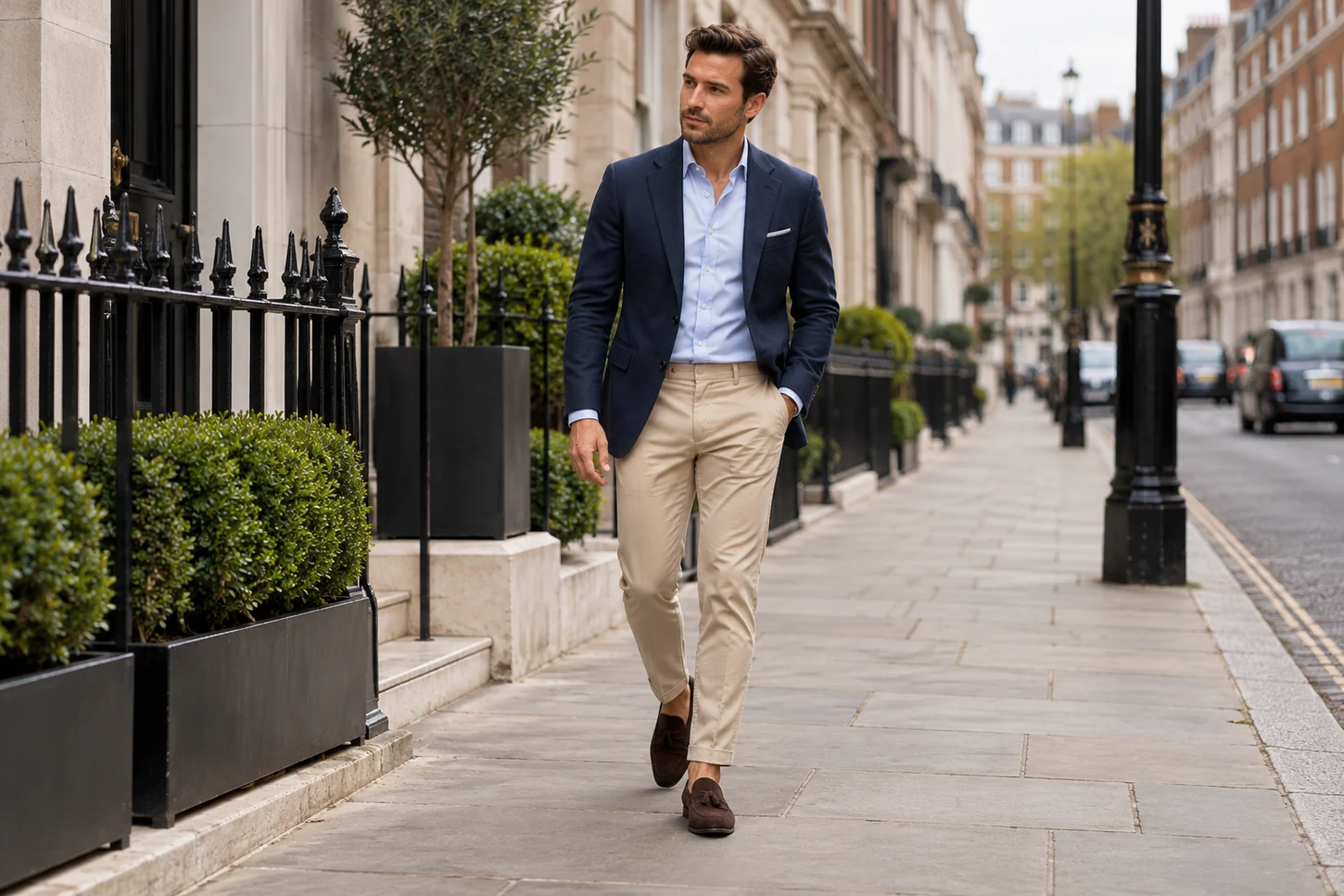
Quick answer: Dress for your proportions by choosing shirts that fit your shoulders, trousers that fit comfortably at the waist and seat, and jackets that balance your torso and legs. Rectangle, triangle, inverted-triangle, oval and athletic descriptions can help you test cuts, but none is a strict rule. Comfort, movement and the occasion come first.
If you want to dress for body type rather than copy someone else’s outfit, start with simple measurements. This UK men’s guide explains which shirt, trouser and jacket cuts to try, plus practical checks you can use in a fitting room.
Table of Contents
Start with proportions, not labels
Men’s fit guides commonly describe five silhouettes. Rectangle means similar widths through shoulders, waist, and hips. Triangle often means more width through the hips or waist than the shoulders. Inverted triangle means notably broader shoulders than hips. Oval describes a fuller middle, while trapezoid or athletic usually means shoulders wider than the waist with a balanced taper. They are styling shortcuts, not medical classifications; many people sit between two descriptions.
Take useful clothing measurements: chest, natural waist, hips, and inside leg. Then stand in front of a full-length mirror wearing an outfit you already own. Does the shirt pull, do the shoulders feel cramped, does the waistband feel comfortable when seated, and are trousers bunching over shoes?
Measurements help select a size; a movement test shows whether the cut works. For a practical way to buy fewer, more versatile pieces, read our men’s capsule wardrobe guide.
Rectangle build: create gentle structure
Try an overshirt or jacket with some shoulder definition and a gently shaped waist. If your upper body is relatively straight, structured layers can add depth without forcing an exaggerated V-shape. A straight-fitting shirt isn’t wrong, but a little shaping or a layered collar can make an outfit more deliberate.
Start with straight or slim-straight trousers that drape through the seat. Avoid making the waistband tight just to look narrower. A textured overshirt over a fine knit creates interest without relying on bold patterns.
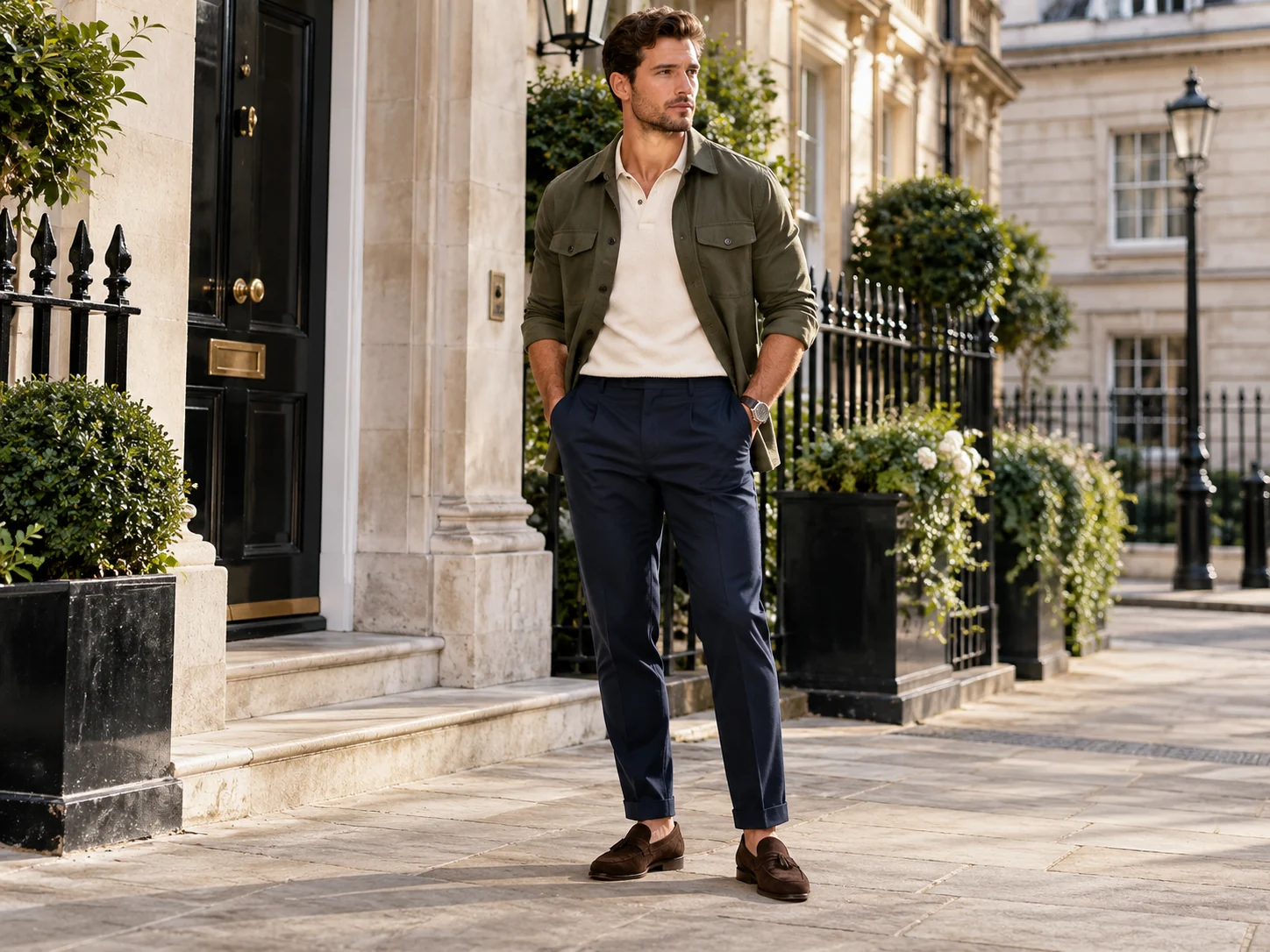
Outfit: olive overshirt, ivory polo, navy tailored trousers and brown loafers. See our business casual shirts guide for office-ready collar styles.
Inverted triangle: balance strong shoulders
When your shoulders and chest are much broader than your hips, the main challenge is finding room across the upper body without excess fabric at the waist. Try shirts with enough space across the back and jackets with softer shoulders. Extra padding may exaggerate upper-body width if you don’t prefer that.
Straight or gently relaxed trousers can balance the silhouette; extremely skinny trousers increase the contrast. That is a visual option rather than a rule. If you are researching how to dress for an inverted triangle body type, try different trouser widths before buying more jackets. Browse men’s business casual outfits for adaptable combinations.
Athletic build: fit the chest before the waist
Start with shoulders and upper chest, then refine the waist. Athletic men can find regular shirts tight across the back but baggy at the stomach when sizing up. Athletic-fit shirts or modest waist alteration can work better than forcing an extreme slim cut. Jacket arms need space to bend and reach.
Check a suit jacket buttoned while standing, then move both arms. Strong X-shaped folds often mean tension. For trousers, allow enough room in the seat and thighs before deciding the taper below the knee.
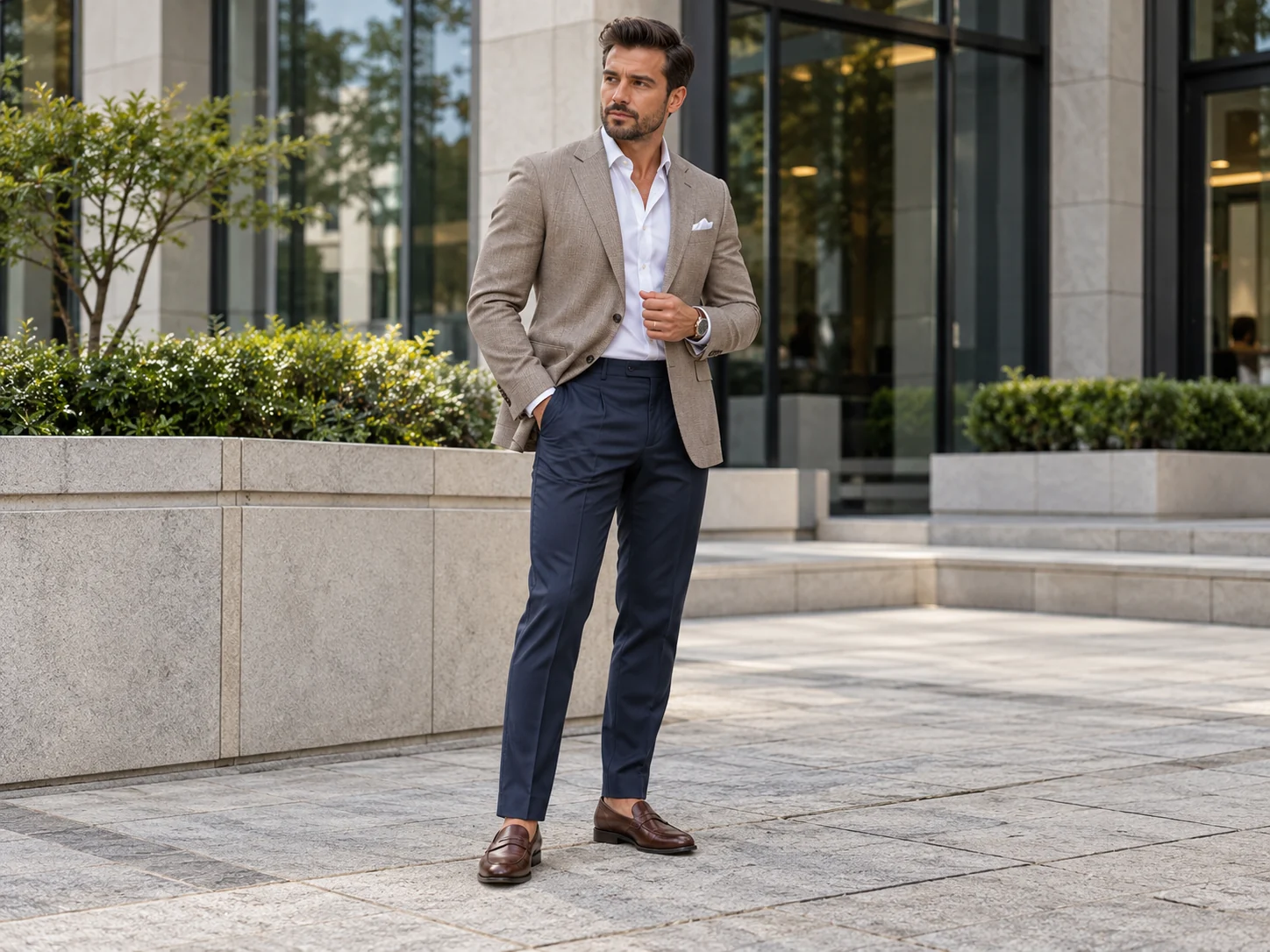
Outfit: taupe blazer, white open-collar shirt, navy trousers and brown loafers. The charcoal grey suit styling guide offers more tailored combinations.
Fuller waist: comfort and clean drape
Start with a comfortable waist and clean shoulder fit. Choose shirts with sufficient ease for natural movement and trousers that feel secure when sitting or walking. A single-breasted blazer with a straight opening creates an intentional line without needing an extremely fitted cut.
Try different trouser rises to discover which sits best, then check the hem against your usual shoes. A coordinated palette can make getting dressed simpler, but bright and dark colors are both valid choices.
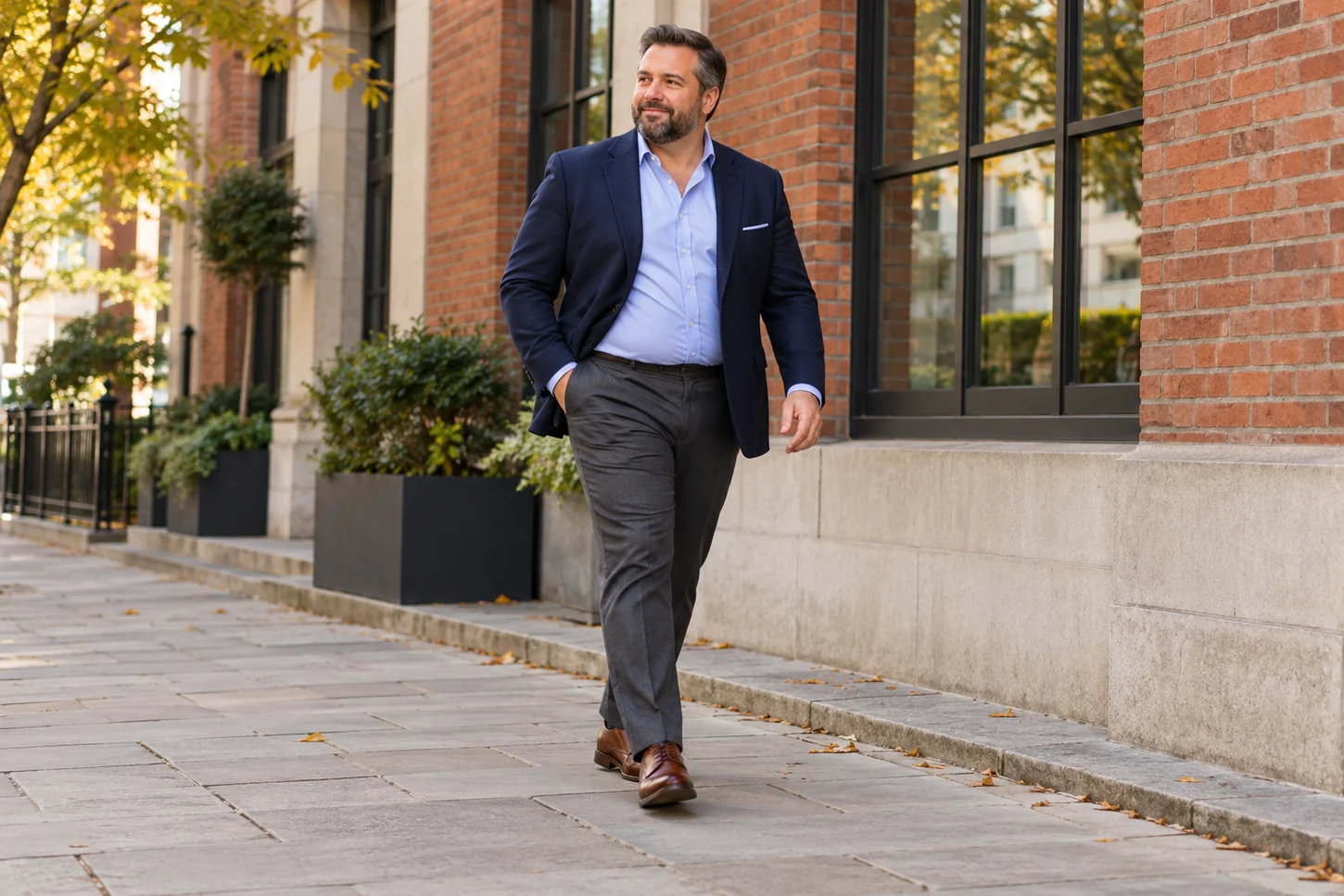
Outfit: navy blazer, pale-blue shirt, charcoal straight trousers and brown leather shoes. Read our chinos versus khakis comparison for another workwear option.
Slim, shorter and taller frames
Shape is only half the story. Two men can have a similar slim build but require entirely different jacket, sleeve and trouser lengths. A slimmer frame can work with a lightly structured overshirt, straight trousers and a knit that skims rather than clings. Extremely skinny garments are optional, not required.
For a shorter frame, choose a tidy trouser hem and a jacket that doesn’t extend much further than intended. Longer layers can still look excellent; just compare the balance in a full-length mirror. Taller men should check sleeve length, jacket body length and inseam before sizing up in width. Tall-size ranges may add length without extra bulk.
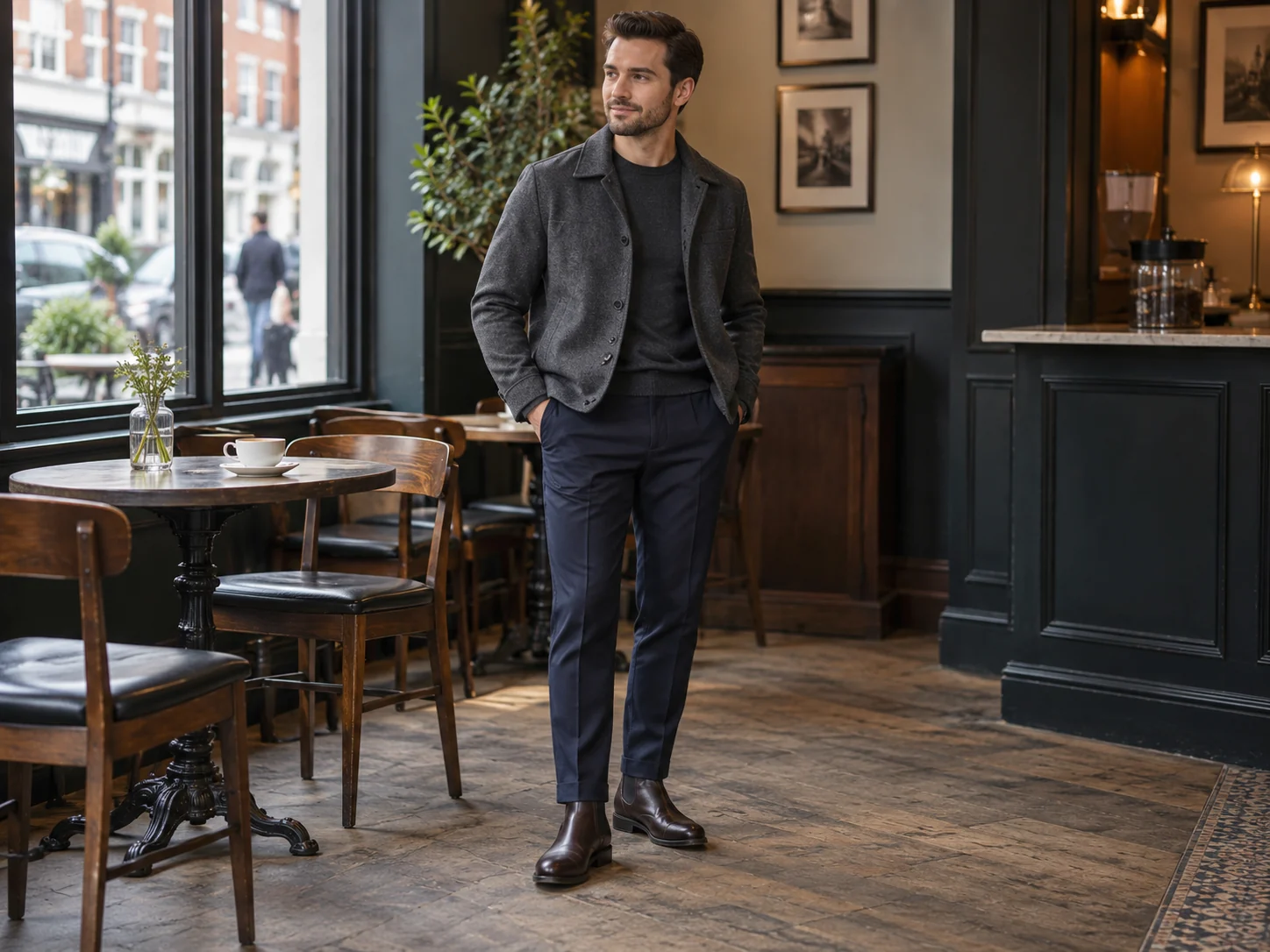
Outfit: charcoal short jacket, dark crew-neck jumper, navy trousers and Chelsea boots. Our men’s knitwear guide explains how fabric and neckline change layering.
Outfit formulas for work and weekends
For a UK office: begin with a collared shirt, tailored trousers and smart leather shoes. A blazer gives structure when you need it, while an overshirt or fine jumper works in a more relaxed workplace. Match clothing to the actual dress code, not an internet body-shape rule. Our half-zip jumper styling guide shows a simple knitwear option.
For weekends: wear a well-fitting overshirt or knit with dark denim or chinos and clean trainers or Chelsea boots. Look at how layers hang when you walk and sit. Check the smart casual guide if you want to dress it up for a restaurant or event.
For a wedding: the invitation comes first. Select a suit that fits your shoulders and chest, then alter sleeve and trouser length if needed. A classic cut with a comfortable waist works better than a trendy cut that pulls when you move. Use the cocktail wedding attire guide for event-specific expectations.
For shoes: choose a shape that complements trouser width. Streamlined Derbies or loafers look tidy with tailoring, while sturdier footwear can balance a more relaxed hem. See our men’s smart and casual shoe guide.
A practical fitting-room checklist
- Shoulders: does the seam sit where the design intends, without restricting arm movement?
- Chest and back: can you reach forward and sit without pulling or gaping buttons?
- Waist and seat: do the trousers stay comfortable and secure when you sit and stand?
- Jacket length: does the hem complement your torso and the trousers you intend to wear?
- Hems: do your trousers fall cleanly over your usual shoes without excessive bunching?
- Fabric: is it substantial enough to drape nicely and comfortable for the season?
Make alterations for a specific purpose: hem trousers, shorten sleeves or adjust a jacket waist when construction allows. Fixing the shoulders of a cheap jacket is rarely as straightforward as hemming trousers. A comparison by GQ on menswear proportions explains how jacket length and trouser rise influence the overall silhouette.
Age, personal preference and common mistakes
Age does not dictate a particular silhouette. If you wonder how to dress for your body type and age, choose clothing that suits the occasion, fits comfortably, and reflects your preferences. A fine knit and a well-fitting jacket work for many men in their twenties, forties or beyond. Neither skinny nor oversized clothing is mandatory.
Common mistakes include buying a jacket solely by chest size while ignoring shoulder fit, choosing trousers too small through the seat, neglecting sleeve or trouser hemming, and copying an outfit without accounting for fabric weight or personal proportions. Fit categories help you know what to try on; they don’t dictate what you are allowed to wear.
The simplest rule for dressing for body type is to use the mirror, check movement, and decide whether you like the result. Your comfort and style preferences matter more than matching a shape diagram.
Repeat the fitting-room checks whenever you change brands or styles: a medium shirt in one shop may have a very different shoulder, sleeve, or waist measurement elsewhere. Keep notes from pieces that fit well and consider inexpensive alterations before replacing an otherwise useful garment. These small, practical decisions tend to improve outfits more reliably than a one-size-fits-all quiz.
Frequently asked questions
How do I work out my body type for men’s clothes?
Compare your shoulder and chest widths with your waist and hips, then check the shape in a full-length mirror. Rectangle, triangle, inverted triangle, oval, and trapezoid are useful descriptions, but most people fall somewhere between categories. Clothing measurements and comfort remain more helpful than a label.
What works for broad-shouldered men?
Shirts with enough room across the upper back and jackets with comfortable shoulders are the best starting point. Softer jacket shoulders and straight-leg trousers can create balance if you prefer that look.
Can men with a fuller middle wear blazers?
Absolutely. Pick a blazer that closes comfortably and drapes cleanly over the shirt. A well-fitting single-breasted style with straight trousers can be a neat everyday option.
Do shorter men have to wear slim-fit trousers?
No. Straight, tapered or relaxed trousers can all work. Compare the rise, hem length, and proportions of the jacket before deciding what looks and feels right.
Should I choose clothing by body shape or measurements?
Use measurements to identify which size to try first, then assess how the garment fits on your body. Body-shape descriptions are suggestions for exploring cuts, not a replacement for fitting the shoulders, waist, hips and leg length.
Not sure what to wear?
Use our Men's Outfit & Dress Code Generator to get a personalised outfit based on your occasion, workplace and weather.
Try the Outfit Generator →