
Quick answer: The safest business casual shirts for men are Oxford button-downs, plain or subtly patterned dress shirts, structured polos, and smart linen shirts. The right choice depends on how formal your office is. A crisp collar, clean fit, restrained colour and neat fabric matter more than the label on the shirt.
If you already know the basics and want outfit combinations, our business casual shirt styling guide covers broader styling rules. This page takes a different approach: it explains which shirt types count as business casual, when they work, and when they don’t.
Table of Contents
What Shirts Are Business Casual?
Business casual sits between a suit-and-tie dress code and everyday casual clothing. For shirts, that normally means a collar or similarly polished neckline, fabric that looks intentional rather than sporty, and a fit that works with chinos, tailored trousers or dark smart denim where the workplace allows it.
A shirt can be casual in construction and still work at the office. Oxford cloth is the clearest example. Recent 2026 menswear coverage still treats the Oxford button-down as a versatile work-to-weekend staple, while dress shirts remain the cleaner option when the office leans formal. British GQ’s current Oxford guide reflects that distinction.
Business Casual Shirt Types: Quick Decision Table
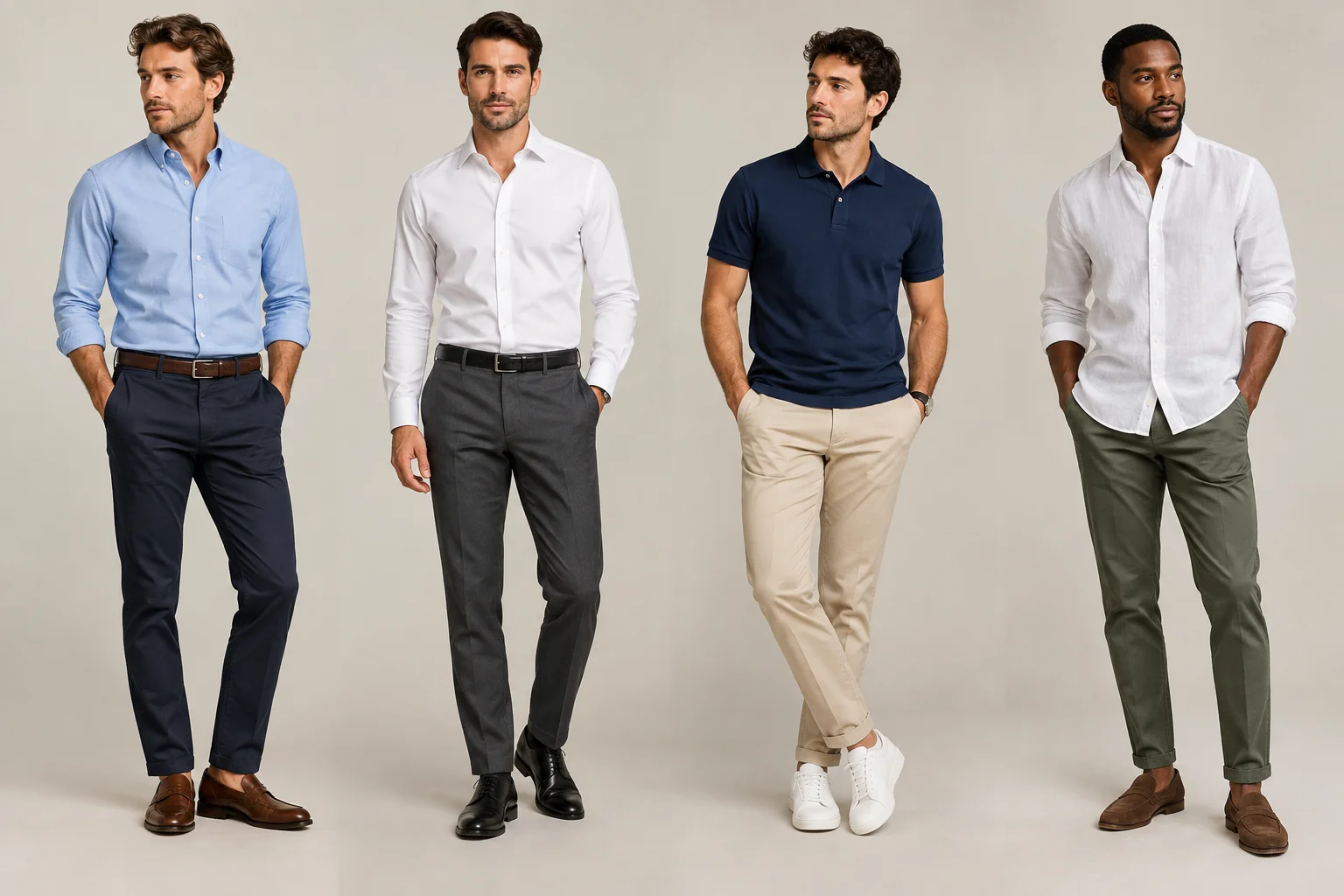
| Shirt type | Business casual? | Best setting | Main caution |
|---|---|---|---|
| Oxford button-down | Yes | Most offices | Avoid an oversized or heavily washed look |
| Dress shirt | Yes | Formal business casual | Very shiny fabric can look dated |
| Polo shirt | Usually | Relaxed and warm-weather offices | Collar must hold its shape |
| Linen shirt | Usually | Summer and warm climates | Keep wrinkles controlled |
| Long-sleeve button-down | Yes | Almost any office | Fit matters more than brand |
| Short-sleeve button-up | Sometimes | Warm, relaxed offices | Can look too casual in conservative workplaces |
| Flannel shirt | Sometimes | Autumn/winter casual offices | Choose fine fabric and subtle checks |
| Plaid shirt | Sometimes | Creative or relaxed offices | Large bright checks read more casual |
| Golf shirt | Sometimes | Casual offices and field roles | Performance details can look too sporty |
| Henley | Rarely | Very relaxed workplaces | No collar lowers formality |
| Plain T-shirt | Rarely | Startup/creative offices | Needs excellent fit and smart layers |
| Hawaiian shirt | Usually no | Social or themed settings | Bold prints rarely read professional |
The Best Business Casual Shirts for Men
1. Oxford Button-Down Shirts
An Oxford shirt is the easiest starting point because its textured cloth sits naturally between formal and casual. Pale blue, white, soft grey, and muted stripes are the safest choices. Wear one with chinos and loafers for a standard office, or add a blazer when the meeting calls for more polish.
The button-down collar also helps the shirt stay neat without a tie. If your office is unfamiliar territory, an Oxford is usually a lower-risk choice than a polo or short-sleeve shirt.
2. Plain Dress Shirts
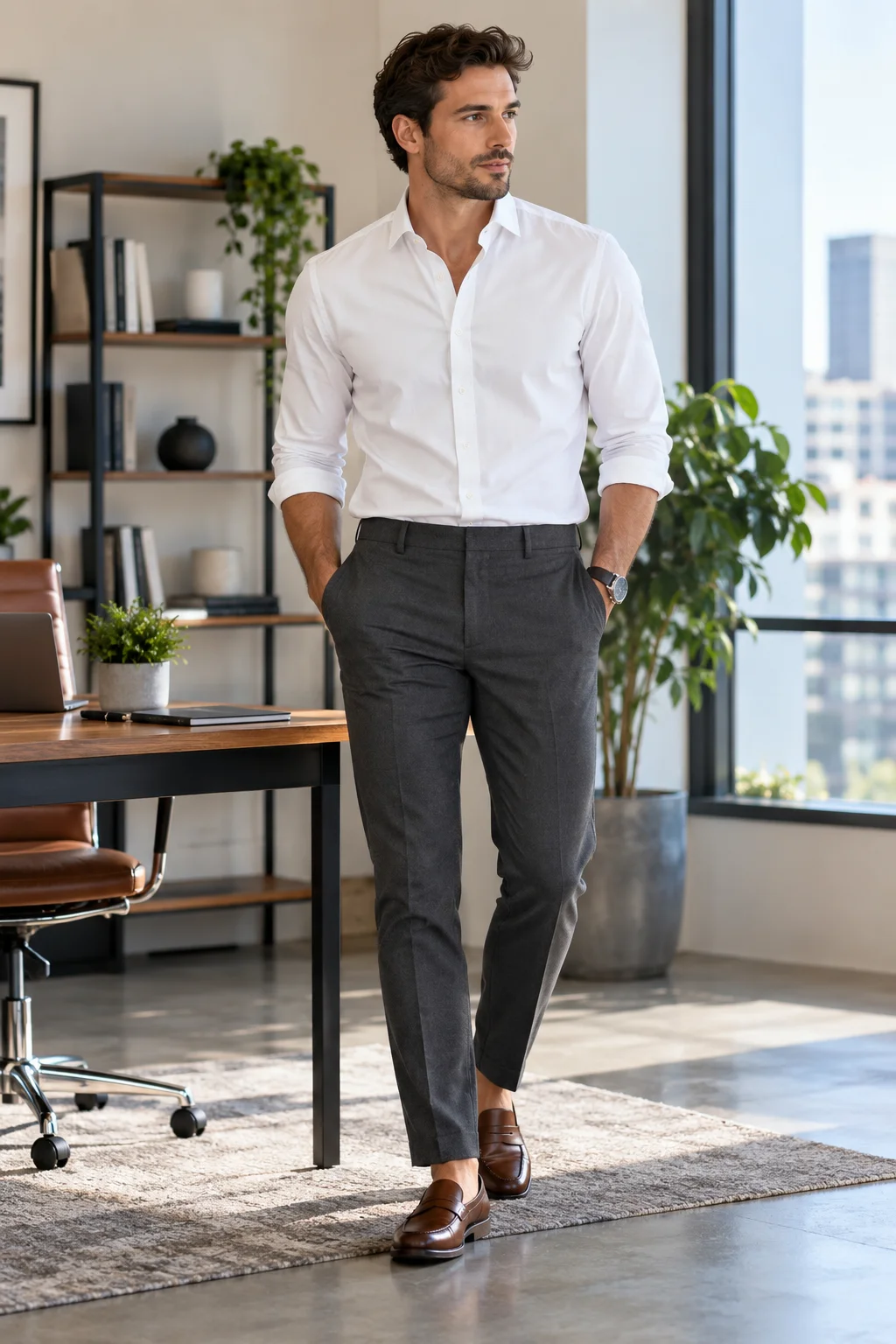
A dress shirt is business casual when you remove the more formal parts of the outfit. Think open collar, tailored trousers or chinos and leather shoes rather than a full suit and tie. White and pale blue are the most versatile. Fine stripes can work too.
For a wider view of how shirts fit into an office wardrobe, see our business casual attire guide.

3. Polo Shirts
Are polo shirts business casual? Yes, in many modern workplaces. The polo works best when the collar is structured, the fabric is smooth, and the body isn’t skin-tight or boxy. A navy polo with stone or khaki chinos is one of the simplest warm-weather business casual combinations.
Avoid sports-team logos, contrast piping, and highly technical golf details unless your workplace specifically accepts them. For more examples, read our business casual polo guide.
4. Linen Shirts
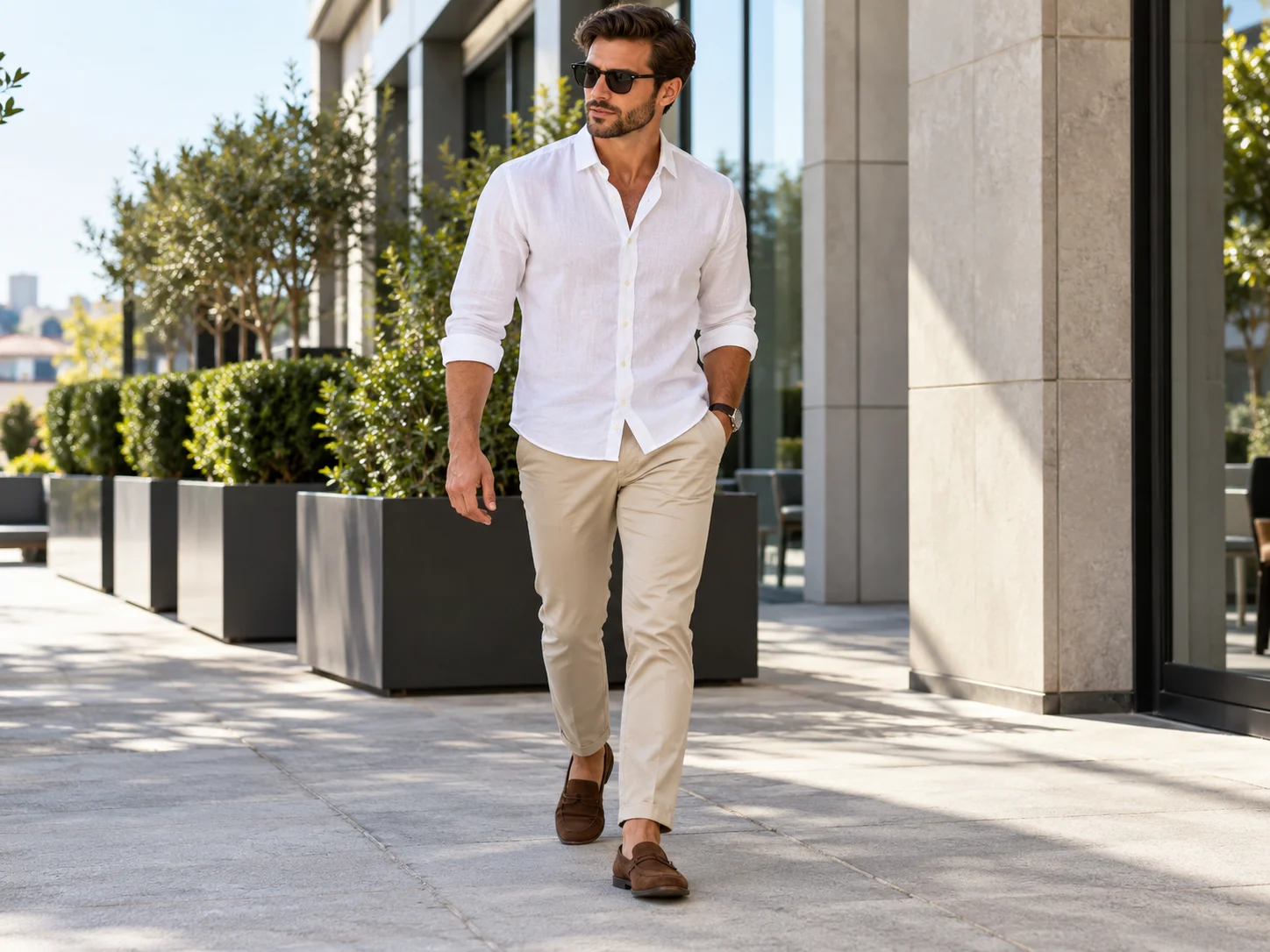
Are linen shirts business casual? Usually, yes, especially in summer. A white, pale blue, navy, or soft beige linen shirt can look polished with tailored trousers or chinos. Linen naturally creases, so the aim is relaxed texture rather than a shirt that looks crushed.
For hot-weather outfit planning, our business casual summer guide covers lighter fabrics and warm-weather combinations in more detail. Current menswear guides also continue to treat linen as a key summer shirt fabric because of its airy handle and relaxed appearance. GQ’s 2026 linen guide is a useful reference.
5. Long-Sleeve Business Casual Shirts
Long sleeves remain the easiest option when you want one shirt to work across meetings, normal desk days, and after-work plans. Wear the sleeves down for a cleaner look, then roll them neatly when the environment becomes more relaxed.
For most men, two pale blue shirts, one white shirt, and one subtle stripe provide more useful combinations than a wardrobe full of loud patterns.
Which Casual Shirt Types Can Still Work?
Are Golf Shirts Business Casual?
Golf shirts can work, but they sit on the casual end of the spectrum. Choose a clean polo-style collar, minimal branding, and a matte fabric. If the shirt looks designed primarily for the course, with shiny performance fabric or obvious athletic detailing, it is less convincing in a professional setting.
Are Flannel Shirts Business Casual?
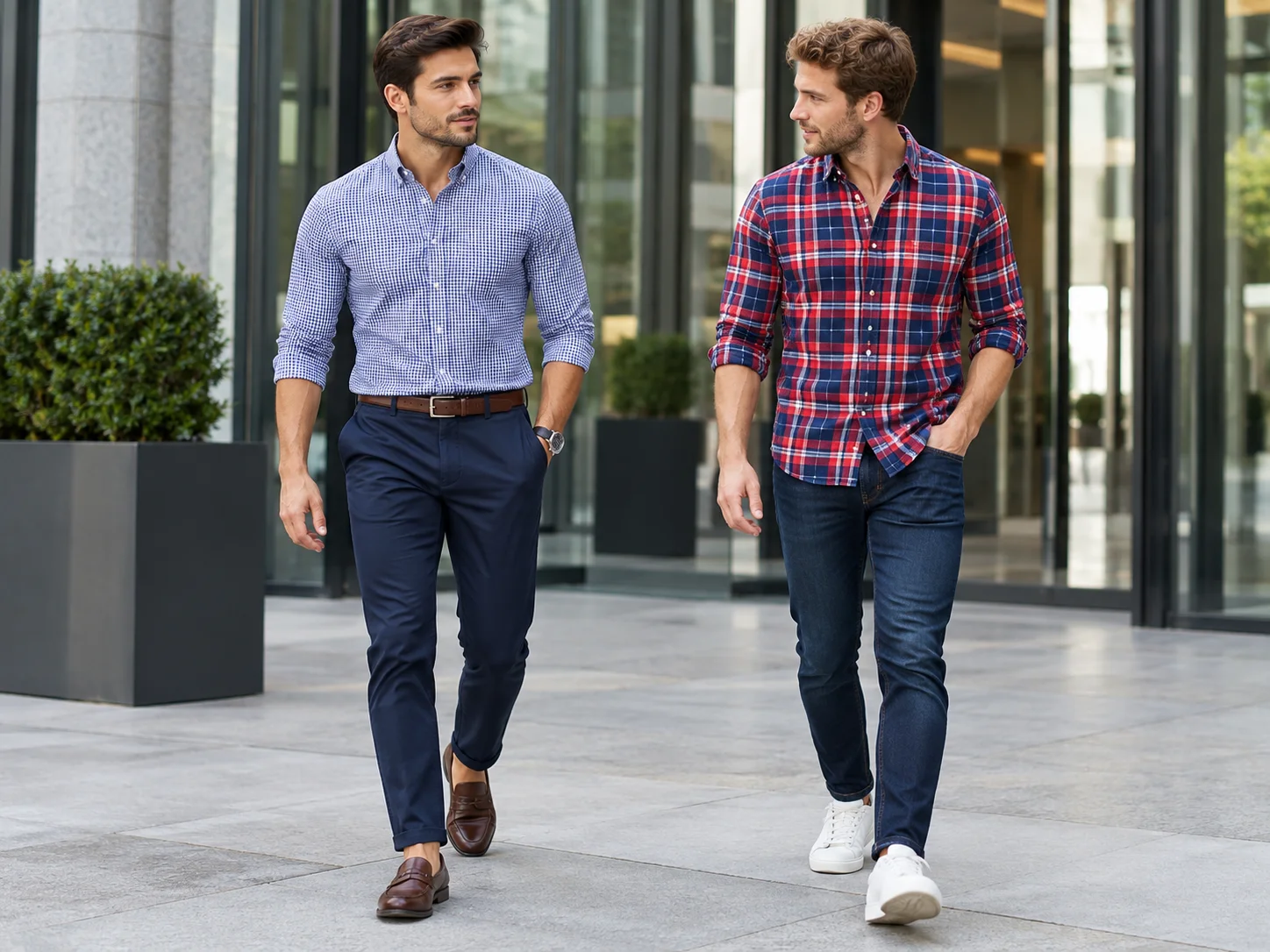
Flannel can be business casual in cooler months when the fabric is relatively fine, and the pattern is restrained. A navy-and-grey micro-check flannel with charcoal trousers can work well. A heavy lumberjack-style red check is much more casual.
Are Plaid Shirts Business Casual?
Yes, but scale and colour matter. Small checks in blue, grey, burgundy, or olive are easier to dress up. Large high-contrast plaid patterns pull the outfit toward weekend wear. Pair a subtle checked shirt with plain trousers so the outfit has one focal point.

Are Short Sleeve Shirts Business Casual?
They can be, especially in warm climates and modern offices. Look for a proper collar, sleeves that finish around mid-bicep, and enough room through the chest without excess fabric. Avoid resort prints on days that include client meetings.
Our dedicated men’s short sleeve shirt guide covers fit, fabrics and outfit combinations in more depth.
Are Henley Shirts Business Casual?
Usually not for a traditional office because the lack of a collar makes the Henley noticeably more casual. It can work in a relaxed creative workplace when layered under a structured jacket, but an Oxford or polo is the safer choice.
Are T-Shirts Business Casual?
A plain T-shirt can fit some modern business casual environments, but it is not a universal business casual shirt. If your workplace accepts tees, choose a heavyweight crew neck in a neutral colour and combine it with tailored trousers, clean leather shoes or minimal trainers, and a structured layer.
If you are moving between office and more relaxed settings, our men’s smart casual guide explains where those boundaries shift.
Are Hawaiian Shirts Business Casual?
Usually no. Bold tropical prints are social, not professional. A very restrained camp-collar shirt with a small tonal pattern might work in a highly relaxed creative office, but treat it as an exception rather than a default business casual choice.

What Makes a Shirt Look Business Casual?
Fit
The shoulder seam should sit close to the edge of your shoulder, the chest should not pull at the buttons, and the shirt should follow your shape without clinging. An expensive shirt with poor proportions looks less polished than an affordable shirt that fits correctly.
Collar
Collar structure is one of the fastest ways to judge formality. A button-down Oxford collar, spread collar or neat polo collar all create a clearer professional frame around the face. Soft camp collars and collarless styles read more casual.
Fabric
Oxford cotton, poplin, twill and smooth cotton blends are reliable year-round choices. Linen is useful in heat. Fine flannel works in cooler months. Very shiny synthetics and heavily distressed fabrics are harder to style professionally.
Colour and Pattern
Start with white, pale blue, navy, soft grey and muted earth tones. Once those are covered, add subtle stripes, gingham or small checks. Patterned shirts can be business casual, but the pattern should not dominate the room.
Three Easy Business Casual Shirt Outfits
Standard Office
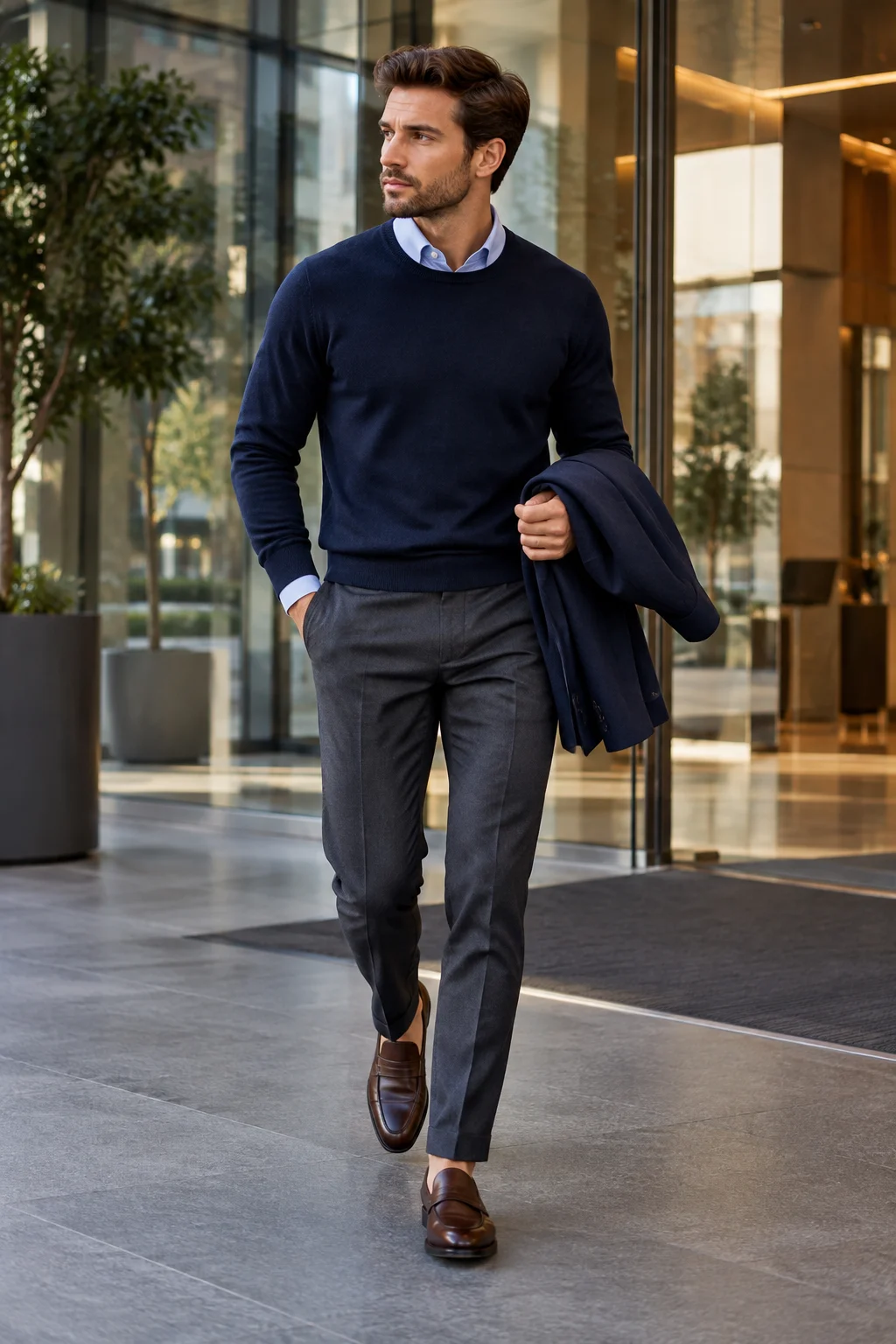
Pale blue Oxford shirt, navy chinos, brown loafers and a matching leather belt. This is a low-risk formula for offices where the dress code isn’t clearly defined.
Relaxed Office
Navy polo, stone chinos and clean minimal trainers or loafers. Keep the polo tucked if the setting leans professional, and untucked only when the hem length is designed for it.
Warm-Weather Office
White or light-blue linen shirt, olive or stone chinos and brown loafers. Keep the palette simple because the linen texture already adds visual interest.
For footwear options that match these combinations, see our business casual shoes guide.
Affordable vs Premium Business Casual Shirts
You do not need a designer label to dress well for work. At the affordable end, focus on collar shape, fabric opacity, button quality, and fit. At higher price points, you are more likely to see finer fabrics, better pattern matching, stronger collars, more size options,s and more refined construction, but none of those benefits matter if the fit is wrong.
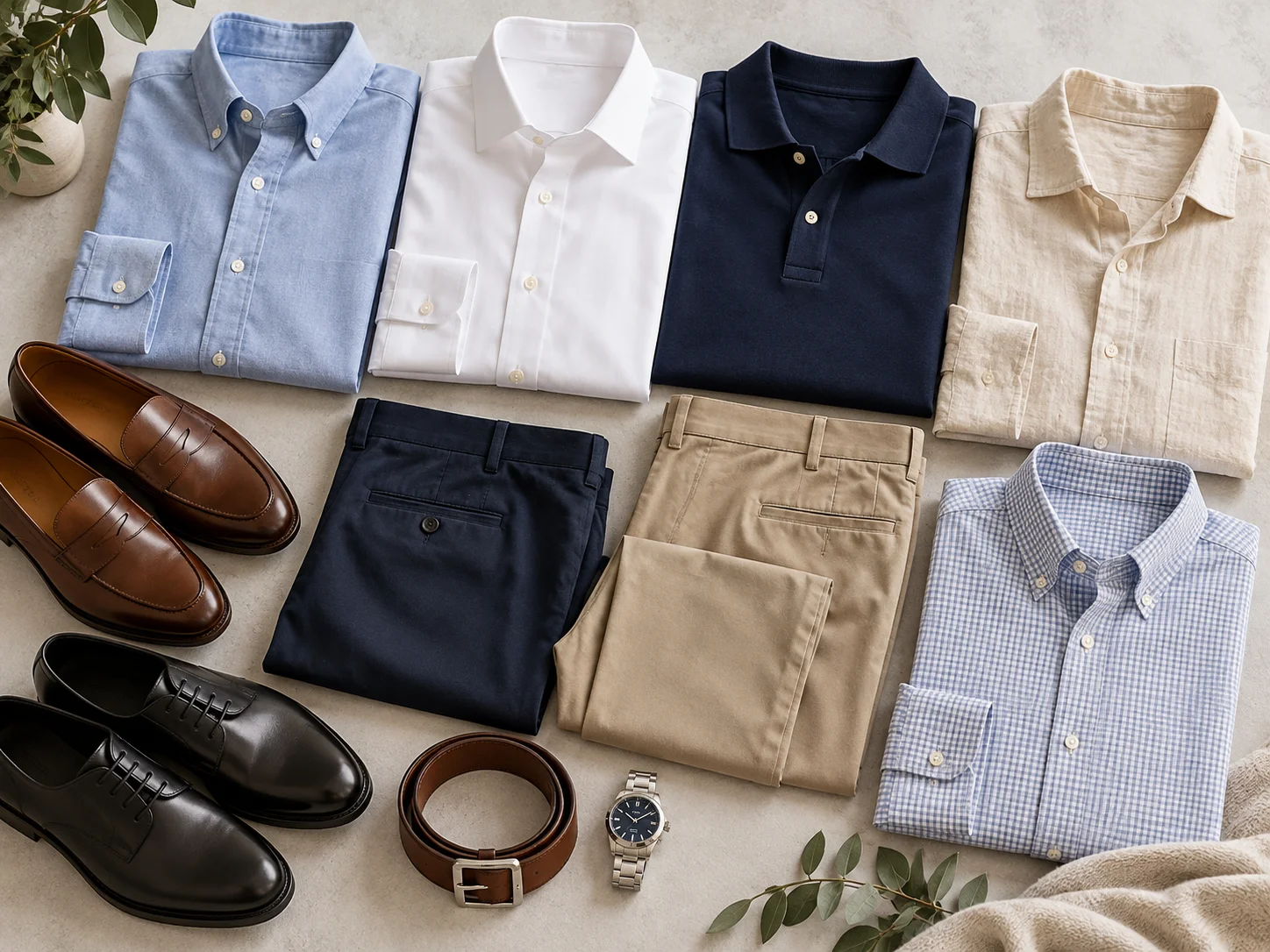
Instead of buying six trend-led shirts, build a small rotation that covers the week: two light-blue shirts, one white, one stripe or check, one polo and one seasonal linen or flannel option. Our business casual tops guide can help you plan the rest of the rotation.
Where Can I Shop for Business Casual Shirts?
Start with retailers that offer clear size charts, multiple fits, and straightforward returns. In the UK, mainstream menswear and shirt specialists make it easy to compare Oxford, dress and polo options across budgets. In the US, department stores, shirt specialists and established casualwear brands offer similar choices.
Rather than choosing by logo, compare four things: collar shape, fabric, fit options and return policy. If you buy online, measure a shirt you already own and compare the chest, shoulder, and sleeve measurements instead of relying only on S/M/L labels.
Frequently Asked Questions
Are button-down shirts business casual?
Yes. Oxford button-downs are one of the most reliable business casual shirts because they combine a structured collar with a slightly relaxed fabric.
Are dress shirts business casual?
Yes. Wear them open-collar with chinos or tailored trousers to reduce the formality of a traditional dress-shirt-and-suit combination.
Do polo shirts count as business casual?
Often, yes. Choose a structured collar, minimal branding, and a clean fit. Polos are more accepted in relaxed or warm-weather offices than in conservative professional environments.
Are plain T-shirts business casual?
Only in relaxed workplaces. A plain premium-looking crew neck can work with tailored trousers and a blazer, but it is less universally appropriate than a collared shirt.
Are patterned shirts business casual?
Yes, when the pattern is controlled. Fine stripes, gingham and small checks are easier to wear professionally than large, bright or novelty prints.
Are Oxford shirts business casual?
Yes. They are arguably the benchmark business casual shirt because they work with chinos, trousers, loafers, derbies and smart trainers depending on the office.
Are collared shirts business casual?
Most collared shirts can be, but the collar alone is not enough. Fabric, fit, pattern, and the rest of the outfit still determine whether the overall look is professional.
Are short sleeve shirts business casual?
They can be in warmer or more relaxed workplaces. Choose a clean button-up style rather than a resort shirt when the setting includes meetings or clients.
Are linen shirts business casual?
Yes, in many offices, especially during summer. Keep the colour restrained and the rest of the outfit structured to balance linen’s relaxed texture.
Are flannel shirts business casual?
Fine flannel in subtle colours can work in autumn and winter. Heavy, oversized or brightly checked flannel is usually too casual.
What shirts are considered business casual?
Oxford shirts, button-downs, plain dress shirts, structured polos and neat linen shirts are the core options. Flannel, plaid and short-sleeve shirts depend more heavily on the workplace.
What is the safest business casual shirt colour?
Pale blue is one of the easiest choices because it works with navy, grey, beige, olive and brown. White is slightly more formal and equally versatile.
Final Checklist
- Choose Oxford, dress, polo or linen first.
- Keep the collar neat and the fit clean.
- Use white, pale blue, navy and subtle patterns as your base.
- Match casual shirt types to your workplace’s actual formality.
- Avoid loud prints, oversized fits, and heavily sporty details for client-facing days.
- Build the outfit around chinos or tailored trousers and appropriate footwear.
Updated: September 2026.
Not sure what to wear?
Use our Men's Outfit & Dress Code Generator to get a personalised outfit based on your occasion, workplace and weather.
Try the Outfit Generator →