
Getting Started With Office Style
By Herry Jack — Business Casual Men style writer
Last updated: 19 September 2026
Business casual menswear should look professional without feeling as rigid as a full suit. For most men, that means pairing a structured top with well-fitting chinos or tailored trousers and polished footwear, then adjusting the formality for the office, meeting, season, or client. This guide explains exactly what counts as business casual men attire, how each piece should fit, and how to build repeatable outfits without overcomplicating your work wardrobe.
Table of Contents
About This Guide
This guide is written for men building practical work wardrobes in the UK and US. Recommendations focus on fit, workplace formality, versatility, seasonal use, and whether you can repeat an item across several office outfits. Brand or product mentions are examples, not paid endorsements unless stated otherwise.
The aim is simple: give you clear outfit rules you can use before work, an interview, a client meeting, or a business-casual event. Where workplace standards differ, the guide calls that out instead of treating every office as if it has the same dress code.
What Is Business Casual?
Business casual sits between formal businesswear and everyday casual clothing. For men, the safest foundation is a collared shirt, polo or fine-gauge knit with chinos or tailored trousers and clean, polished shoes. A blazer is optional rather than mandatory, while a full matching suit and tie are usually more formal than the dress code requires. The exact level depends on your workplace, so client-facing and traditional offices should lean smarter than creative or relaxed teams.
Understanding Business Casual Men Attire
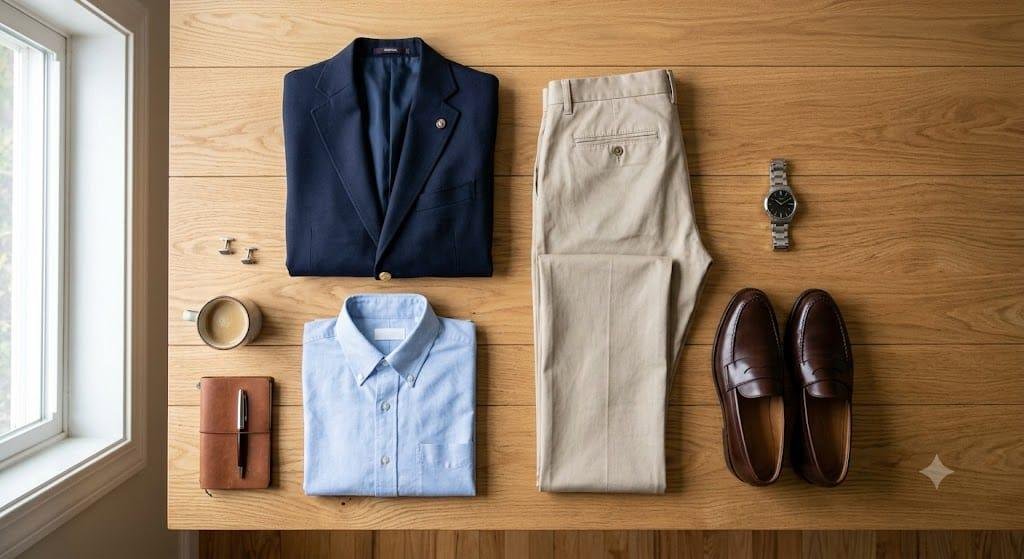
For men, business casual is less about one fixed uniform and more about keeping the outfit structured, clean and appropriate for the room. Oxford shirts, polos, fine-gauge knitwear, chinos, tailored trousers, loafers, Derbies and Chelsea boots all fit naturally into the dress code. Dark denim can work in relaxed offices, but it is a weaker choice for interviews, client meetings and traditional industries. The key is to keep at least two parts of the outfit polished so the overall look never slips into weekend casual.
Business Casual vs Smart Casual vs Formal
| Dress Code | Shirts & Tops | Trousers | Shoes | Best For |
|---|---|---|---|---|
| Formal | Dress shirt, usually with tie | Matching suit trousers | Oxfords or polished dress shoes | Boardrooms, formal events, conservative meetings |
| Business Casual | Oxford shirt, polo, fine knit, optional blazer | Chinos or tailored trousers | Loafers, Derbies, Chelsea boots | Offices, client meetings, networking |
| Smart Casual | Polo, knit, open-collar shirt, overshirt | Chinos, tailored trousers or dark jeans | Loafers, boots or minimal trainers | Dinners, social events, relaxed workplaces |
| Casual | T-shirt, sweatshirt, hoodie | Jeans or casual trousers | Trainers | Weekends and informal settings |
If you are unsure which level applies, dress one step smarter for a first meeting or a new workplace. Charles Tyrwhitt’s current UK business-casual guide makes the same practical distinction: business casual is office-first, while smart casual allows more flexibility when the setting permits it.
How Business Casual Should Fit
Fit matters more than the label. A shirt’s shoulder seam should sit close to the edge of your shoulder, with enough room through the chest to move without pulling at the buttons. Sleeves should finish around the wrist bone. Chinos and trousers should follow the leg without clinging, and the hem should have little or no excess break over the shoe. A blazer should lie cleanly across the shoulders, close without strain, and show a small amount of shirt cuff at the sleeve. Avoid both extremes: oversized clothes look careless, while very tight tailoring quickly feels dated and uncomfortable.
What Do Men Wear For Business Casual?
A dependable business casual outfit follows a simple formula: structured top + tailored bottom + polished footwear. The top might be an Oxford shirt, smart polo, merino crew-neck or quarter-zip. Chinos and tailored trousers are the safest bottoms, while dark denim is better reserved for offices that clearly allow it. Finish with loafers, Derbies, brogues, Chelsea boots or clean minimalist leather trainers where the dress code is relaxed.
5 Business Casual Outfit Formulas You Can Repeat
Classic office: light blue Oxford shirt + navy chinos + brown loafers. This is the safest everyday combination for most offices.
Client meeting: navy blazer + white or pale-blue shirt + charcoal tailored trousers + leather Derbies. Use this when you need a little more authority without wearing a full suit.
Modern office: knitted polo + stone chinos + suede loafers. The knit gives the polo more structure than a sporty pique style.
Cold-weather office: merino crew-neck over an Oxford shirt + wool trousers + Chelsea boots. Keep the knit fine enough to layer cleanly under a coat or blazer.
Casual Friday: Oxford shirt + dark, clean jeans + unstructured blazer + Chelsea boots. This works only where denim is already accepted.
Are Jeans Business Casual?
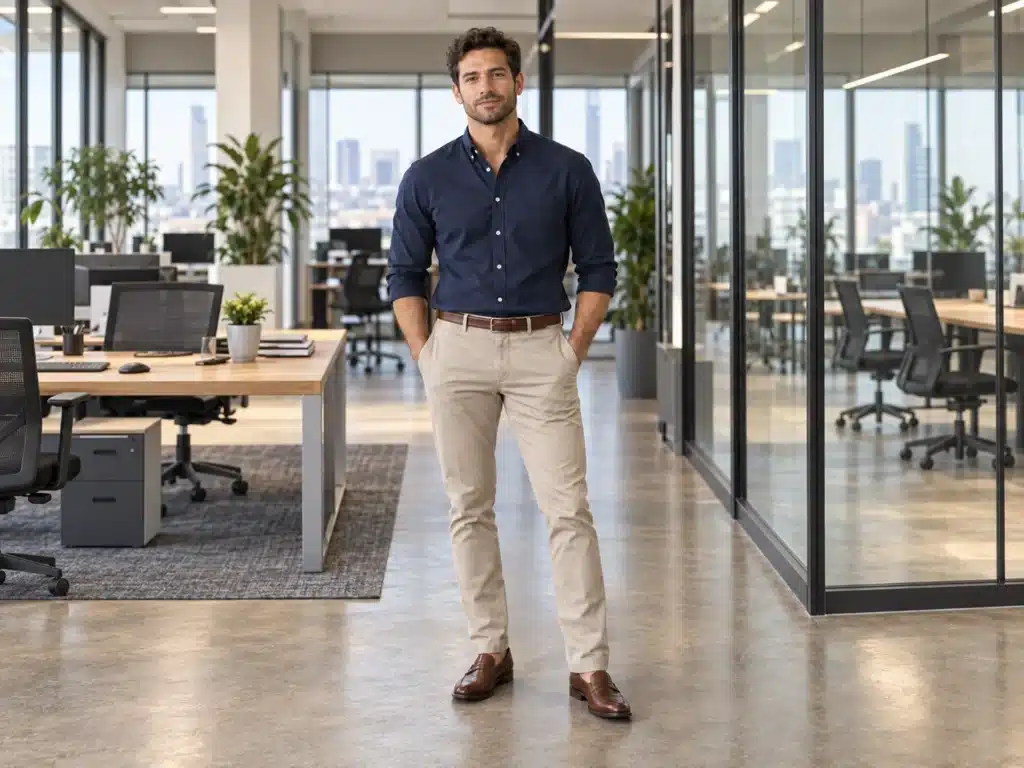
Jeans can work in business casual offices, but only when the workplace already accepts denim. Choose a dark, clean wash with minimal fading, no distressing, and a straight or slim fit. Pair the jeans with an Oxford shirt, polo, fine knit, or blazer, plus polished footwear. For interviews, client meetings and conservative offices, chinos or tailored trousers are the safer choice.
British GQ’s current business casual dress-code guide takes a similarly cautious view on denim: chinos or tailored trousers are the safer default, while dark, clean jeans work best only when the workplace already accepts them.
Are Polo Shirts Business Casual?
Yes, a polo can be business casual when the fabric, collar and fit are tidy enough for the workplace. Choose a structured cotton-piqué or knitted polo in navy, charcoal, white, olive or another restrained colour. The shoulder seam should sit cleanly, the sleeves should finish around mid-bicep, and the body should skim rather than cling. Pair it with chinos or tailored trousers and loafers, Derbies or clean leather trainers where the office allows them. Avoid oversized polos, large logos, contrast sports detailing, and thin fabrics that collapse at the collar. For a client meeting or a traditional finance or legal office, an Oxford or dress shirt remains the safer option.
Best Business Casual Shoes for Men
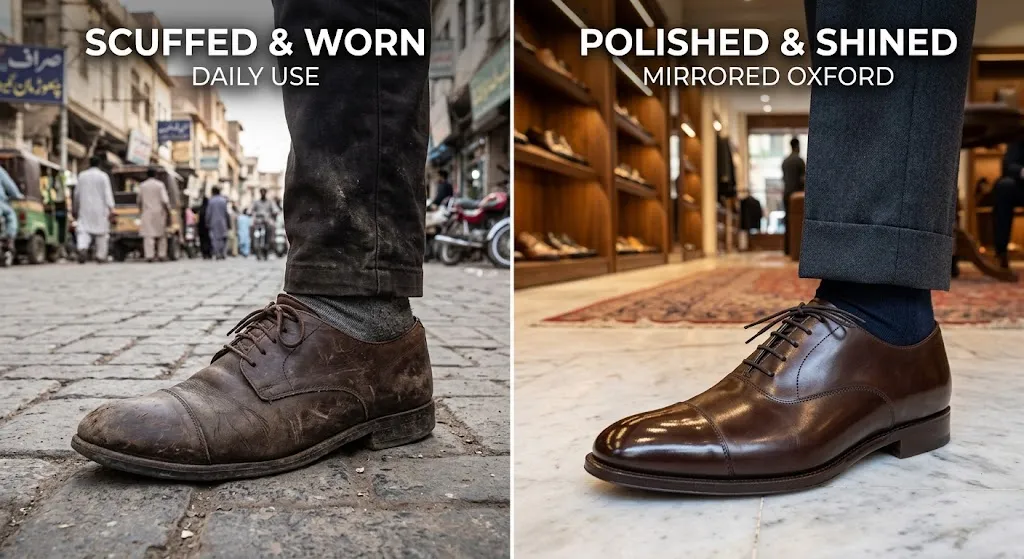
Footwear sets the formality of a business casual outfit. Loafers, Derbies and brogues are dependable choices with chinos and tailored trousers, while Chelsea boots work especially well through autumn and winter. Brown leather or suede usually pairs more easily with navy, grey, stone and olive than very formal black Oxfords. Minimal leather trainers can work in modern or creative offices, but they should be plain, clean and free from running-shoe details. If the day includes an interview, presentation or client meeting, choose leather shoes or boots rather than trainers. Whatever the style, worn soles, heavy scuffs and dirty uppers make the entire outfit look less polished.
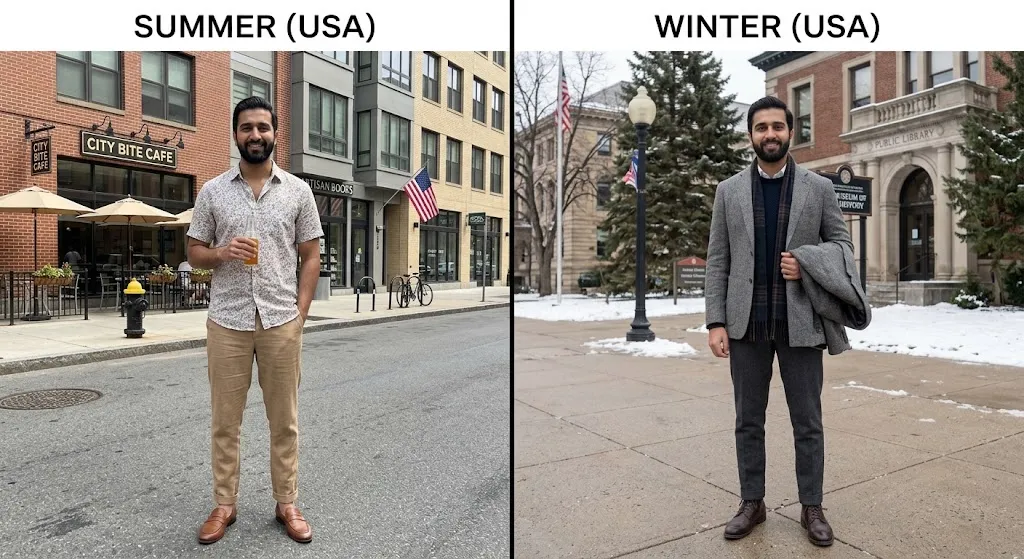
Business Casual by Season
Seasonal business casual mostly comes down to fabric weight and layering. In spring and summer, favour breathable cotton, linen blends, lightweight chinos, knitted polos and unlined or softly structured jackets. Pale blue, stone, olive and navy are easy to combine, while loafers help keep the outfit polished without adding unnecessary weight. In autumn and winter, move toward merino knitwear, flannel or wool-blend trousers, Chelsea boots and a weather-appropriate overcoat. A fine-gauge jumper over an Oxford shirt is particularly useful for UK offices because it works indoors without becoming bulky under a coat. Keep each layer slim enough to sit cleanly over the one beneath it; warmth should not come at the cost of shape.
Summer Business Casual
In warmer weather, prioritise breathable fabrics and lighter construction rather than simply removing layers. Cotton and linen-blend shirts, knitted polos, lightweight chinos and unstructured blazers work well. Loafers or clean minimal leather trainers can keep the outfit comfortable without making it look too casual. Pale blue, stone, olive, cream and navy are easy summer colours to combine.
Autumn and Winter Business Casual
For cooler months, keep the same basic outfit structure but increase fabric weight and add layers. A merino crew-neck or quarter-zip over an Oxford shirt, wool or flannel trousers, Chelsea boots and a wool overcoat is practical for UK commuting and still looks polished indoors. Avoid bulky outdoor layers at the desk; fine-gauge knitwear is easier to combine with blazers and coats.
Modern and Elevated Styles: Smart Business Casual
Smart business casual sits at the more polished end of the dress code. It is useful for interviews, presentations, client dinners, and offices where a simple polo-and-chino combination feels too relaxed. Start with a crisp Oxford or dress shirt, tailored trousers or dark chinos, and leather shoes. Add a navy blazer or textured sports coat when the meeting matters or when you are unsure about the room. A tie is usually unnecessary, but the shirt collar, trouser crease and footwear should all look intentional. In UK offices, this slightly sharper interpretation is often the safest choice for finance, legal and other client-facing roles. For a more relaxed interpretation, see our smart casual guide for men.
Business Casual for Different Work Environments
Traditional corporate or client-facing office: choose a dress shirt, tailored trousers, leather shoes and an optional blazer. Dark chinos can work, but avoid trainers and denim unless the office culture clearly permits them.
Modern professional office: an Oxford shirt or structured polo with chinos, loafers and fine-gauge knitwear gives you more flexibility while still looking work-appropriate.
Creative, tech or relaxed office: knitwear, polos, overshirts, dark denim and clean minimal trainers may be acceptable. Keep at least one or two elements structured so the outfit still reads as deliberate rather than purely casual.
Interview, first day or senior meeting: move one level smarter than your normal office outfit. A shirt, tailored trousers or dark chinos, blazer and leather shoes is a low-risk choice.
When to Wear a Blazer, Sports Coat or No Jacket
A blazer is the easiest way to make business casual look more polished. Navy is the most versatile choice because it works with grey trousers, beige chinos, Oxford shirts, and polos. Choose one for client meetings, presentations, first days and traditional offices.
A sports coat is slightly more relaxed and often has more texture or pattern. It works well when you want tailoring without looking as formal as a suit. Tweed, hopsack and subtle checks are particularly useful in autumn and winter. Skip the jacket when the office is relaxed and the rest of the outfit already has enough structure, such as an Oxford shirt with tailored chinos and loafers.
Business Casual Colour Combinations That Work
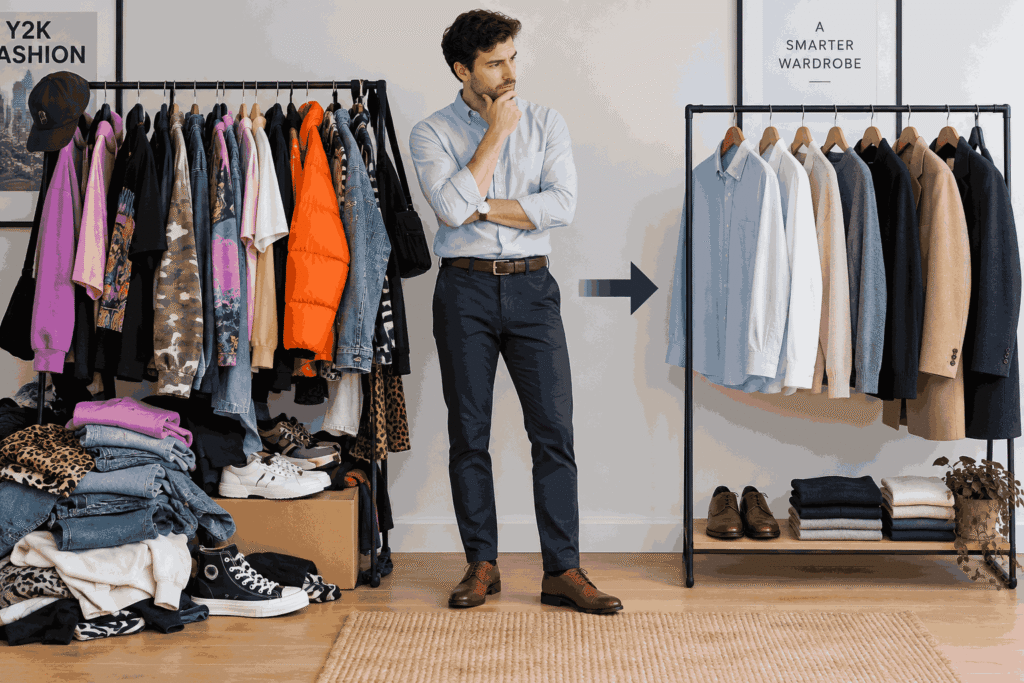
Neutral colours make a work wardrobe easier to repeat. Reliable combinations include navy with stone, charcoal with pale blue, olive with white, brown with cream, and grey with burgundy. Keep most of the outfit neutral and use one stronger colour at a time. For example, a burgundy merino jumper works best with charcoal trousers and brown shoes, not with several other bold colours.
Business Casual Accessories: Belts, Watches and Bags
Accessories should support the outfit rather than dominate it. A simple leather belt in brown or black is enough for most offices; it does not need to match the shoes perfectly, but the colours should sit comfortably together. Choose an understated watch with a leather or metal strap instead of a bulky sports watch for more formal workplaces. A clean leather or structured canvas briefcase, tote or laptop bag looks more professional than a gym bag or heavily branded backpack.
Common Business Casual Mistakes Men Make
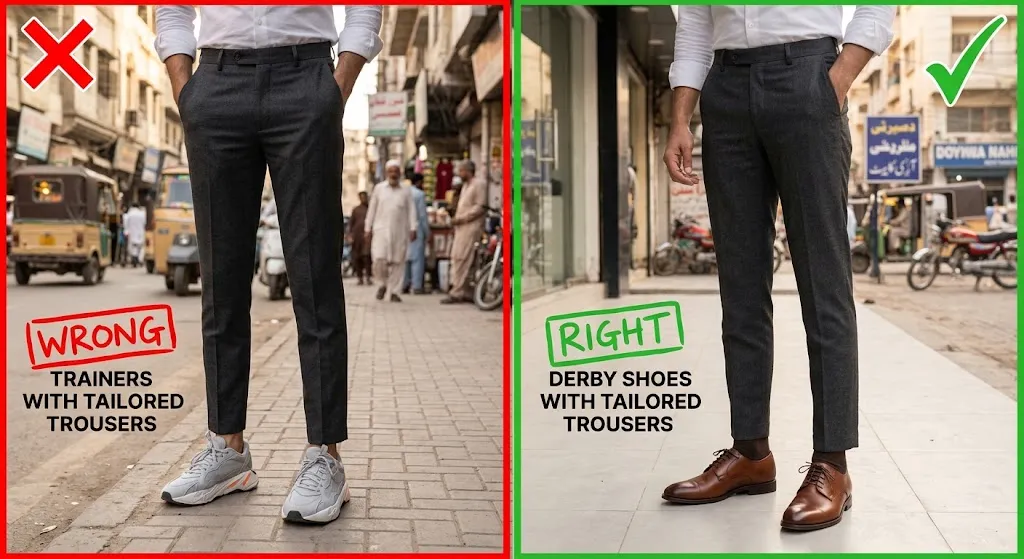
1. Wearing poor-fitting clothes: oversized shirts, trousers pooling over the shoes, or jackets pulling across the chest make even expensive clothes look wrong. Fix the proportions before buying more pieces.
2. Going too casual all at once: one relaxed piece can work, but combining trainers, faded jeans, a T-shirt and a hoodie usually moves the outfit outside business casual.
3. Ignoring footwear: running shoes, dirty trainers and heavily worn soles can undermine an otherwise polished outfit. Keep work shoes clean and rotate pairs when possible.
4. Wearing distressed denim: if jeans are allowed, choose a dark wash with minimal fading and no rips. Chinos or tailored trousers remain safer for formal offices and client work.
5. Overusing patterns: a checked shirt, patterned blazer and bold trousers in one outfit compete for attention. Let one piece carry the pattern and keep the rest quieter.
6. Dressing for the label instead of the workplace: business casual is not identical in every industry. Watch what senior colleagues and client-facing staff wear, then adjust your formality accordingly.
Building a Business Casual Capsule Wardrobe
You do not need a large wardrobe to dress well for work. Start with two Oxford shirts (white and pale blue), two polos or knitted polos, two pairs of chinos (navy and stone), one pair of charcoal tailored trousers, one fine-gauge merino jumper, one navy blazer, brown loafers or Derbies, and a second pair of Chelsea boots or minimal leather trainers if your office allows them. These pieces create more than a week’s worth of combinations without relying on trend-led items.
Add replacements only when you find a genuine gap: a lighter shirt for summer, a heavier knit for winter, or a sports coat for client-facing days. This keeps the wardrobe cohesive and makes getting dressed faster.

Business Casual for Client Meetings
For a client meeting, move one level smarter than your normal office outfit. A navy blazer, white or pale-blue Oxford shirt, charcoal or mid-grey tailored trousers, and polished brown or black leather shoes is a dependable combination. The aim is to look prepared and credible without appearing as though you are wearing a formal suit by default.
Keep patterns restrained and make sure the fit and condition of the clothes are right. Avoid distressed denim, athletic trainers, wrinkled shirts, oversized logos and anything that competes for attention. If the meeting is with a new client or takes place in a conservative industry, choose trousers over jeans and leather shoes over trainers.
Business Casual for Job Interviews
For a business-casual interview, it is safer to be slightly smarter than the everyday dress code. Start with a crisp Oxford or poplin shirt, tailored chinos or wool trousers, and clean leather Derbies or loafers. Add a navy blazer for corporate, management or client-facing roles. A tie is usually optional unless the company or role is clearly more formal.
Keep colours simple: navy, charcoal, mid-grey, white and pale blue are easy to combine and photograph well on video calls too. Charles Tyrwhitt’s current interview dressing guide follows the same principle: business casual still needs structure, polished footwear and a well-fitting shirt.
Where To Buy Business Casual Clothes
For UK wardrobes, useful starting points include M&S for accessible trousers and knitwear, Charles Tyrwhitt for shirts, chinos and smarter layers, and Uniqlo for simple Oxford shirts, merino knitwear and clean basics. In the US, J.Crew, Banana Republic and Uniqlo cover a similar range. Buy for fit and repeatability rather than logos: a well-fitting navy chino or pale-blue Oxford that works in five outfits is more useful than a trend piece you wear once. Check fabric composition, care instructions and return policies before buying online.

Real Business Casual Men Examples and Outfits
Everyday office: pale-blue Oxford shirt, navy chinos and brown loafers. Client-facing day: navy blazer, white shirt, charcoal trousers and polished leather shoes. Creative office: knitted polo, olive chinos and minimal leather trainers if the dress code allows them. Desk-to-dinner: dark chinos, fine-gauge merino knit, Chelsea boots and an unstructured blazer that can be removed after work. These combinations are easy to repeat because the pieces share a neutral colour palette and similar levels of formality.
How to Transition Business Casual From Work to Evening
You usually need only one or two changes. Remove the tie if you wore one, open the top shirt button, swap a formal blazer for an unstructured jacket, or replace dress shoes with clean loafers or Chelsea boots. Keep the trousers and shirt if they still look sharp. The goal is to relax the outfit without rebuilding it from scratch. For a more relaxed evening dress code, compare these ideas with our complete smart casual guide.
Frequently Asked Questions (FAQs)
These are the practical questions that usually come up when men are trying to judge whether an outfit is polished enough for work without becoming formal.
What is business casual for men?
Business casual for men means dressing professionally without relying on a full matching suit. A typical outfit combines a collared shirt, polo or fine knit with chinos or tailored trousers and polished shoes. Add a blazer when the workplace, meeting, or role calls for more structure.
Are sneakers business casual?
Sneakers can be business casual in modern or creative offices, but the design matters. Choose simple leather or suede trainers with minimal branding, a low profile and clean soles. White, off-white, navy and dark brown are easier to style than brightly coloured athletic shoes. Pair them with chinos, tailored trousers, an Oxford shirt, a polo, or a fine knit so the rest of the outfit carries enough structure. For interviews, senior meetings, traditional offices and client-facing work, loafers, Derbies or Chelsea boots are the safer option. If you are unsure, follow the level of formality set by senior colleagues rather than assuming all trainers are acceptable.
Can I wear the same business casual outfit in every season?
Keep the same basic formula but change the fabric weight and layers. In summer, use breathable cotton, linen blends, lightweight chinos and loafers. In winter, switch to merino knitwear, heavier trousers, Chelsea boots, and an overcoat. The colours can stay similar, which makes a capsule wardrobe easier to manage year-round.
Does business casual include jeans?
Jeans can be business casual when the workplace already accepts denim. Choose a dark indigo or black wash with little fading, no distressing and a straight or slim fit. Pair them with an Oxford shirt, fine knit or blazer and polished shoes or boots. Avoid light washes, ripped knees, stacked hems, and overly skinny cuts. For interviews, important client meetings and conservative offices, chinos or tailored trousers are still the safer choice.
What is considered business casual?
Business casual means professional clothing without the full formality of a matching suit and tie. For men, that usually means an Oxford or dress shirt, a structured polo or fine knit, chinos or tailored trousers, and polished shoes. A blazer is optional but useful when you need to raise the formality. The easiest test is whether the outfit would still look appropriate in a meeting: clean fit, controlled colours, no distressed clothing, and footwear that looks maintained.
When is a blazer required for business casual?
A blazer is not required for every business casual office, but it is useful for client meetings, interviews, presentations, first days and traditional workplaces. A navy or textured mid-blue blazer is the easiest option because it works with grey trousers, beige or navy chinos, Oxford shirts and polos.
What belt and watch work best with business casual?
Choose a simple leather belt in a tone that works with your shoes rather than trying to create a perfect colour match. Brown and dark tan work well with navy, grey, stone, and olive. For watches, a restrained leather-strap or metal-bracelet design usually looks more polished than a bulky sports watch in formal offices.
How can I make business casual more formal without wearing a suit?
Swap jeans for tailored trousers, trainers for leather shoes, and a casual polo for an Oxford or dress shirt. Then add a blazer or sports coat. Those changes raise the formality without creating the matched, structured appearance of a full business suit.
How do I build a business casual wardrobe from scratch?
Start with two Oxford shirts, two pairs of chinos, one pair of tailored trousers, one fine-gauge knit, a navy blazer, brown loafers or Derbies, and one second pair of weather-appropriate shoes. Keep the colours interchangeable before adding patterns or trend-led pieces. That small base can cover most working weeks without creating duplicate purchases.
Conclusion
A reliable business casual wardrobe does not need to be large. Start with well-fitting shirts, chinos or tailored trousers, one useful layer, and two pairs of work-appropriate shoes. Build around neutral colours so the same pieces work across ordinary office days, client meetings and seasonal changes. When you are unsure about a dress code, choose the slightly smarter option first; you can always remove a blazer or relax the outfit later. Fit, fabric condition, and clean footwear matter more than chasing trends or buying expensive labels.
Not sure what to wear?
Use our Men's Outfit & Dress Code Generator to get a personalised outfit based on your occasion, workplace and weather.
Try the Outfit Generator →