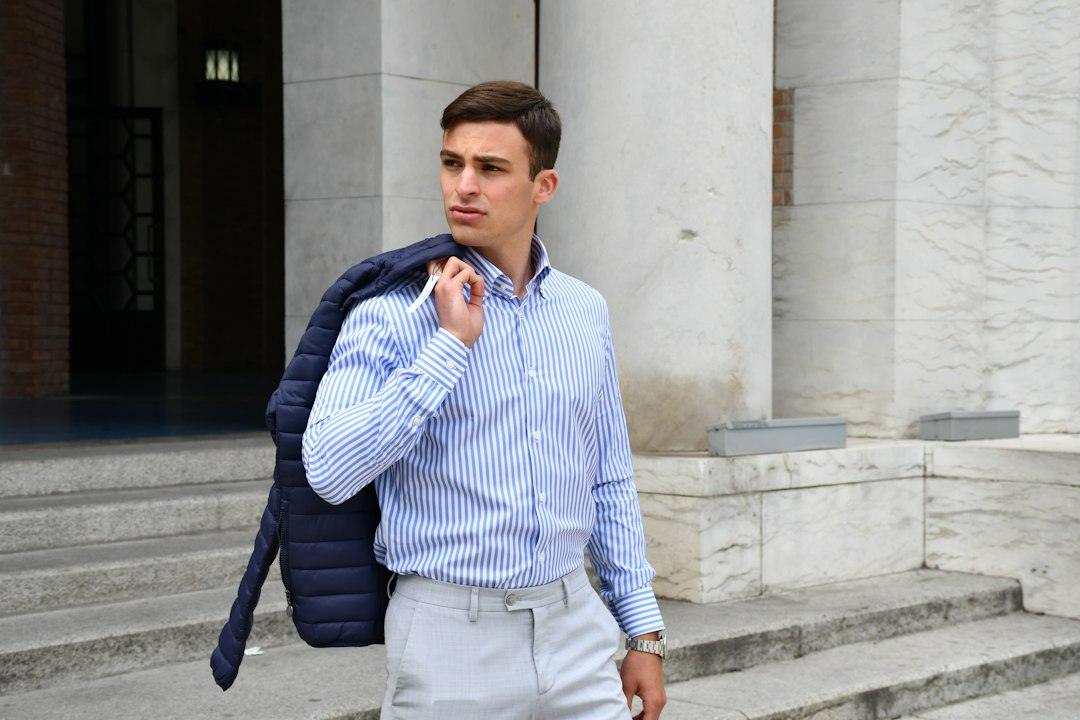
Business casual shirts should look professional without the formality of a suit-and-tie shirt. For most men, the safest choices are a well-fitted Oxford button-down, a plain dress shirt, or a structured polo in a conservative colour. Linen and short-sleeve shirts can work in warmer offices, while T-shirts, Hawaiian shirts and sports-style tops depend heavily on workplace culture.
Quick Style Summary
- Safest choice: white or pale-blue Oxford shirt with chinos or tailored trousers.
- Relaxed office: a fitted polo can work, especially in tech, creative and casual workplaces.
- Summer: lightweight cotton, linen blends and restrained short-sleeve shirts are practical.
- Fit matters: shoulder seams, collar, sleeve length and body shape should look clean without pulling or excessive fabric.
- When unsure: choose the more structured shirt and check how colleagues and managers dress.
What Shirts Are Considered Business Casual?
A business casual shirt sits between formal business dress and everyday casual clothing. It normally has a collar, a clean shape and little or no prominent branding. Oxford shirts, button-downs and open-collar dress shirts are the dependable core. Polos can move into business casual when the office is relaxed and the design is simple.
The shirt is only one part of the dress code. Pair it with chinos, tailored trousers and appropriate footwear. See our complete men’s business casual guide for the full dress-code hierarchy.
Business Casual Shirt Quick-Reference Table
| Shirt type | Business casual? | Best use |
|---|---|---|
| Oxford button-down | Yes | Most offices, meetings, everyday work |
| Dress shirt | Yes | Smarter offices and client-facing days |
| Polo shirt | Usually | Relaxed offices and warm weather |
| Linen shirt | Usually | Summer and warm climates |
| Short-sleeve collared shirt | Sometimes | Relaxed summer offices |
| Flannel or plaid shirt | Sometimes | Casual offices, especially autumn/winter |
| Golf shirt | Sometimes | Relaxed workplaces if branding is minimal |
| Henley | Rarely | Smart casual rather than standard business casual |
| Plain T-shirt | Rarely | Creative offices, usually with a blazer |
| Hawaiian shirt | Usually no | Only explicitly relaxed or themed workplaces |
Best Business Casual Shirts for Men
1. Oxford Button-Down Shirt
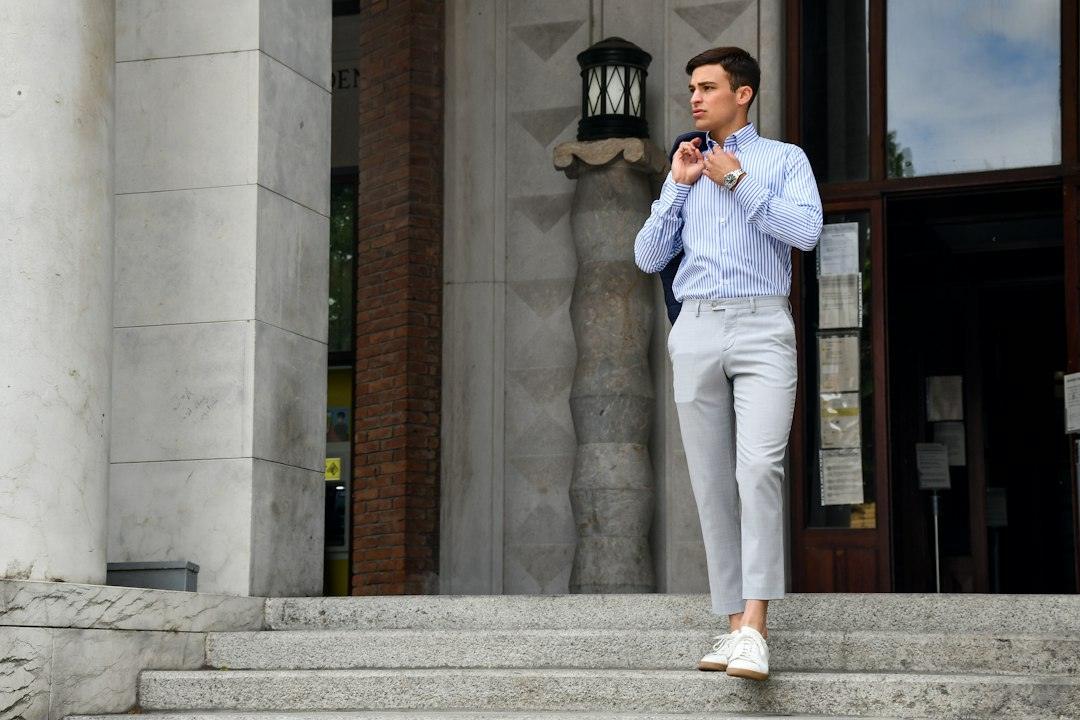
The Oxford is the easiest starting point because its textured cotton fabric and button-down collar bridge formal and casual clothing. White, pale blue and subtle stripes pair easily with navy, charcoal, olive and stone trousers. If you want one shirt that can handle an ordinary office day and a meeting, start here.
2. Dress Shirt
A dress shirt is business casual when worn without a tie and paired with chinos or separate trousers rather than a matching suit. A soft blue or white shirt is safer than glossy fabric, a stiff evening collar or conspicuous cuff details. For interviews and conservative workplaces, it is the smarter option.
3. Polo Shirt
Are polo shirts business casual? They can be. Choose a fitted polo with a tidy collar, solid colour or restrained pattern, and minimal sports branding. A knitted polo generally reads smarter than a performance golf polo. If your workplace is client-facing or conservative, an Oxford remains the safer default.
4. Linen Shirt
Linen shirts can work for business casual in hot weather, particularly in white, pale blue, stone or navy. Linen naturally develops creases, so choose a neat fit and keep the rest of the outfit structured. A linen-cotton blend can be useful when you want a slightly crisper appearance.
For more warm-weather combinations, use our summer business casual guide.
5. Short-Sleeve Shirt
A short-sleeve collared shirt can work in a relaxed summer office, but the cut needs to be intentional. Avoid sleeves that flare widely and loud holiday prints. Our men’s short-sleeve shirt guide covers fit and styling in more detail.
6. Flannel and Plaid Shirts
Flannel is more casual because of its texture, while plaid varies enormously. A fine, restrained check in navy, grey or burgundy can suit a casual office. Large lumberjack-style checks, very heavy fabric and oversized fits are better kept for weekends. In a traditional office, choose an Oxford instead.
7. Golf Shirts
A golf shirt is essentially a performance-oriented polo. It may be acceptable in a relaxed workplace, but shiny technical fabric, contrast piping and large club or sports logos make it look more athletic. A cotton-piqué or knitted polo is normally easier to dress for the office.
8. Henleys, T-Shirts and Hawaiian Shirts
Henleys and plain T-shirts sit closer to smart casual than conventional business casual because they lack a collar. Some creative workplaces accept a high-quality plain T-shirt under an unstructured blazer, but it is not a universal office formula. Hawaiian shirts are usually too bold for business casual unless your workplace explicitly encourages them.
Long-Sleeve vs Short-Sleeve Business Casual Shirts
Long sleeves are the more versatile choice. You can wear them normally for meetings and roll them neatly when the environment becomes relaxed. Short sleeves make sense in hot weather and less formal workplaces, but they move the outfit down the formality scale. If you have an important client meeting, presentation or interview, long sleeves are usually safer.
Men’s Summer Business Casual Shirts
For summer, prioritise breathable construction rather than simply choosing the thinnest shirt. Lightweight cotton, Oxford cloth at the lighter end, linen and linen blends are useful options. Pale blue, white, light grey and restrained stripes are easy to combine. In hotter US climates, a polo or short-sleeve shirt may be normal; in many UK professional offices, a long-sleeve shirt with the sleeves kept down or neatly rolled remains the safer choice.
Colours and Patterns That Work
Build around white and pale blue first. Navy, soft grey, olive and subtle stripes add variety without making the shirt difficult to combine. Small checks can work, but pattern scale matters: the larger and higher-contrast the pattern, the more casual it tends to look. Avoid novelty graphics and oversized logos when the goal is professional versatility.
Fit and Fabric: What Matters Most
- Shoulders: the seam should sit close to the edge of your shoulder.
- Chest: buttons should lie flat rather than pull apart.
- Body: enough room to move, without large folds of excess fabric.
- Sleeves: long sleeves should reach the wrist cleanly.
- Collar: it should hold its shape when worn open.
- Fabric: choose a weight and weave appropriate to the season and office temperature.
Match the Shirt to Your Office Formality
Conservative office: Oxford or dress shirt, tucked into tailored trousers, with leather shoes. Standard business casual: Oxford or subtle patterned shirt with chinos. Relaxed office: polo, linen shirt or restrained short-sleeve shirt may work. Creative office: a plain T-shirt or Henley may be accepted, but that is workplace-specific rather than a general business casual rule.
If your workplace sits between business casual and weekend clothing, compare the distinction in our smart casual men’s guide.
3 Practical Business Casual Shirt Outfits
Outfit 1: Reliable Office Combination
- Pale-blue Oxford shirt
- Navy chinos
- Brown leather Derby shoes or loafers
- Brown belt
This is a dependable baseline for normal office days. For more combinations, see these men’s business casual outfits.
Outfit 2: Relaxed Summer Office
- Navy or light-blue polo
- Stone chinos
- Brown loafers or minimal leather trainers (sneakers), if accepted by your office
Outfit 3: Client-Facing Day
- White dress shirt or Oxford
- Charcoal tailored trousers
- Navy unstructured blazer
- Dark brown leather shoes
Footwear changes the formality of all three combinations. Use our business casual shoes guide to choose an appropriate pair.
Affordable vs Premium Business Casual Shirts
Price alone does not determine whether a shirt is office-appropriate. At any budget, prioritise fit, opaque fabric, tidy stitching, a collar that holds its shape and care requirements that suit your routine. Premium shirts may offer different fabrics, construction and finishing, but a well-fitting affordable Oxford can look more appropriate than an expensive shirt in the wrong size. Compare current retailer specifications and prices before buying rather than relying on old price lists.
Where Can I Shop for Business Casual Shirts?
Look at menswear retailers, department stores and shirt specialists that provide clear size charts, fabric composition and care instructions. Instead of shopping by logo, compare collar style, fit options, material and return policy. For a small work wardrobe, start with white and pale-blue shirts before adding patterns or seasonal fabrics.
UK vs USA Business Casual Shirt Notes
There is no single national rule, and company culture matters more than geography. As a practical starting point, traditional UK professional workplaces often reward a slightly smarter shirt-and-trouser combination, while many US tech and creative offices permit polos and more relaxed footwear. In either country, client-facing industries may expect a more formal interpretation. When starting a new job, observe the dress code before testing its casual limits.
Common Business Casual Shirt Mistakes
- Choosing a shirt that pulls across the chest or hangs excessively loose.
- Using sports polos with prominent logos as a substitute for an office polo.
- Wearing a visibly creased shirt to an important meeting.
- Combining a loud shirt with equally loud trousers or accessories.
- Assuming every office accepts untucked shirts, trainers or T-shirts.
- Ignoring fabric transparency under bright office lighting.
- Using a casual shirt when the occasion calls for an interview-level outfit. See our business casual interview guide for the smarter end of the dress code.
Business Casual Shirts FAQs
Are polo shirts business casual?
Yes, in many relaxed and standard business casual workplaces. Choose a clean, fitted polo in a solid colour or subtle pattern. Conservative or client-facing offices may still favour an Oxford or dress shirt.
Are Oxford shirts business casual?
Yes. Oxford button-down shirts are among the safest business casual choices because they combine a structured collar with a less formal textured fabric.
Are button-down shirts business casual?
Usually, yes. A plain or subtly patterned button-down with chinos or tailored trousers works in most business casual offices.
Are dress shirts business casual?
Yes. Wear the dress shirt open at the collar without a tie and combine it with chinos or separate trousers to reduce the formality.
Are linen shirts business casual?
They can be, particularly in summer. Keep the colour restrained, fit neat and the rest of the outfit structured.
Are short-sleeve shirts business casual?
They can be in relaxed offices and warm weather. A long-sleeve Oxford or dress shirt is safer for conservative workplaces and important meetings.
Are flannel or plaid shirts business casual?
Sometimes. Fine flannel and small, restrained checks can work in casual offices. Heavy flannel and large, high-contrast plaid patterns usually look more casual.
Are T-shirts business casual?
Not as a general rule. A plain T-shirt may be accepted in creative or very relaxed offices, sometimes under a blazer, but it is not a safe default.
Are Henley shirts business casual?
Usually they sit closer to smart casual. Because a Henley has no collar, an Oxford or polo is a safer workplace choice.
Are Hawaiian shirts business casual?
Usually not. Bold tropical prints are generally too casual unless the workplace has an explicitly relaxed dress code or themed event.
Are golf shirts business casual?
Some are. Simple polos with minimal branding can work in relaxed offices, while shiny performance fabric and prominent sports branding make them more casual.
Are collared shirts business casual?
A collar helps, but it is not the only test. Fit, fabric, pattern, branding and the workplace dress code determine whether the shirt looks professional enough.
Are patterned shirts business casual?
Yes, when the pattern is restrained. Fine stripes, small checks and low-contrast patterns are easier to wear professionally than large or novelty prints.
Final Style Notes
The best business casual shirts for men are not necessarily the most expensive. Start with fit, fabric and workplace formality. A pale-blue or white Oxford is the most dependable foundation, then add polos, linen, patterns and short sleeves once you know how relaxed your office allows you to be.
For colder months, shirts also work well under fine knitwear. See our men’s half-zip jumper guide for a practical layering option.
Last updated: September 2026.
Not sure what to wear?
Use our Men's Outfit & Dress Code Generator to get a personalised outfit based on your occasion, workplace and weather.
Try the Outfit Generator →