
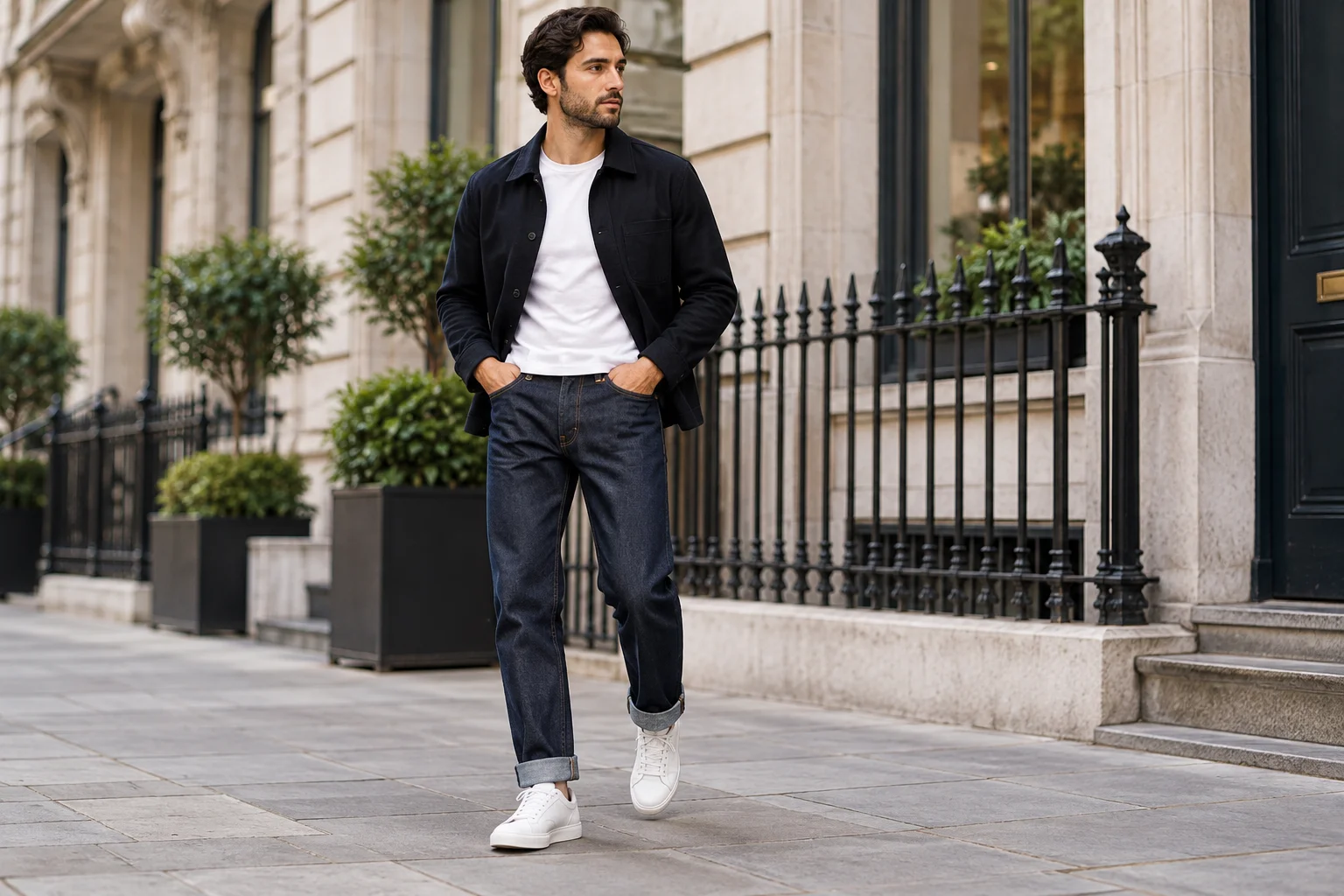
Cuff jeans when you want to shorten the break, show more of your footwear, or add a deliberate finish to casual denim. For most men, a single or double cuff is the safest option. Wider or Japanese-style cuffs work better with straight, relaxed, and selvage jeans, while bootcut and heavily flared jeans are usually better left uncuffed.
The right cuff depends on three things: the cut of the jeans, how much extra length you have, and the shoes you are wearing. A cuff should look intentional, not like a temporary fix that keeps collapsing around the ankle.
Table of Contents
How to Cuff Jeans Properly
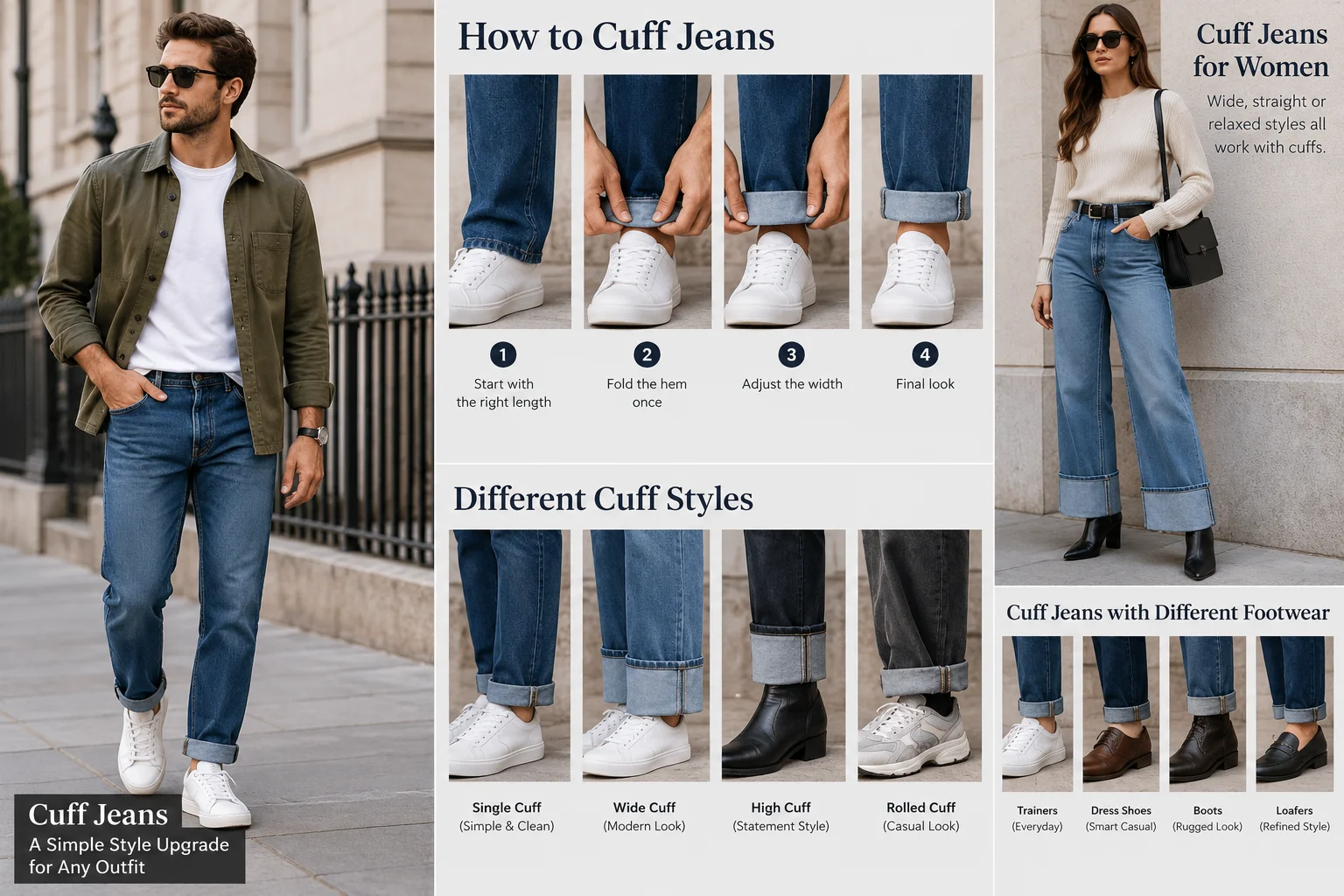
For a simple cuff, start with the jeans hanging naturally over your shoes. Fold the hem upward once, keeping the width even all the way around. Around 2–5 cm works for most straight or tapered jeans. If the cuff still leaves too much fabric at the ankle, fold it once more.
- Put on the shoes you plan to wear.
- Let the jeans fall naturally without bunching.
- Fold the hem once and smooth the cuff around the leg.
- Check both sides in a mirror to make sure the cuffs sit at the same height.
- If there is still too much break, add a second fold rather than making the first cuff excessively tall.
Levi’s current jeans cuffing guide also separates double rolls from deep cuffs and pairs deeper cuffs with boots or retro high-tops. That is a useful rule because cuff depth should match the shoe’s visual weight.
The Main Cuff Styles
Single Cuff
The simple cuff jeans method is a single fold at the hem. It works best with straight and slim jeans that are only slightly long. This is the least fussy option and the easiest to pair with trainers, loafers, or casual leather shoes.
Double Cuff
A double cuff uses two consecutive folds. It shortens the leg more than a single cuff and keeps the edge looking tidy. This is usually the most practical method when your jeans are a little long but don’t need professional hemming.
Wide or Deep Cuff
Wide cuff jeans use one noticeably deeper fold. The look is more deliberate and works better with straight, relaxed, or heavier denim than with narrow skinny fits. A large cuff also draws attention to the ankle, so it works best when the footwear has enough visual weight to balance it.
Japanese Cuff
The Japanese cuff starts with a large first fold, then a second smaller fold that leaves the original hem visible. Denim specialists often use this method to show chainstitching and the selvage edge. It suits raw or selvage denim especially well because the contrast between the dark face of the denim and the lighter inside becomes part of the look.
Pinroll
A pinroll narrows the ankle and shortens the hem. Pinch a small amount of fabric at the inside seam, fold that excess inward, then roll the hem over it. This is better for tapered casual outfits than for wide or straight jeans, because the goal is a close ankle opening.
How to Cuff Jeans for Different Fits
| Jean fit | Best cuff | What to avoid |
|---|---|---|
| Straight leg | Single, double or Japanese cuff | Very tight pinrolls |
| Slim/tapered | Small single or double cuff | Oversized deep cuffs |
| Baggy/relaxed | Wide single or loose double cuff | Tiny cuffs that look out of scale |
| Wide leg | Wide, deliberate cuff if fabric holds it | Narrow pinrolls |
| Bootcut | Usually uncuffed | Bulky cuffs that distort the flare |
For straight-leg denim, the cuff should follow the leg’s natural width. That keeps the silhouette clean and makes cuffed jeans easy to use in everyday casual outfits for men.
With baggy jeans, scale matters. A small cuff can look accidental against a wide leg, so a broader fold often looks more proportionate. With wide-leg jeans, cuff only if the denim has enough structure to hold the fold; very soft fabric can collapse and look untidy.
Bootcut jeans are different. The flare is designed to sit over footwear, so turning it up often interrupts the shape. If a bootcut pair is too long, hemming is normally cleaner than cuffing.
How to Cuff Jeans with Boots and Trainers
With Trainers
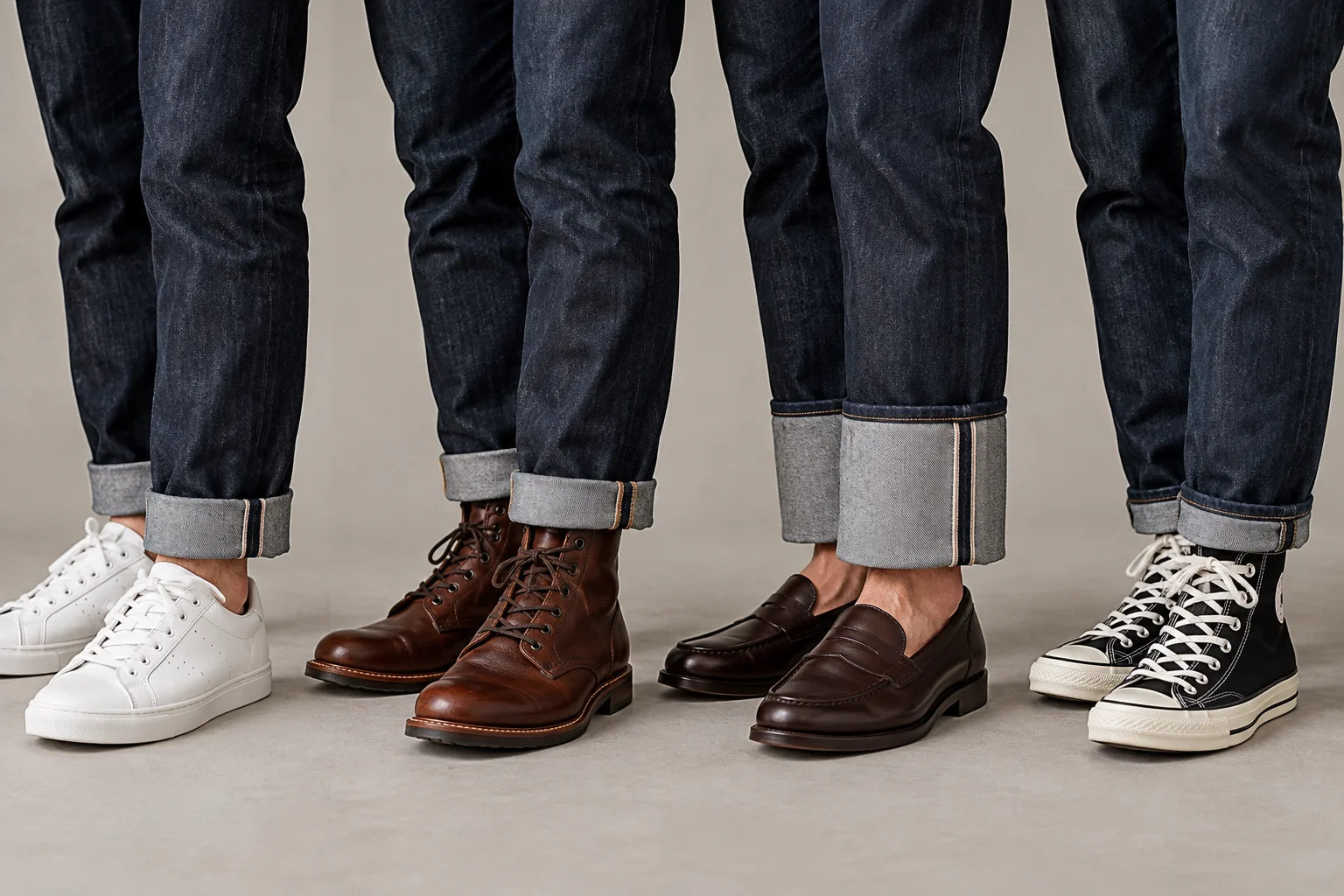
For low-profile trainers, keep the cuff relatively compact so you don’t expose too much ankle. A small single or double cuff works well. This gives the hem a cleaner break and keeps attention on the shoe without shortening the leg too aggressively.
If the outfit sits closer to smart casual, dark jeans with a neat cuff and minimal trainers look more controlled than heavily faded jeans with a loose roll. If trainers are part of your work wardrobe, our business casual sneakers guide explains when they look polished enough for the office.
With Boots
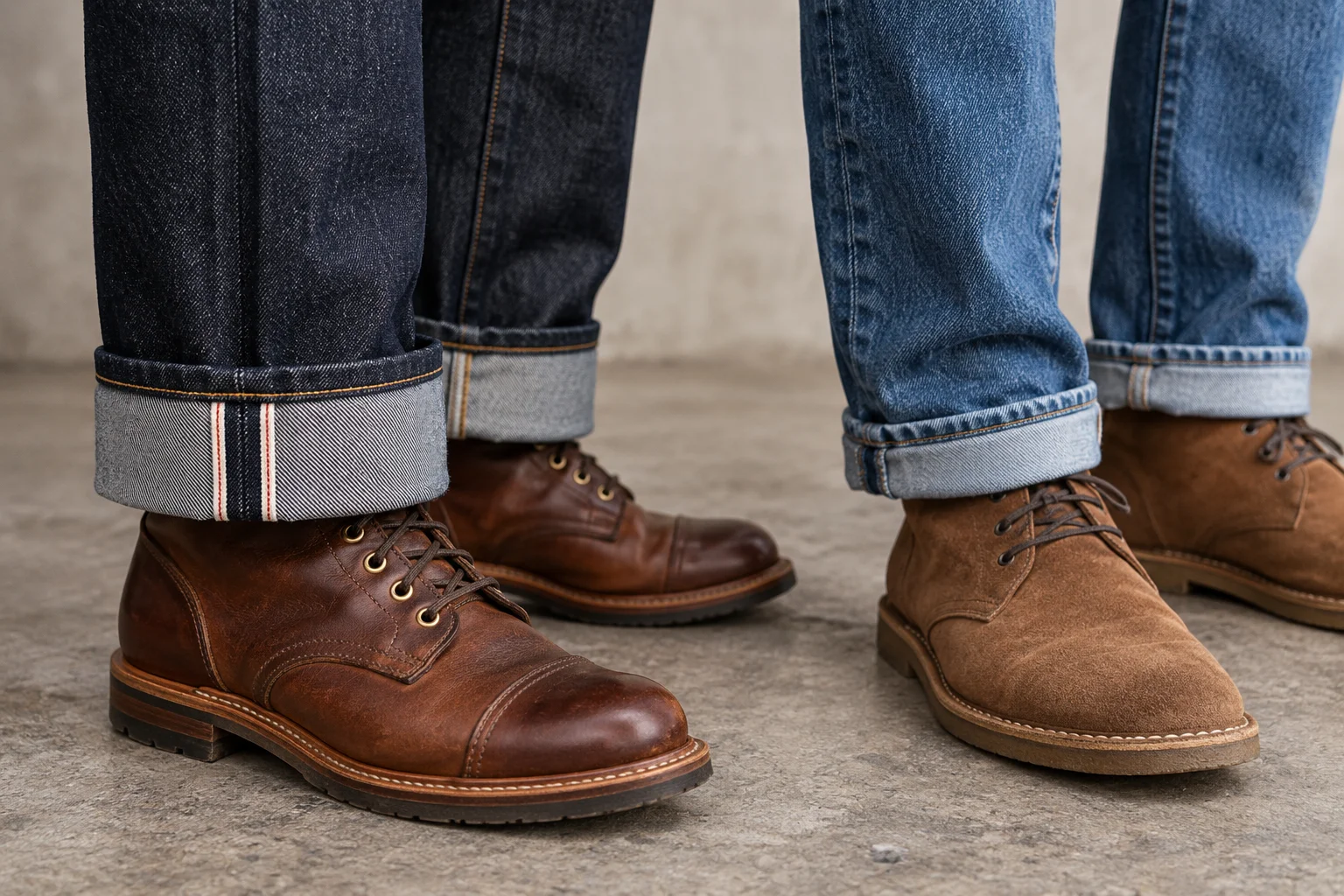
Boots can handle a larger cuff because the footwear is visually heavier. A deep single cuff or Japanese-style cuff works especially well with lace-up work boots and heritage-inspired footwear.
Avoid rolling the jeans so high that a large strip of sock is exposed unless that is clearly intentional. The cuff should normally sit close to the top of the boot. For more footwear combinations, our casual shoes for men guide covers trainers, loafers and smarter casual options.
For relaxed office environments where dark denim is permitted, compare the full outfit against our business casual jeans guide. A small, clean cuff is easier to dress up than a large heritage-style turn-up.
How to Cuff Selvedge Jeans
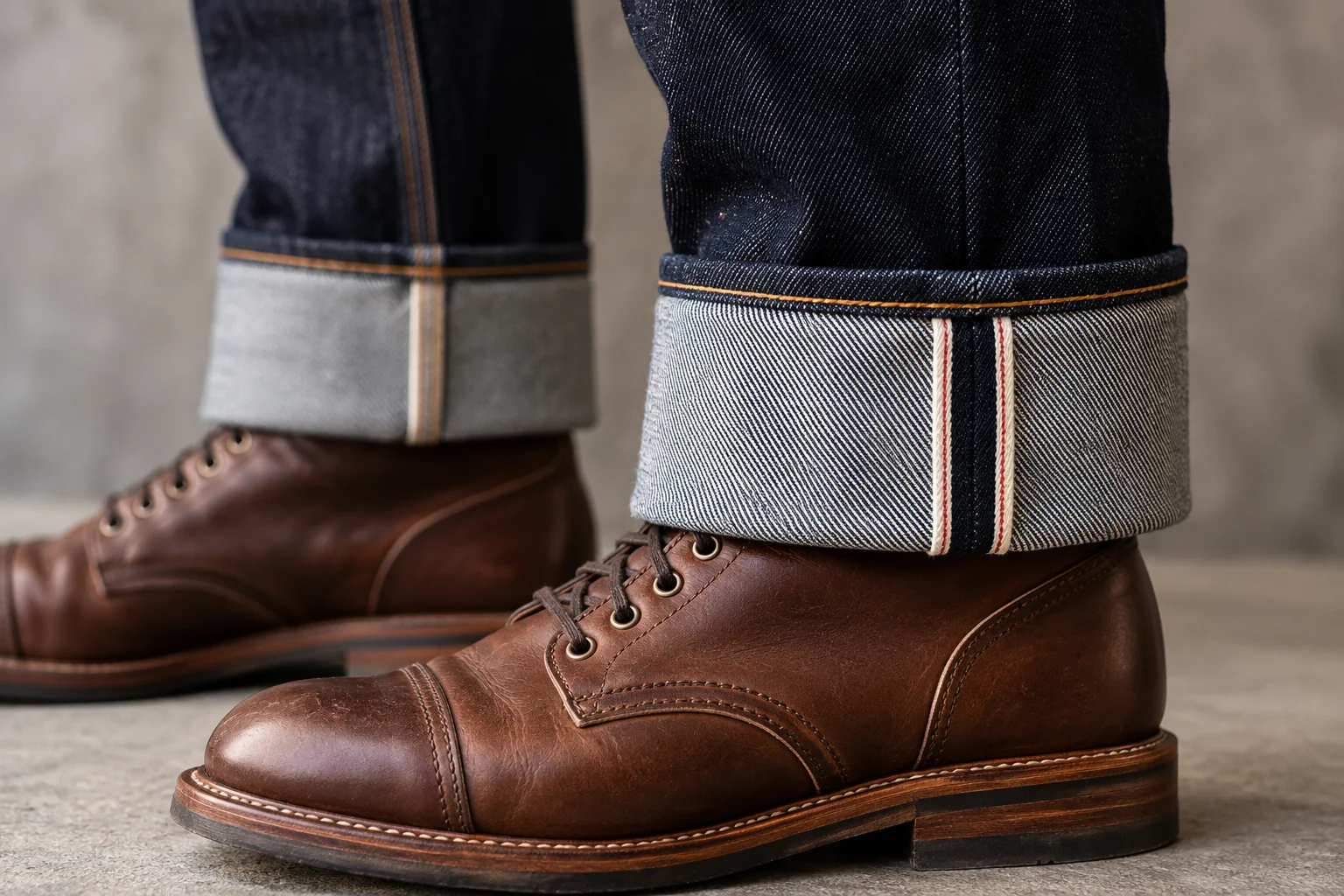
Selvedge denim has a self-finished edge along the fabric, and cuffing can reveal that edge at the outseam. This is one reason cuffed selvage jeans are common in raw-denim styling.
A single cuff is enough if you only want to reveal the edge. A Japanese cuff is more decorative: start with a larger fold, then turn part of it up again so the hem stitching remains visible. This works best when the jeans have enough extra inseam to support the fold without ending too high above the shoe.
Remember that selvage and raw denim are not the same thing. Selvedge describes the woven edge. They often appear together, but one does not automatically mean the other.
How to Cuff Jeans That Are Too Long
If jeans are only a little long, use a double cuff. If they are several inches too long, a large cuff may solve the length but can distort proportions, especially on slimmer frames.
A useful test is to wear the jeans with your normal shoes and make the smallest cuff that removes the unwanted break. If that requires an unusually tall fold every time, professional hemming is the better long-term fix.
Cuffing is therefore a styling choice first and a temporary length adjustment second. It shouldn’t replace proper alterations when the inseam is substantially wrong.
How to Cuff Jeans So They Stay
Stiff, heavier denim holds cuffs more easily than soft stretch denim. To stop a cuff from unfolding:
- Make each fold even and press it flat with your hands.
- Use two smaller folds instead of one loose oversized roll.
- Keep the cuff width consistent around the whole leg.
- On softer denim, lightly press the fold after washing if the care label permits ironing.
- If the cuff repeatedly falls, the fabric may be too soft for that cuff style.
A pinroll also stays more securely on tapered jeans because the tucked fabric creates extra tension around the ankle.
When Should Men Cuff Jeans?
Cuff jeans when the turn-up improves the proportion between the jeans and the shoes. It works especially well in casual and semi-casual outfits, with selvage denim, or when you want to show more of a good pair of boots or trainers.
Leave jeans uncuffed when the cut is already the right length, when the denim looks very formal, or when the shape depends on a flared hem. For a cleaner office look, uncuffed dark denim is generally easier to combine with the kind of outfits shown in our men’s business casual outfits guide.
Cuffs also make an outfit read more casual. If you are trying to push jeans toward the smarter end of business casual, keep the fold narrow and tidy or skip it completely.
Common Cuffing Mistakes
| Don’t | Try instead | Why |
|---|---|---|
| Use a huge cuff on skinny jeans | Use a small single or double cuff | The scale matches the narrow leg |
| Pinroll wide-leg denim | Use a broad single cuff | Pinrolling fights the natural width |
| Cuff bootcut jeans tightly | Hem them or leave them full length | The flare is designed to sit over footwear |
| Make each leg a different height | Check both cuffs in a mirror | Uneven cuffs look accidental |
| Roll repeatedly until the cuff is bulky | Use fewer, cleaner folds | Excess fabric creates a heavy ankle |
FAQs
How do you cuff jeans for men?
Start with a single fold of around 2–5 cm. If the jeans are still too long, fold the hem once more. Keep the width even, and make sure both cuffs finish at the same height.
Should I cuff my jeans?
Cuff them if you want a more casual finish, need to remove a little excess break, or want to show more of your footwear. Leave them uncuffed if the full-length silhouette already looks cleaner.
Can you cuff wide-leg jeans?
Yes, as long as the denim has enough structure to hold the fold. A wider single cuff usually suits the scale of wide-leg jeans better than a narrow pinroll.
How do you cuff baggy jeans?
Use a broad single cuff or a loose double cuff. The cuff should look proportionate to the wider leg, not tiny and tight around the ankle.
How do you cuff straight-leg jeans?
A single or double cuff works best. Straight-leg jeans also work well with Japanese cuffs when there is enough extra length and the denim is substantial enough to hold its shape.
How do you cuff jeans with boots?
Use a slightly deeper cuff and let the hem finish close to the top of the boot. Heavy boots can visually support a larger cuff better than slim trainers can.
Can you cuff bootcut jeans?
You can, but it usually disrupts the intended flare. If bootcut jeans are too long, hemming usually preserves the shape better than rolling.
How do you cuff jeans that are too long?
Try a double cuff first. If you need a very large fold every time, the inseam is probably too long, and hemming will look cleaner.
The Practical Choice
For most men, a neat single or double cuff is the easiest place to start. Use a wider cuff for relaxed straight-leg or heavyweight denim, and reserve the Japanese cuff for jeans with enough extra length to show the hem and selvage cleanly. Match the cuff to the shoe, keep both sides even, and avoid forcing a cuff onto a jean shape that works better at full length. For a tighter everyday wardrobe, our capsule wardrobe for men guide shows how dark denim can work with shirts, knitwear, and casual footwear.
Not sure what to wear?
Use our Men's Outfit & Dress Code Generator to get a personalised outfit based on your occasion, workplace and weather.
Try the Outfit Generator →