
Rapid Style Summary
Business casual for men sits between a full suit and jeans-and-a-T-shirt — think a smart shirt, tailored trousers or chinos, and clean shoes, minus the tie. This guide breaks down what business casual actually looks like, how it differs from business professional, and how to build outfits that work for UK and US offices without overthinking it every morning.
Table of Contents
Key Points
- Business casual means a collared shirt (no tie needed), tailored trousers or chinos, and smart shoes — no jeans, trainers, or T-shirts.
- Best for: offices without a strict dress code, client meetings, casual Fridays that still need to look put-together.
- Avoid: anything you’d wear to the gym or a football match — trainers, hoodies, graphic tees.
- Typical cost range: £50-£150 / £ 60-£ 180 for a solid starter outfit.
Everything You Should Know
Ever got dressed for work and second-guessed yourself halfway out the door, wondering if chinos are too laid-back or too dressy for today’s meeting? You’re not alone — business casual is one of the most misunderstood dress codes out there, mostly because it means something slightly different at every company.
This guide covers what business casual for men actually means, how it differs from business professional, specific outfit combinations you can copy, real product picks, and the mistakes that quietly make an outfit look wrong even when every individual piece seems fine. I’ve spent years testing business casual outfits for real UK/US offices, so everything here is based on what actually works day to day, not just what looks good in a lookbook.
What Is Business Casual?
Business casual sits between business professional (suit, tie, dress shoes) and smart casual (chinos, polo, loafers). At its core, it means a collared shirt, tailored trousers or chinos, and leather shoes — no tie required, no jeans allowed, no trainers in sight.
It matters because getting it wrong in either direction sends the wrong signal — overdressing in a full suit at a startup can look like you’re trying too hard, while turning up in jeans to a client meeting can read as not taking it seriously. The line moves depending on the workplace.
In the UK, business casual tends to lean slightly more formal — a blazer stays on more often, and trousers over chinos is common in finance and law. In the US, particularly in tech and creative industries, business casual can flex further toward smart casual, with chinos and an Oxford shirt doing most of the work. Neither is “correct” — it depends on your office.
The Formality Scale
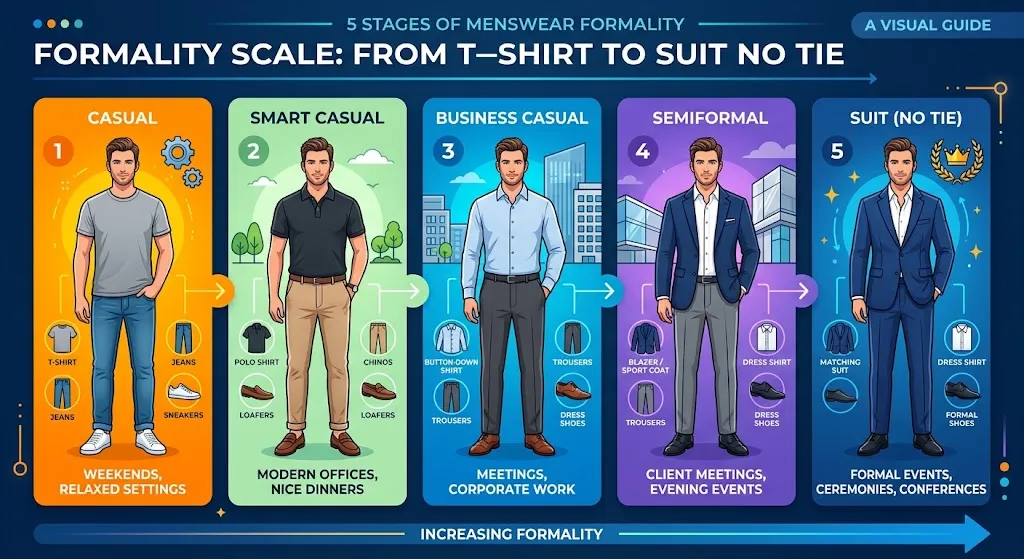
- T-shirt — most casual, skip for the office entirely.
- Polo shirt — fine for very relaxed offices or casual Friday, not a safe default.
- Chinos + button-down oxford — the business casual workhorse, works in almost any office.
- Trousers + dress shirt — dressier end of business casual, good for client-facing days.
- Suit, no tie — edges into business professional, safe for interviews or formal meetings.
Rule of thumb: more colour, more pattern, more texture = more casual. Plainer, more structured, more customized = more formal. When in doubt, dress one level up from what you think the room needs.
Quick Reference Table
| Item | Dressed Down | Baseline | Dressed Up | Never |
| Top | Polo shirt | Oxford button-down | Dress shirt + blazer | Graphic t-shirt |
| Bottom | Smart chinos | Tailored chinos | Wool-blend trousers | Ripped jeans |
| Shoes | Clean leather loafers | Derby shoes | Oxford brogues | Trainers |
| Accessories | Leather belt | Belt + simple watch | Belt, watch, pocket square | Backpack with logos |
How to Style Business Casual
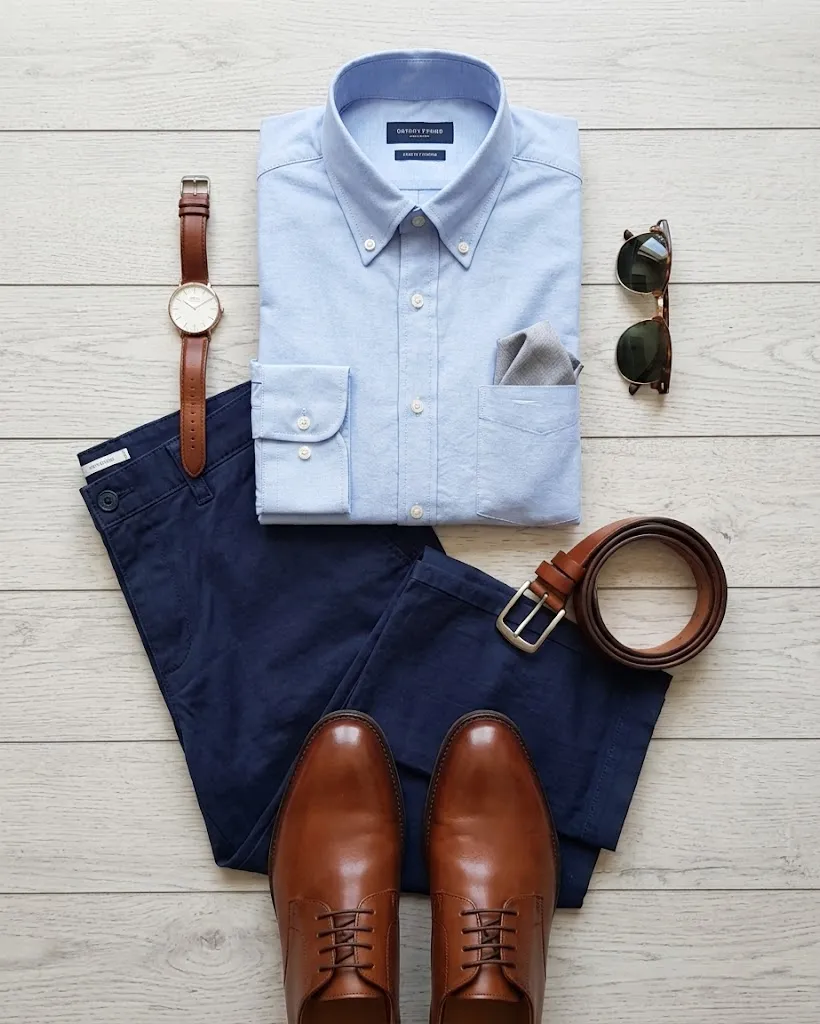
Outfit 1: The Everyday Baseline
- Top: Light blue oxford button-down shirt
- Bottom: Navy tailored chinos
- Shoes: Brown leather derby shoes
- Extras: Brown leather belt corresponding to the shoes
- Best for: A standard office day with no client meetings; works across most industries.
Outfit 2: The Client Meeting
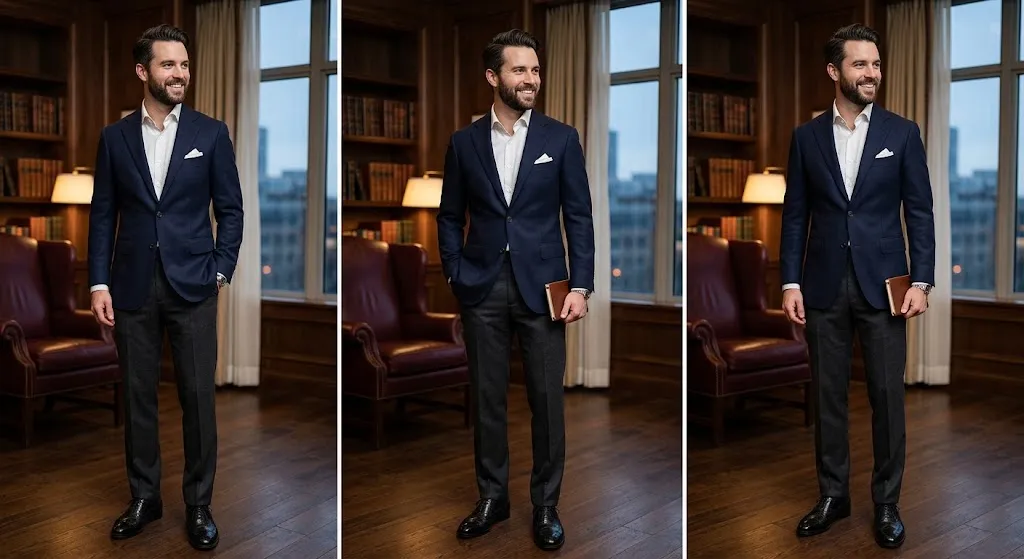
- Top: White dress shirt, navy blazer
- Bottom: Charcoal wool-blend trousers
- Shoes: Black oxford brogues
- Extras: Black leather belt, simple silver watch
- Best for: Client-facing days or presentations where you want to look one notch sharper
Outfit 3: The Relaxed Friday
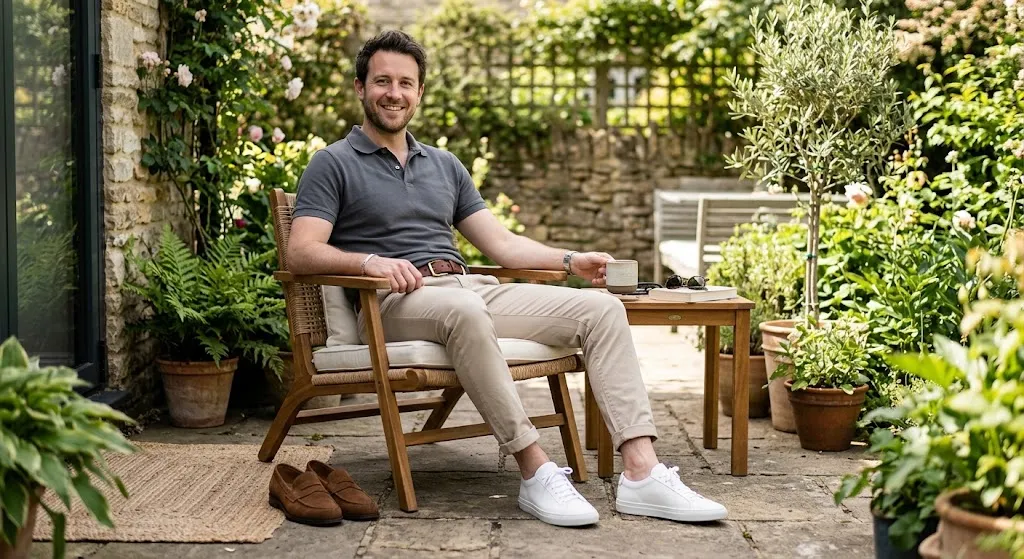
- Top: Grey merino polo shirt
- Bottom: Stone chinos
- Shoes: Clean white leather trainers or brown loafers
- Extras: Canvas belt, no watch needed
- Best for: Relaxed offices, tech/creative workplaces, or a Friday with no client contact
Best Business Casual Pieces — Our Top Picks
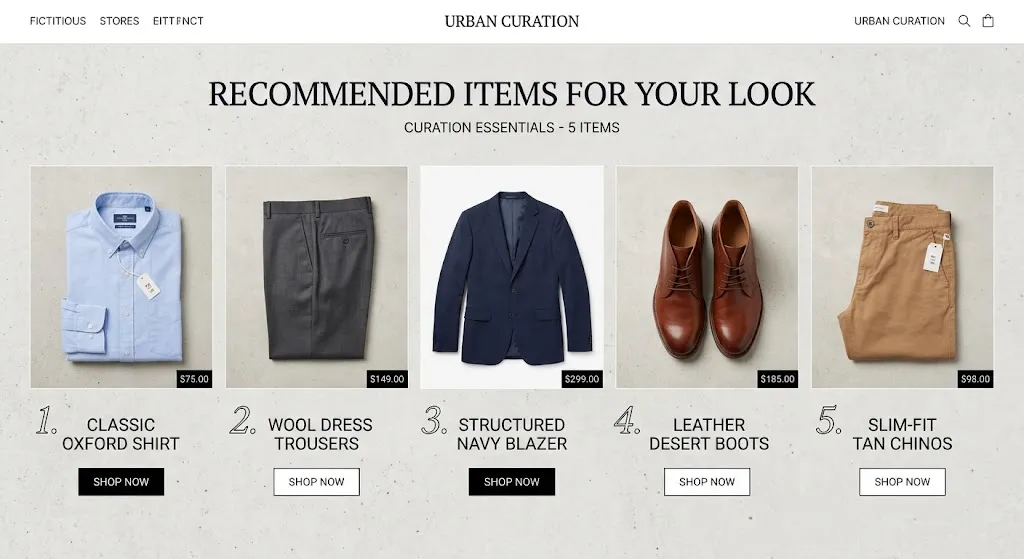
1. Charles Tyrwhitt Non-Iron Oxford Shirt
- Price: £45 / $60
- Best for: Everyday business casual, easy to layer under a blazer
- Buy at: Charles Tyrwhitt
- Why it works: Holds its shape through a full workday and doesn’t need ironing every morning.
- Downside: Slim fit runs tight through the shoulders among broader builds — check the size guide first.
2. Uniqlo Smart Ankle Pants
- Price: £40 / $50
- Best for: A chino alternative with a slightly cleaner, slightly more tailored look
- Buy at: Uniqlo
- Why it works: Stretch fabric holds a crease well and doesn’t bag out at the knee by afternoon.
- Downside: Ankle-length cut isn’t for everyone — worth trying in-store if you’re unsure about the length.
3. Reiss Slim-Fit Trousers
- Price: £98 / $130
- Best for: Client meetings and dressier business casual days
- Buy at: Reiss
- Why it works: Genuinely tailored fit that reads as intentional rather than “office trousers.”
- Downside: Price point is a step up from Uniqlo or M&S — best treated as an investment piece, not a daily rotation item.
4. J.Crew Ludlow Blazer
- Price: £180 / $220
- Best for: Layering over a shirt for client-facing days
- Buy at: J.Crew
- Why it works: Structured enough to look sharp, unstructured enough not to feel like a suit jacket.
- Downside: US-focused sizing runs slightly different from UK blazers — check the size chart before ordering.
5. Clarks Desert Boot
- Price: £90 / $115
- Best for: A slightly more business-casual shoe that still looks intentional
- Buy at: Clarks
- Why it works: Versatile enough to wear with chinos or dark jeans on more relaxed days.
- Downside: Suede needs more care than leather — not ideal in constant UK rain without a coating spray.
UK vs USA Style Differences
UK offices, especially in finance and law, tend to hold onto a slightly more formal baseline — trousers over chinos, blazers staying on longer into the day. US offices, particularly in tech and creative fields, lean more relaxed, with chinos and an Oxford shirt often being the ceiling rather than the floor.
Brand availability differs too — Charles Tyrwhitt and TM Lewin are UK staples that don’t have the same footprint in the US, while Bonobos and J.Crew are more of an American default. Uniqlo, H&M, and ASOS work across both markets. Currency matters as well — always check whether a price is genuinely comparable after conversion, since £1 doesn’t equal $1 and some brands price US stock higher than a straight conversion would suggest.
Style Swaps: Common Mistakes to Avoid
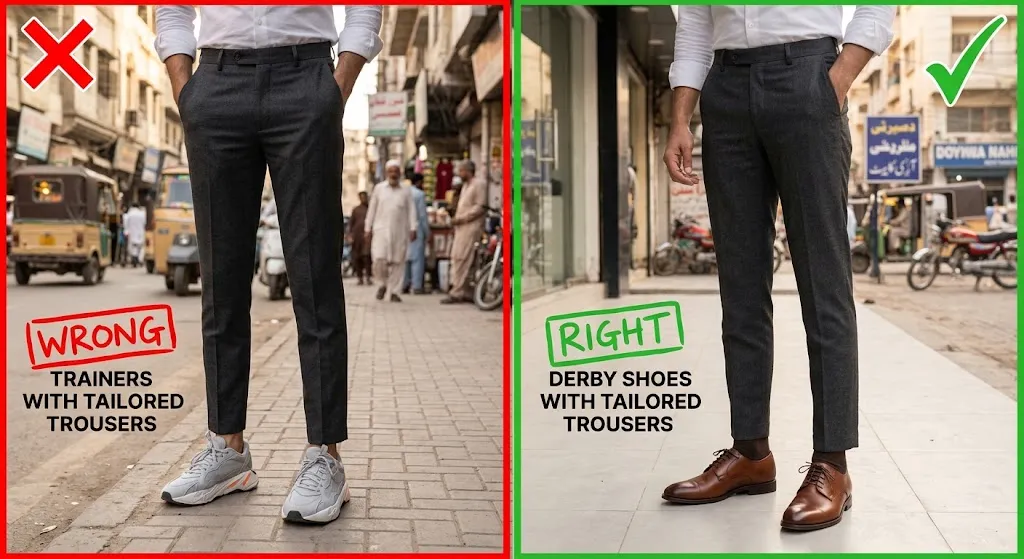
Don’t: Wear trainers with fitted trousers. Do: Wear leather derby shoes.
Why it’s a mistake: The contrast between structured trousers and sporty trainers reads as mismatched, not intentionally casual.
Better choice: Clarks Un Tailor Derby Shoe — £85 / $100
Why it works: Clean enough to pair alongside tailored trousers without looking like you tried too hard.
Don’t: Wear a slim polo shirt under a blazer. Do: Wear a collared dress shirt.
Why it’s a mistake: Polo collars don’t sit right under a blazer lapel and often bunch or twist.
Better choice: Charles Tyrwhitt Slim Fit Dress Shirt — £40 / $55
Why it works: A proper collar sits flat under a blazer and looks deliberate, not accidental.
Don’t: Wear a logo backpack to client meetings. Do: Carry a plain leather or canvas bag.
Why it’s a mistake: A branded gym-style backpack undercuts an otherwise sharp outfit and reads as an afterthought.
Better choice: Fossil Buckner Leather Messenger Bag — £150 / $170
Why it works: Neutral enough to work with any business casual outfit without pulling focus.
Don’t: Wear a novelty or loud printed tie. Do: Skip the tie entirely, or wear a plain/subtle pattern.
Why it’s a mistake: Business casual generally doesn’t call for a tie at all — wearing one, especially a loud one, can actually overdress the look.
Better choice: Reiss Silk Tie (subtle stripe) — £55 / $70, for the rare day you do need one
Why it works: A subtle pattern reads as considered rather than distracting, for the occasions a tie is actually necessary.
Don’t: Wear scuffed or unpolished leather shoes. Do: Keep one pair properly maintained.
Why it’s a mistake: Scuffed shoes undercut an otherwise sharp outfit faster than almost anything else — it’s the first thing people notice.
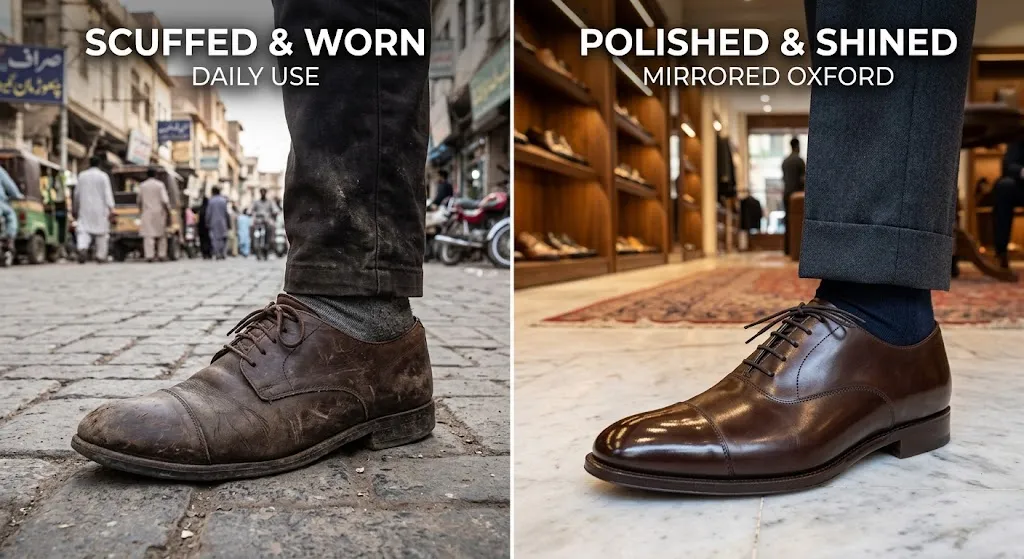
Better choice: M&S Leather Oxford Shoes — £69 / $85
Why it works: A budget-friendly pair that still looks sharp if you keep it polished and rotate it with a second pair.
Budget Guide — Every Price Point
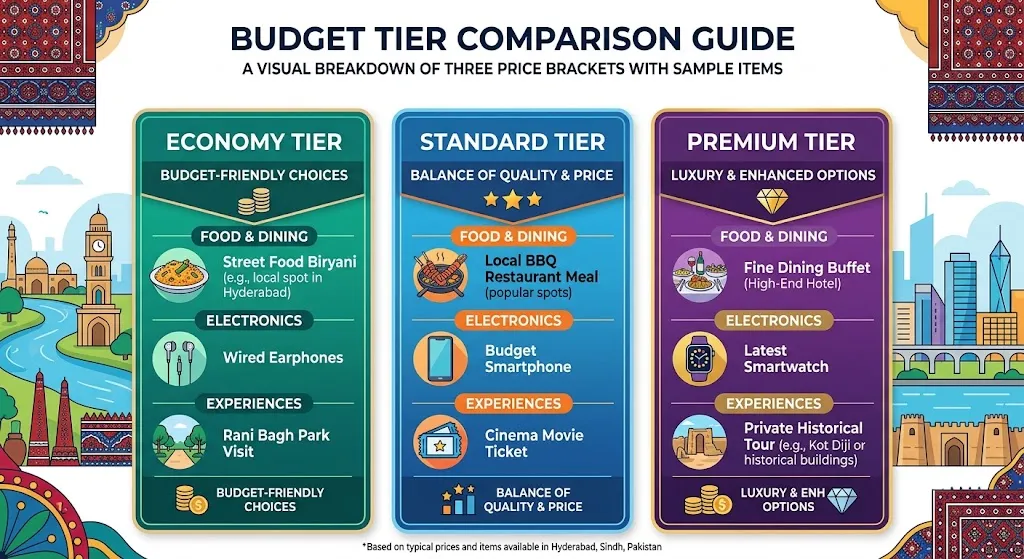
Under £50 / $50:
- Shop at: Uniqlo, H&M, M&S, Old Navy
- Focus on: Getting the basics right — one good Oxford shirt, one pair of chinos.
- Best value: Uniqlo Oxford shirts and chinos consistently punch above their price
£50-150 / $50-150:
- Shop at: Charles Tyrwhitt, Next, J.Crew, Banana Republic
- Best quality-to-price: A proper pair of leather derby shoes, a non-iron dress shirt
- Investment pieces: A well-fitted pair of wool-blend trousers
£150+ / $150+:
- Shop at: Reiss, Nordstrom, higher-end J.Crew pieces
- Worth it for: A blazer you’ll wear multiple times a week
- Why spend more: A well-tailored blazer holds its shape for years, while a cheap one loses structure within months.
Seasonal Notes
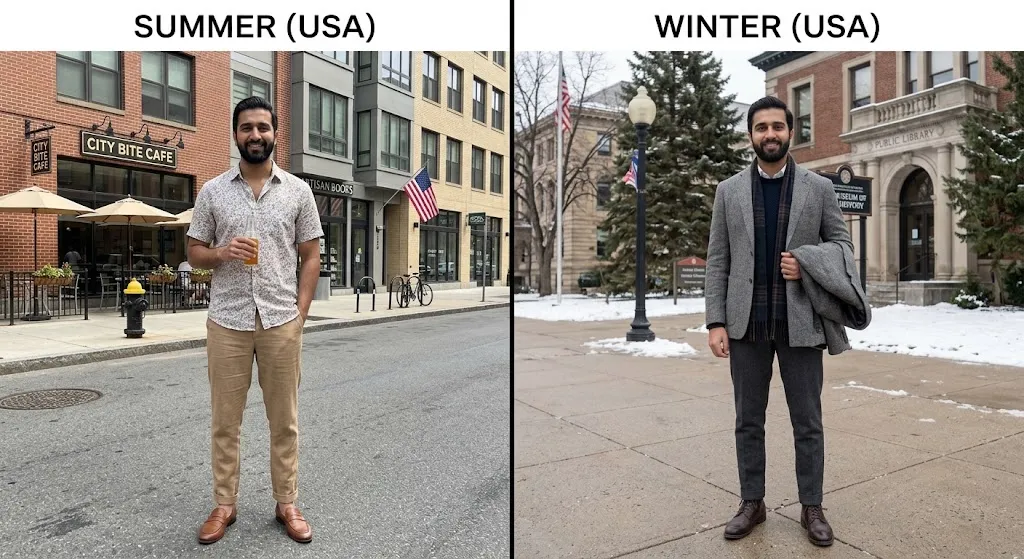
Summer version: Swap wool-blend trousers for lightweight cotton or linen-blend chinos, and short-sleeve Oxford shirts are increasingly acceptable in relaxed offices.
Winter version: Layer a business casual sweater in merino wool under a blazer, and switch to slightly heavier wool-blend trousers.
UK weather note: Keep a lightweight water-resistant jacket at your desk — British weather rarely gives fair warning before the walk to a meeting turns into a downpour.
Frequently Asked Questions
Q: What is business casual for men?
A: Business casual for men means a collared shirt (like an Oxford button-down), tailored trousers or chinos, and leather shoes — no tie required, no jeans or trainers. It sits between business professional and smart casual.
Q: Can I dress in jeans for business casual?
A: Generally speaking, no. Even dark, unripped jeans are deemed too casual for business casual in most offices. Unless your office has confirmed that jeans are OK, chinos or fitted trousers are a safer option.
Q: Where should I shop for business casual outfits?
A: Uniqlo and M&S work well for budget basics, Charles Tyrwhitt and Next for mid-range UK pieces, and J.Crew or Banana Republic for US shoppers. Reiss is a solid step-up option in both markets.
Q: What’s the difference between business casual and smart casual?
A: Business casual leans slightly more formal — a collared shirt and tailored trousers are the baseline. Smart casual allows more flexibility, like a polo shirt or well-fitted knitwear, and sits one notch more relaxed.
Q: Is business casual different in the UK vs the US?
A: UK offices, especially in finance and law, tend to stay closer to trousers-and-blazer. US offices, particularly in tech, often treat chinos and an Oxford shirt as the ceiling rather than the floor.
Q: How much should I spend building a business casual wardrobe?
A: A solid starting outfit — shirt, chinos, and shoes — runs roughly £50-£150 / 60-180 depending on where you shop. You don’t need to buy everything at once; build it piece by piece.
Final Style Notes
Business casual for men isn’t complicated once you know the baseline: a collared shirt, tailored trousers or chinos, and leather shoes, no tie required. People usually go wrong in the details — trainers worn with tailored trousers, a scuffed shoe, a backpack that doesn’t match the rest of the outfit.
Don’t be afraid to experiment within the boundaries — a good watch, a carefully selected belt, or swapping in a desert boot on a more relaxed day can make an outfit feel like yours rather than a uniform. If you’re still working out where your office’s line actually sits, my guides on smart casual and business casual sneakers dig into the finer details, and the full Windsor knot guide is worth a look for the days a tie does come out.
Not sure what to wear?
Use our Men's Outfit & Dress Code Generator to get a personalised outfit based on your occasion, workplace and weather.
Try the Outfit Generator →