
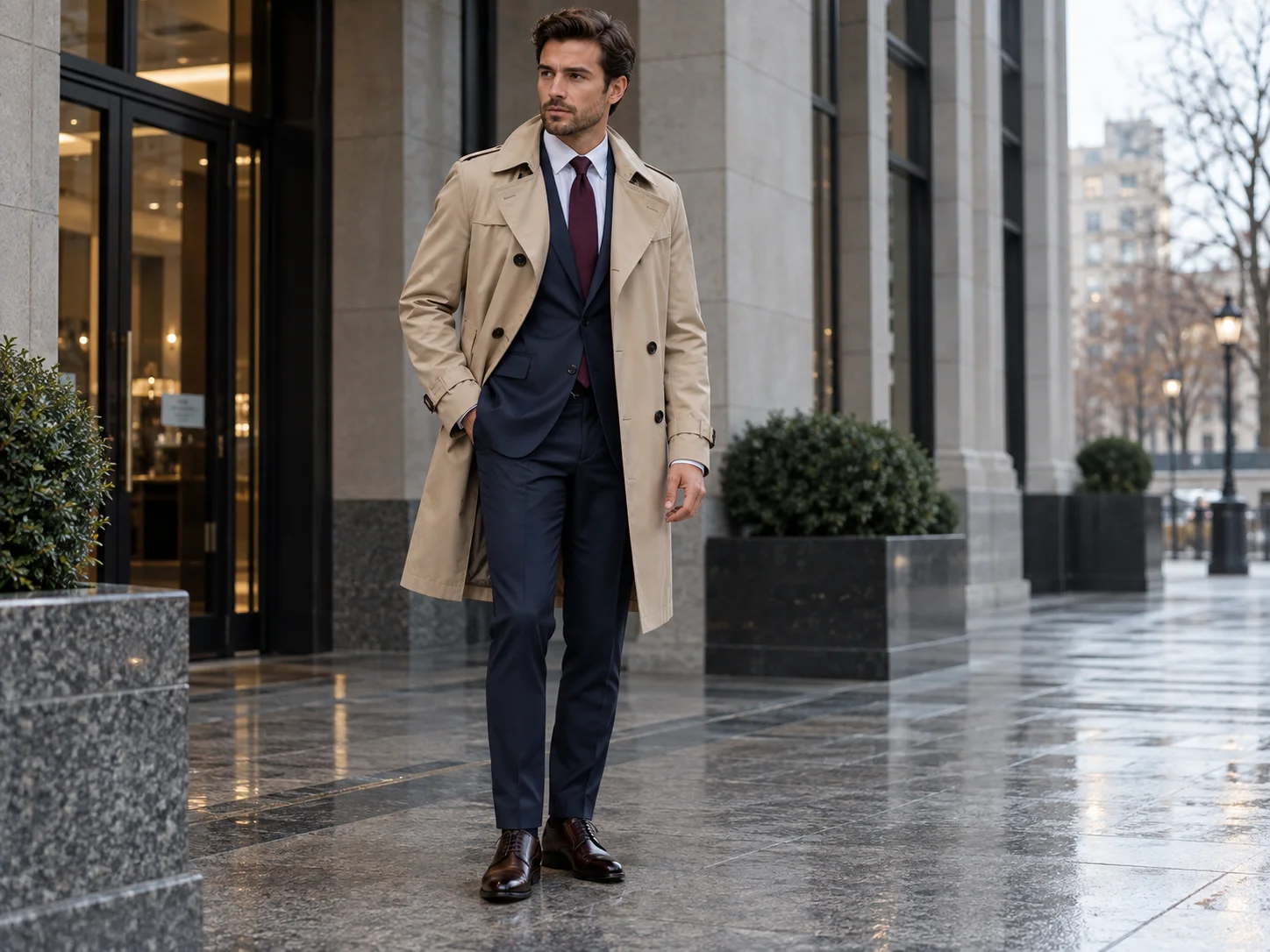
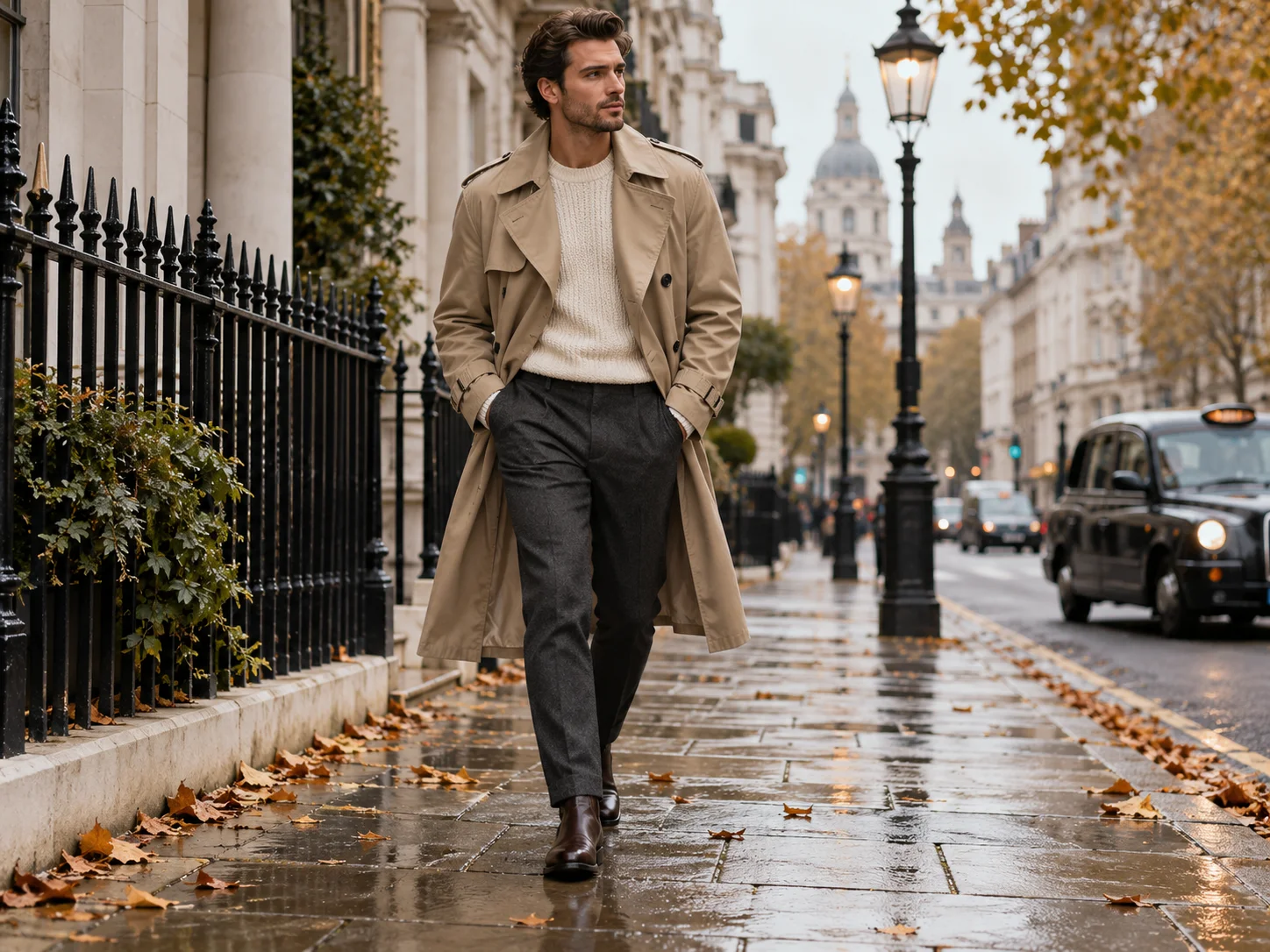
Men trench coat styling is easiest when you treat the coat as a practical outer layer first and a statement piece second. A well-cut trench should protect your tailoring or knitwear, add shape without bulk, and end at a length that equalizes your height and trousers.
For most wardrobes, beige or stone is the typical choice, black is the sharper urban option, and navy is the easiest alternative if you already wear a lot of grey, blue, and brown.
Table of Contents
What Makes a trench jacket Different?
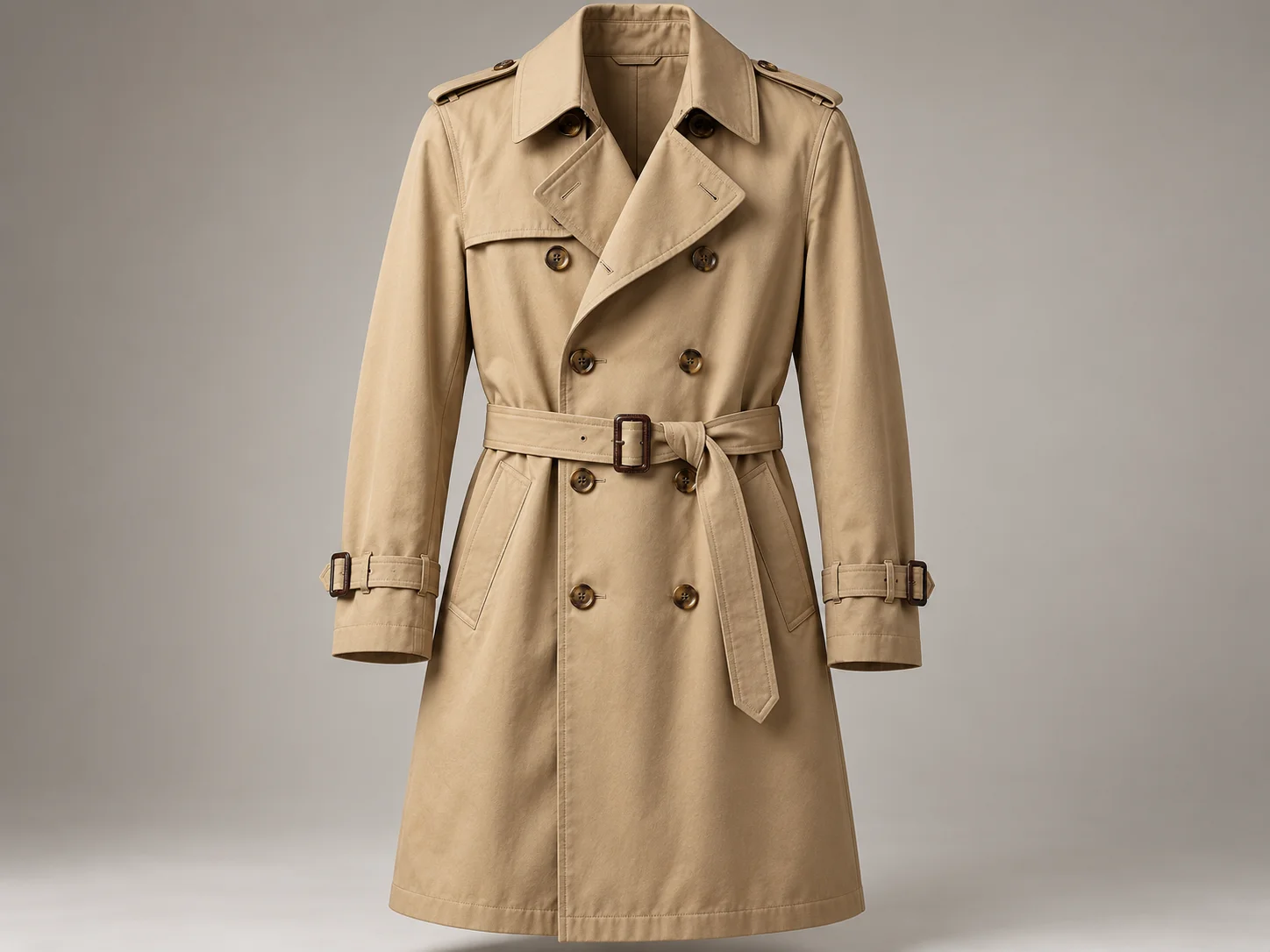
A traditional trench is a belted raincoat with military-rooted details such as epaulets, a storm flap, cuff straps and a double-breasted front. The classic version is made from tightly woven cotton gabardine rather than heavy winter wool, which is why it works especially well in changeable spring and autumn weather.
Burberry’s heritage explains that Thomas Burberry developed gabardine in 1879, and the modern Heritage collection still uses details such as belts and epaulets. Current Burberry fits include the structured Kensington and the closer-cut Chelsea. Burberry’s official trench-coat heritage page is a useful reference for the original construction.
The trench also sits comfortably within business casual menswear because it adds polish without requiring a formal overcoat.
Trench Coat Fit and Sizing
The shoulders should sit cleanly without obvious pulling, but the coat must still leave enough room for the layers you actually plan to wear underneath. If you regularly wear tailoring, test the coat over a blazer or suit jacket rather than over a T-shirt.
The chest should close without strain, the sleeves should cover the jacket sleeves beneath, and the belt should define the waist without bunching the fabric. A slightly relaxed fit is better than a coat that looks sharp when open but becomes tight as soon as you button it.
For office use, compare the silhouette with the layering principles in our business casual suit guide.
Choosing the Right Trench Coat Length
For most men, around-the-knee is the safest classic length. A coat that ends a little above the knee feels more modern and mobile; a longer version gives more rain protection and creates a stronger traditional silhouette.
Very short versions can lose some of the proportion that makes a trench distinctive. On the other hand, an extra-long coat can overwhelm a shorter frame unless the rest of the outfit is kept clean and fitted.
If you wear tailored trousers regularly, knee length usually creates the most balanced line. Our charcoal grey suit guide shows how trouser and shoe proportions affect a formal outfit overall.
How to Style Beige, Black and Navy
A beige trench works with navy, cream, charcoal, olive and dark denim. For an easy men trench coat outfit, wear it open over a blue Oxford shirt, dark jeans and brown loafers or boots.
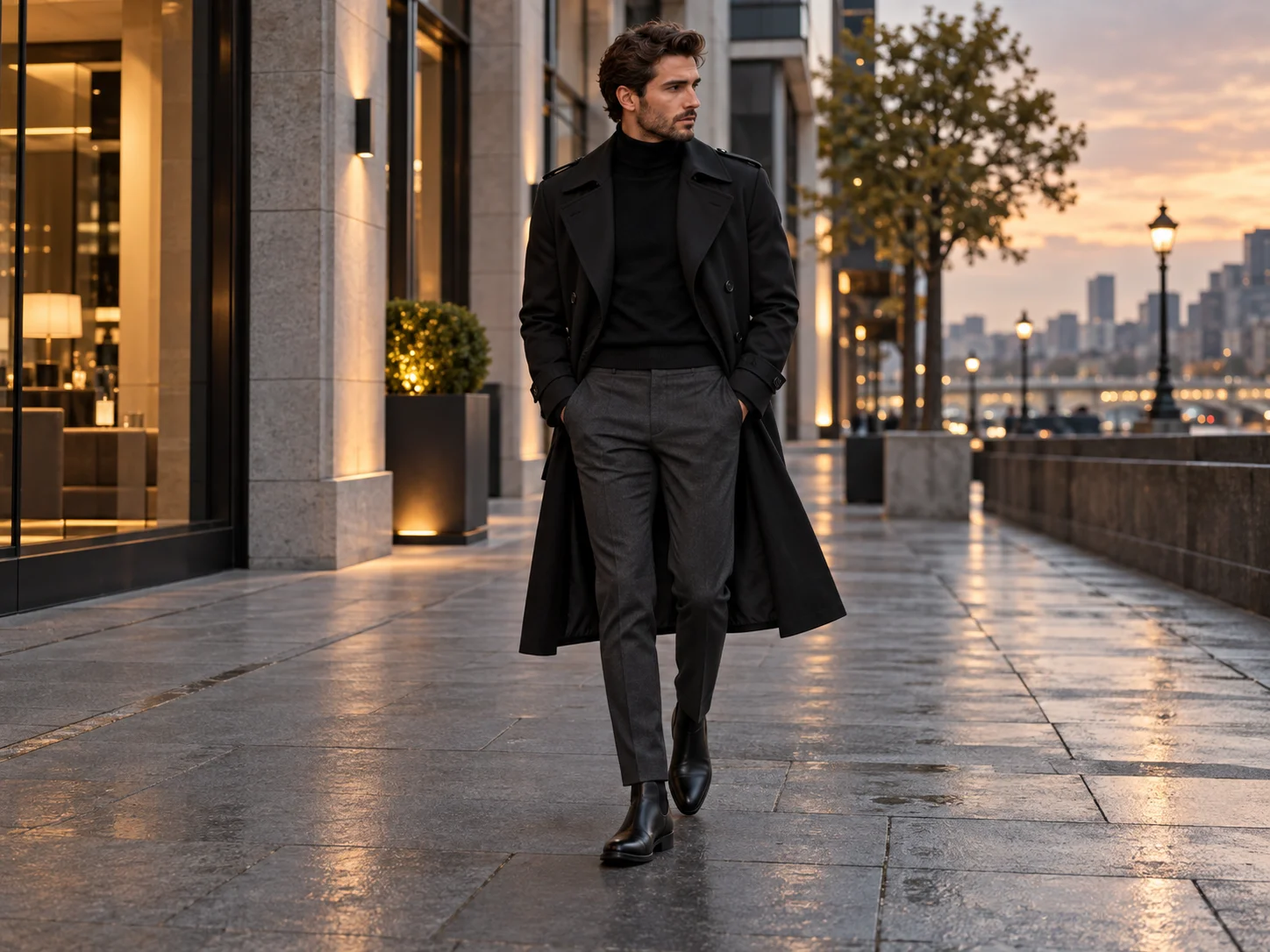
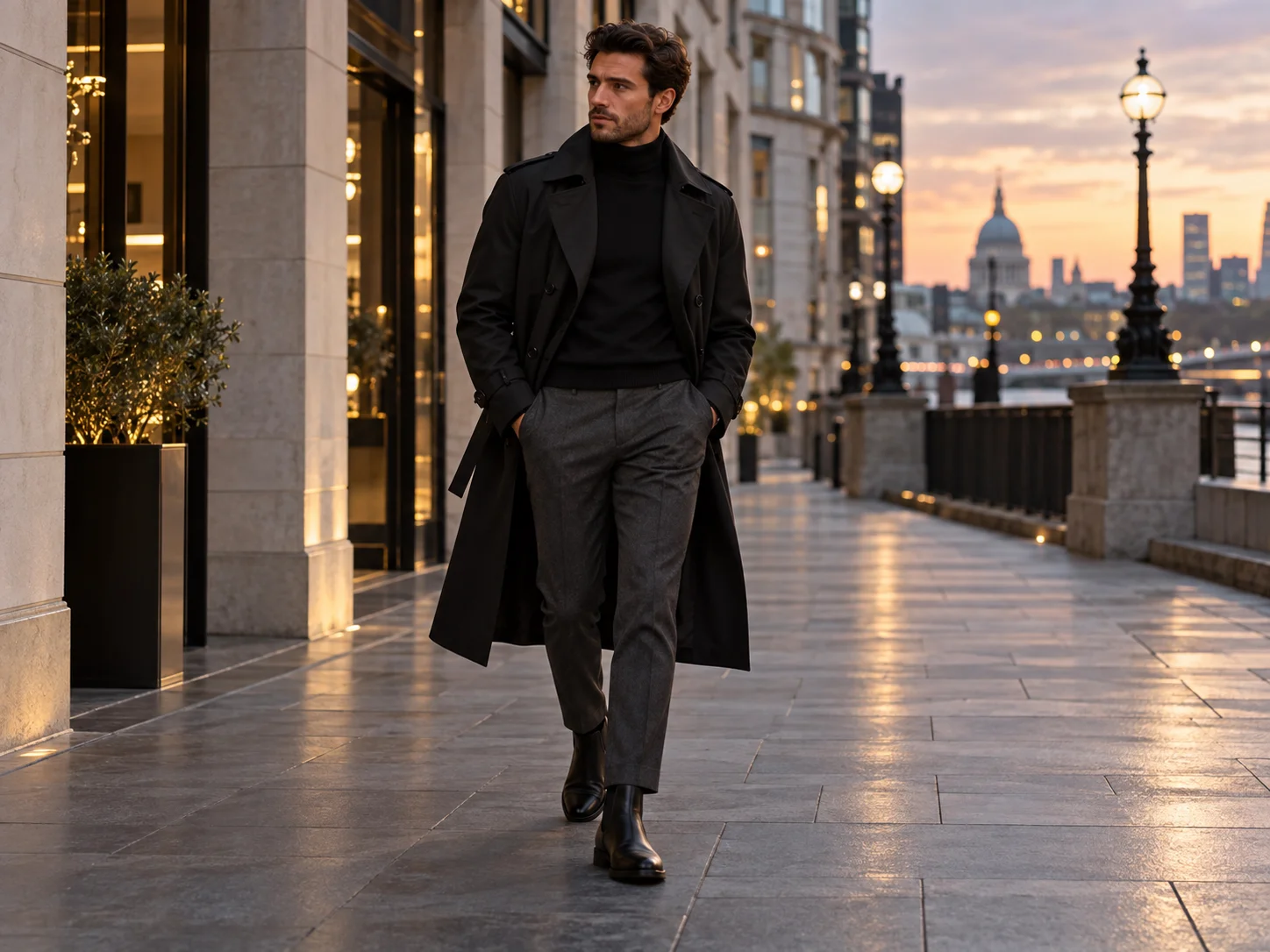
A black men’s trench coat feels more urban and minimal. Pair it with a black or charcoal knit, grey trousers, and black Chelsea boots. Avoid overloading the outfit with bright accessories; the clean monochrome line is the main advantage.
Navy is quieter than black and less traditional than beige. It works particularly well with grey flannel, stone chinos and brown leather shoes. For more combinations at this degree of formality, see our smart casual guide.
How to Wear a stylish coat Over a Suit
A men trench coat over suit should be roomy enough through the shoulders and upper back to cover the suit jacket without compressing it. The trench should also be at least as long as the jacket underneath, ideally longer.
Beige over navy is the classic combination. Black works well over charcoal or dark navy, while stone can soften a darker business wardrobe. Keep footwear equally polished: Oxfords, Derbies, or refined loafers are safer than chunky casual shoes.
If your office dress code is less formal, our men’s business casual outfits guide gives easier ways to combine tailoring with practical outerwear.
What to Layer Under a duster coat
The best layer depends on the temperature and setting. For work, use a suit, blazer, Oxford shirt,t or fine-gauge knit. For weekends, a crewneck sweater, polo, denim shirt, or clean T-shirt can all work.
A trench isn’t meant to provide heavy insulation on its own, so layering matters in colder weather. A half-zip or fine wool jumper gives heat without adding too much bulk; see our men’s half-zip jumper guide for practical combinations.
Best Seasons and Occasions for a macintosh
Spring and autumn are the natural seasons because a classic trench is designed as lightweight weather protection. It is especially useful on rainy commutes, cool evenings, business travel, and transitional days when a heavy wool overcoat would be too warm.
It can also work in a mild winter with knitwear underneath. For genuinely cold conditions, though, a padded or wool outer layer may be more practical. Our winter business casual guide covers heavier cold-weather layering.
Winter, Wool and Hooded Versions
A men trench coat winter option may use a removable liner, heavier fabric, or insulated construction. These versions keep the trench silhouette while improving warmth.
Wool trench-style coats are warmer and softer but behave more like overcoats than traditional rain trenches. Hooded versions are practical in wet weather, although the hood makes the design more casual and less suited to formal tailoring.
Choose function first: if your main problem is rain, give priority to a tightly woven, weather-resistant shell; if your main problem is cold, insulation and wool content matter more.
How to Tie the Trench Coat Belt
When the coat is closed, buckle the belt normally for the cleanest traditional look, or use a simple knot if you prefer a softer shape. Avoid an oversized bow at the front, which can make a men’s coat look fussy.
When wearing the coat open, you can loosely knot the belt behind your back to keep the ends controlled. Bring both ends behind you, cross them once, make a simple flat knot, then tighten only enough to stop the belt hanging loose. Do not pull so hard that the back of the coat bunches.
Burberry and Other Buying Options
Burberry remains the reference point for heritage trench construction. Its current Heritage range includes classic details, Yorkshire manufacturing and multiple fits. The brand’s official material currently identifies the Kensington and Waterloo among its signature trench styles, while its trench-craft pages also describe the close-cut Chelsea.
Other retailers produce modern versions at lower prices, including lightweight cotton trenches, water-resistant commuter coats and wool-blend interpretations. Rather than buying by brand alone, compare:
- shoulder and chest room over your normal layers;
- finished coat length;
- fabric weight and water resistance;
- lining or removable insulation;
- button, buckle and belt construction;
- whether alterations are realistic if the sleeves are too long.
For footwear with a trench, polished loafers, Derbies and Chelsea boots are reliable choices. Our tassel loafers guide covers one of the smarter options.
FAQs
How to style a black trench coat men?
Keep the palette restrained: black coat, charcoal or black knitwear, grey trousers and black leather boots or shoes. A white shirt underneath adds contrast for work.
Where should a topcoat fall men?
Around the knee is the safest traditional point. Slightly above the knee looks more contemporary, while longer cuts provide more coverage and a stronger classic silhouette.
What to wear with a overcoat men?
For smart casual, use knitwear, an Oxford shirt, chinos, or dark denim. For work, layer it over tailored trousers, a blazer, or a full suit.
How to tie a greatcoat belt behind your back men?
Cross the belt ends behind your back and make a simple flat knot. Keep it loose enough that the coat falls naturally rather than gathering at the waist.
Where to buy a jacket men?
Look at specialist outerwear brands, department stores, and established menswear retailers. Compare fit, fabric and return policy rather than choosing only by price, especially if you need room for alteration underneath.
The Best Starting Point
If you are buying your first trench, choose beige, stone, navy or black in a knee-length cut with enough shoulder room for a lightweight knit or blazer. That gives you the broadest range of use, from office commutes to smart-casual weekends.
Not sure what to wear?
Use our Men's Outfit & Dress Code Generator to get a personalised outfit based on your occasion, workplace and weather.
Try the Outfit Generator →