Quick answer: For a men UK office wardrobe, start with Oxford shirts, chinos or tailored trousers, fine knitwear and polished loafers or Derbies. Shop high-street basics before investing in a blazer, and check your employer’s dress code first. Fit, fabric and versatility matter more than a large wardrobe or a particular brand.
This guide focuses on what to buy, where to shop, and how to compare value, rather than repeating general rules for smart office dressing. It is written for men building a practical work wardrobe, from first-job basics to smarter client-facing outfits. Prices and availability vary, so treat store suggestions as options to investigate, not promises about live stock.
Table of Contents
What belongs in a business-casual wardrobe?
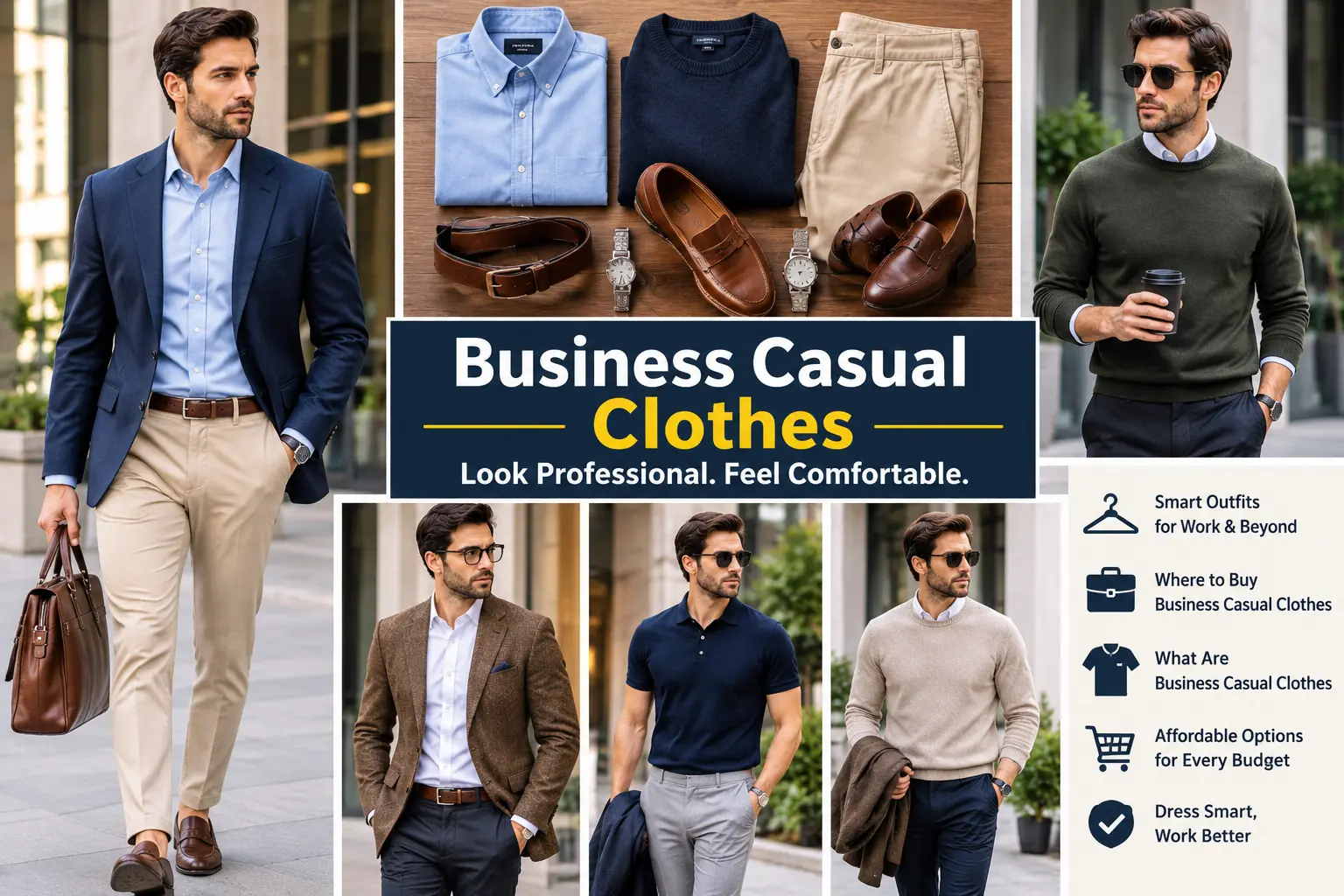
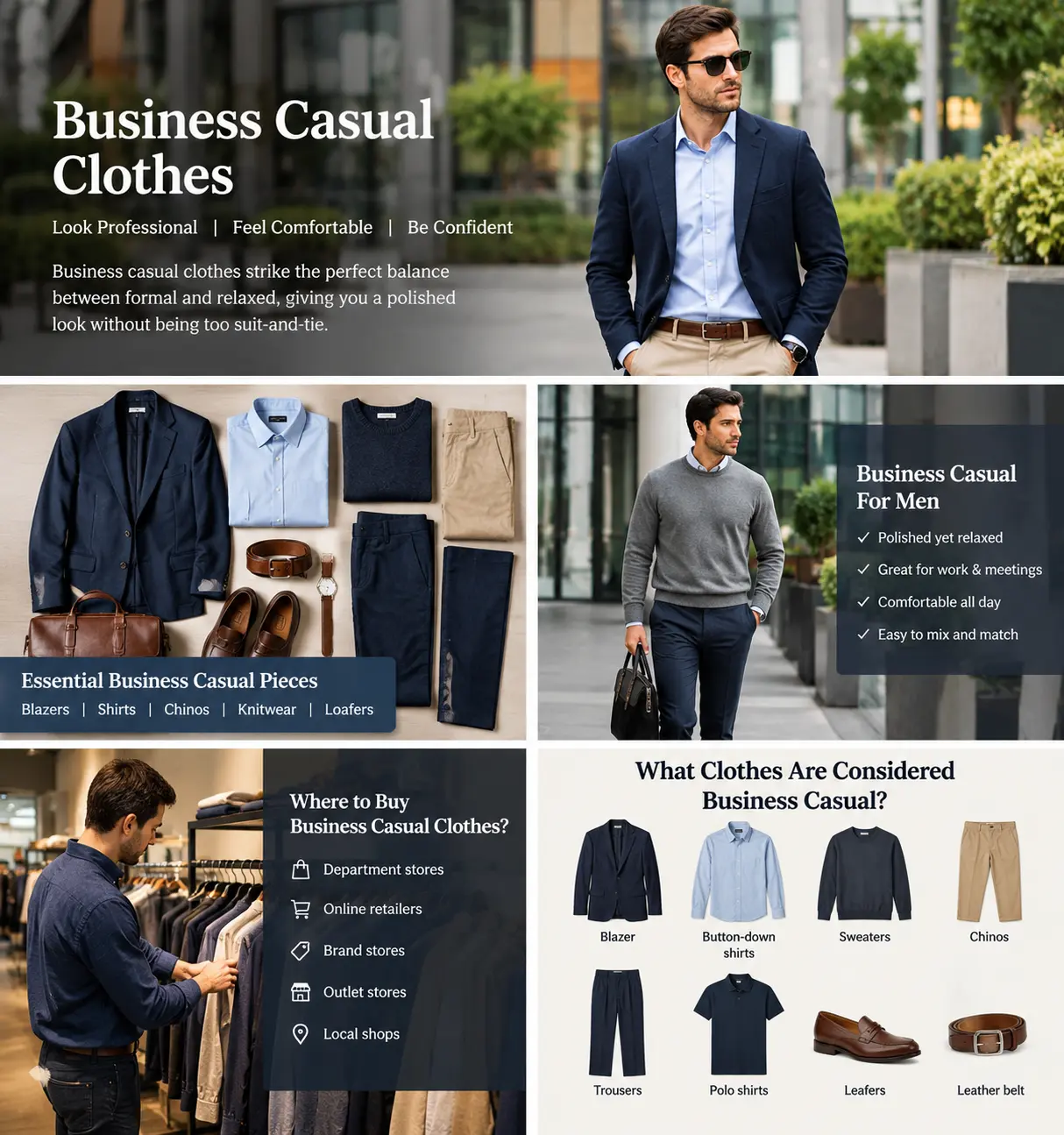
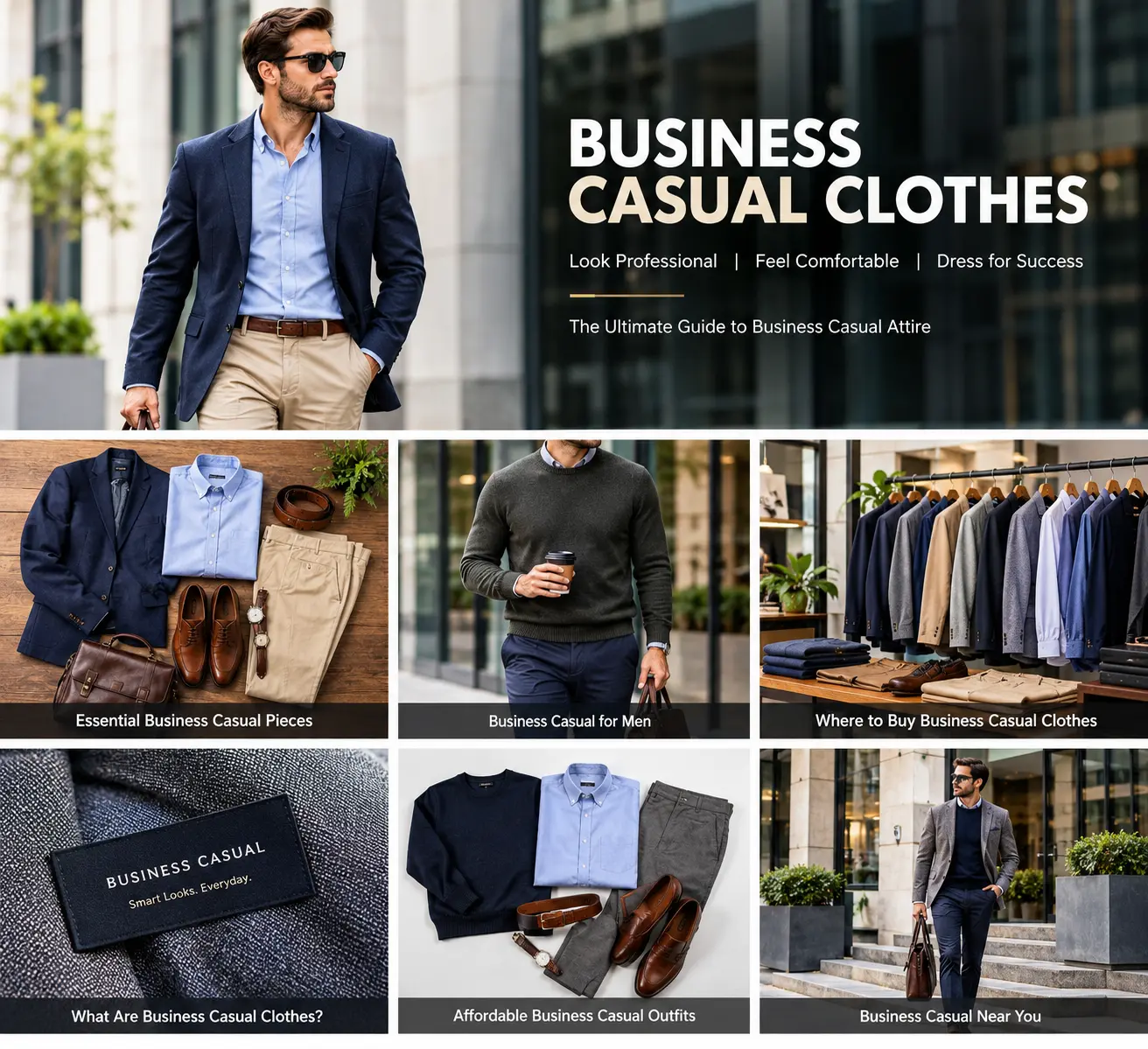
Start with versatile pieces you can mix and match without buying a complete outfit each time. A reliable foundation is two collared shirts, two pairs of tailored trousers or chinos, one fine-knit jumper and tidy leather shoes. Add a soft blazer once the essentials fit properly. Whether a polo or smart trainer is acceptable depends on your workplace.
| Piece | What to look for | First choice |
|---|---|---|
| Oxford shirt | Comfortable collar, opaque cotton, clean fit | Pale blue or white |
| Chinos | Neat seat, comfortable waist, minimal bunching | Navy or stone |
| Tailored trousers | Good drape, crease-resistant options where practical | Charcoal |
| Fine knitwear | Smooth layer without bulky shoulders | Navy or grey |
| Footwear | Comfortable fit, polished finish, good traction | Dark brown Derbies or loafers |
If your employer has a written code, check it before shopping. Our business casual dress-code guide explains the boundary between everyday office wear and stricter professional dress. For differences between casual and tailored shirts, see which business casual shirts work best.
Where to buy business casual clothes in the UK
The best place to shop depends on what you need: an affordable first wardrobe, consistent basics or a better-fitting investment piece. Try several retailers rather than expecting one shop to fit every category. Prices, stock, and sizes change, so the groups below are shopping starting points rather than claims about today’s cheapest deal.
- Primark: worth checking for low-cost Oxford shirts, chinos and simple knitwear if you can inspect fabric, seams and fit in person.
- Uniqlo: a useful starting point for understated shirts, chinos, smart trousers and fine-gauge knitwear.
- COS and Arket: look here if you prefer minimal designs, looser tailoring or a more contemporary office wardrobe; check cut and proportions.
- Reiss: consider it for sharper tailoring, a structured blazer or a more polished office look when your budget allows.
- Charity shops, outlets and second-hand platforms: potentially good for blazers and wool knitwear, provided you can check condition, measurements and returns.
These retailer categories align with British GQ’s guide to buying work clothes. That editorial guide is a useful independent starting point, not a guarantee that any specific size or garment is available today.
Search by garment and fit rather than typing a generic dress code into a retailer’s search box: “men’s Oxford shirt”, “regular-fit chinos”, “wool-blend tailored trousers” or “fine-gauge crew-neck jumper” usually gives you a clearer set of comparisons. Our chinos versus khakis guide explains which trousers dress up more easily.
Affordable business casual clothes: what to buy first
Buy the pieces you will wear twice a week before occasional statement items. An inexpensive, well-fitting wardrobe can look more professional than costly clothing with poor proportions. Start with repeatable colors and set aside part of the budget for alterations, a spare shirt, or shoe care.
- First purchases: two shirts (white and pale blue), one pair of navy chinos, and one pair of charcoal trousers.
- Next purchase: a fine-knit jumper in navy or grey, chosen to sit smoothly over both shirts.
- Footwear: one comfortable pair of dark leather Derbies or loafers suitable for your commute.
- Only then: add a navy unstructured blazer, another pair of trousers or a seasonal outer layer.
A useful rule: ask whether each new garment works with at least three items you already own. Compare the proposed purchases against our men’s capsule wardrobe checklist before spending more.
Should you shop online or in person?
Use shops for difficult fit decisions and online stores for repeat purchases once you know your size. Trying on trousers and blazers is especially useful because waist, rise, seat, shoulders and sleeve proportions vary by cut. Online shopping works well for replacing a shirt in a known fit or comparing several fabric options.
When searching for shops near you, use the map and retailer store finder, then confirm opening hours and stock before traveling. Do not assume a nearby branch carries everything shown online. If ordering from a UK retailer, read delivery charges, return windows and whether sale items have different conditions.
Measure a garment you already like and compare it with the seller’s garment-size chart rather than relying only on S, M or L. For knitwear and polos, also check garment length: a shirt may be long enough to tuck in, while a jumper may look awkward if it ends too low.
Four easy outfits to build from a small wardrobe
Everyday office
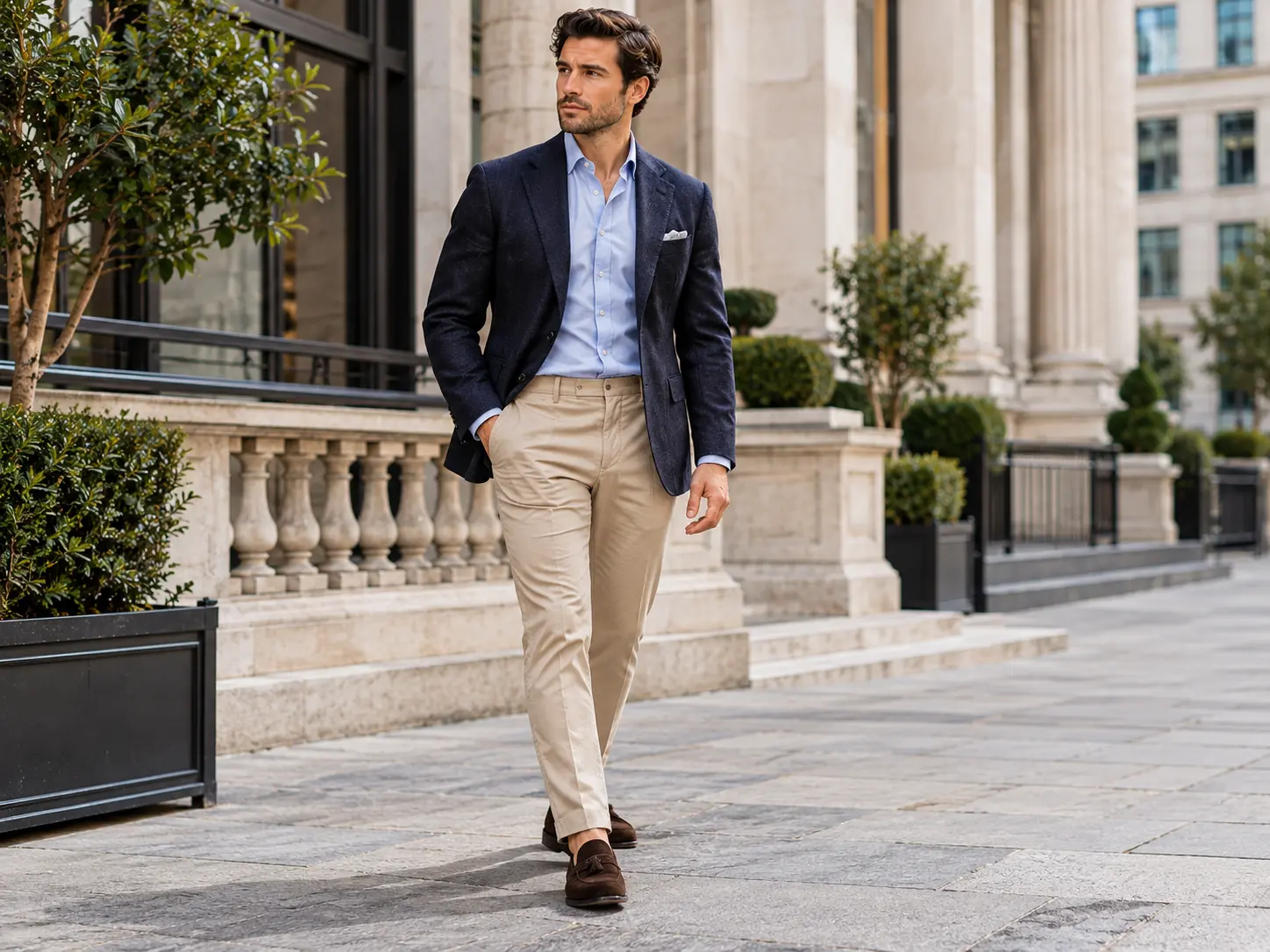
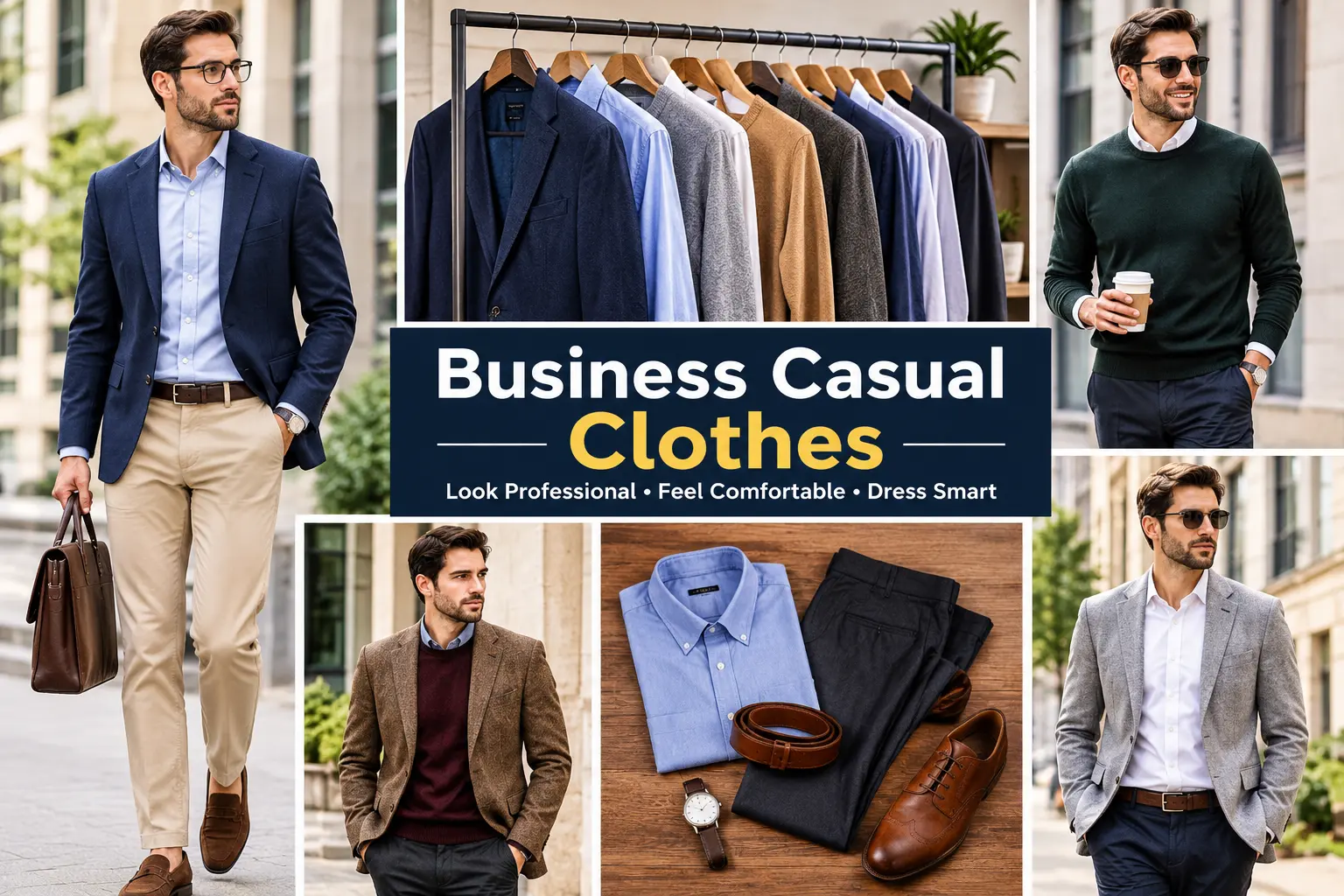
A pale-blue Oxford shirt, navy chinos and brown leather Derbies. This is a safe starting point for many offices and needs very little styling.
Client-facing but not formal
A white shirt, charcoal trousers, navy unstructured blazer and polished loafers. Keep a tie available only if the meeting warrants it.
Smart relaxed workplace
A fine merino crew-neck over an Oxford shirt with tapered chinos. Choose thin layers so the collar lies flat. Check our men’s office-ready tops guide to tell the difference between a tidy knit and a casual sweatshirt.
Commuter-friendly cold weather
Dark tailored trousers, a collared shirt, fine knitwear and a weather-appropriate coat. Pick footwear with a sensible sole for wet pavements. Find extra combinations in our business casual outfit ideas for men and winter office outfit guide.
What to inspect before buying clothes for work
Fit and care matter more than a label promising a premium look. Sit, bend and walk in trousers before you buy. Check that the shirt collar doesn’t pull when buttoned, the sleeves don’t swallow your hands, and the jumper doesn’t cling or balloon at the waist.
Read the care label: cotton shirts can crease; wool knitwear may need gentler washing and drying; blended trousers vary in breathability and care. If you regularly commute, favor garments that stay comfortable all day rather than looking perfect only in a fitting-room mirror.
Footwear shouldn’t require painful break-in. Test the heel grip and make sure there’s enough room at the toes. For options that work for the office and the weekend, see our men’s smart and casual shoe guide.
What not to buy for a stricter office
A smart purchase only works if it fits your workplace. Distressed jeans, graphic T-shirts, gym trainers, ripped garments, beach shorts and sportswear are poor choices for a conservative business-casual policy. Some creative offices allow neat dark jeans or minimal trainers, but that is an exception to confirm rather than a universal standard.
Even where trainers are accepted, choose understated pairs kept clean and in good condition. Our guide to business casual trainers explains when they might work. For an upcoming job interview, don’t extrapolate from a relaxed workplace photo: follow the invitation or use the business casual interview clothing guide.
Frequently asked questions
What clothes are considered business casual?
Typically Oxford shirts, chinos, neat tailored trousers, fine knitwear, optional blazers and smart leather shoes. The exact standard depends on the company and job.
Where can men buy affordable office wear?
Start with budget high-street retailers, outlets and second-hand shops, then compare sizes and garment construction. Buying a smaller capsule often saves more than chasing the cheapest single item.
Can men wear jeans to a business-casual office?
Some employers allow clean, dark, non-distressed denim; others require chinos or tailored trousers. Confirm company policy before using jeans as your default.
What should you buy first for a new office job?
Two collared shirts, two versatile pairs of trousers, and comfortable smart shoes. Add a jumper or blazer after seeing how colleagues dress.
Not sure what to wear?
Use our Men's Outfit & Dress Code Generator to get a personalised outfit based on your occasion, workplace and weather.
Try the Outfit Generator →