Quick answer: Professional casual is a practical way for men to look office-ready without a full suit: start with a pressed shirt or fine knit, tailored trousers and polished shoes, then add an unstructured blazer when needed. No single universal dress code goes by that name, so your employer’s policy, meeting, and audience should guide your final choice.
This guide is for men in UK offices, coworking spaces and client-facing jobs who need to choose how formal to look on a specific day. It avoids a one-size-fits-all rule and gives clear outfit combinations, a decision test and practical ways to get the balance right.
Table of Contents
What does a polished-but-relaxed dress code mean?
There is no universally defined workplace standard with that name. In practice,anyone’srs may mean business casual, smart casual or simply a neat version of their everyday office style. The useful goal is to look trustworthy and comfortable without the formality of a matching suit and tie. A “business casual” policy takes priority over anyone’s personal interpretation.
For men, professional casual attire usually begins with an Oxford shirt or fine-gauge jumper, chinos or wool trousers, and clean, smart footwear. An unstructured blazer is an optional upgrade, not an automatic requirement. Dark denim might work at a creative studio but may be inappropriate for a client-facing finance role.
Start by checking the written policy, then observe the workplace. The broader business casual dress code guide covers standard workplace rules; this article focuses on calibrating the level of polish for a particular wdepends onkday.
Business casual vs business professiona,l: where is the line?
Business professional usually means structured, matching tailoring; business casual allows separates, softer layers, and more relaxed footwear. Both aim to be presentable. The distinction is the formality expected by the role, employer, and occasion, not just whether someone wears a jacket.
| Decision | Relaxed professional office | Business professional setting |
|---|---|---|
| Jacket | Optional blazer or overshirt if permitted | Matching suit jacket typically expected |
| Top | Oxford shirt, collared knit or smart jumper | Formal dress shirt; tie where required |
| Trousers | Chinos or tailored separates | Matching suit trousers |
| Shoes | Loafers, Derbies or approved minimal trainers | Polished formal leather shoes |
| Best use | Routine office days, informal meetings | Strict corporate environments and formal meetings |
A formal presentation, interview or client invitation can raise expectations even when the normal office is relaxed. For a clear explanation of suit-and-tie requirements, see business professional attire for men; when an invitation explicitly says formal, use our business formal guide instead.
Recent workwear advice in GQ’s explanation of modern business casual likewise stresses that acceptable clothing varies by industry. Treat trends as ideas, not substitutes for your employer’s rules.
A three-question test for choosing the right outfit
1. Who will see you?
Internal work with familiar colleagues is often less formal than a first meeting with a client, senior leader, or external partner. If you haven’t met the audience before, choose tailored trousers and leather shoes rather than testing the most relaxed interpretation of the rules.
2. What will you actually do?
Desk work, presentations, site visits, and long commutes have different practical needs. If you will be standing for hours, prioritize comfortable footwear; if you need protective clothing or have safety requirements, those rules come first. A blazer you can carry to the meeting can be more useful than wearing one the entire commute.
3. Does the outfit still look intentional by 5 pm?
Check for shirts that pull, trousers that sag at the seat, fabric that creases badly, worn heels and knitwear that has lost its shape. A tidy silhouette matters more than a prominent brand. If one detail feels too casual, change just that element rather than replacing your whole outfit.
Four outfit formulas for different working days
The everyday UK office
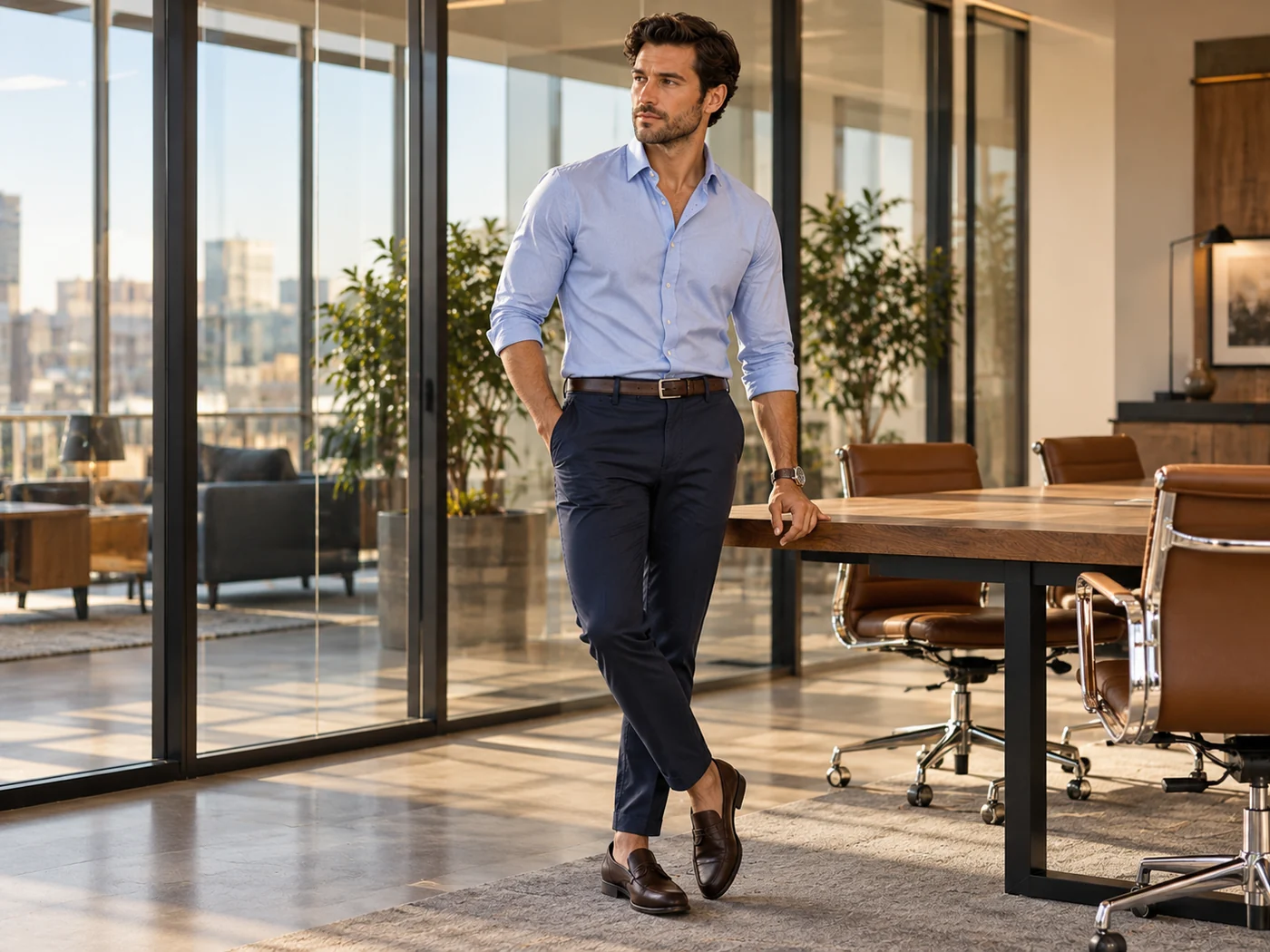
A pale-blue Oxford shirt, navy chinos and dark brown Derbies are a useful starting point. It looks appropriate in many relaxed offices without looking like you’re dressed for a wedding. If mornings are cold, add a lightweight crew-neck jumper.
The hybrid office or coworking space
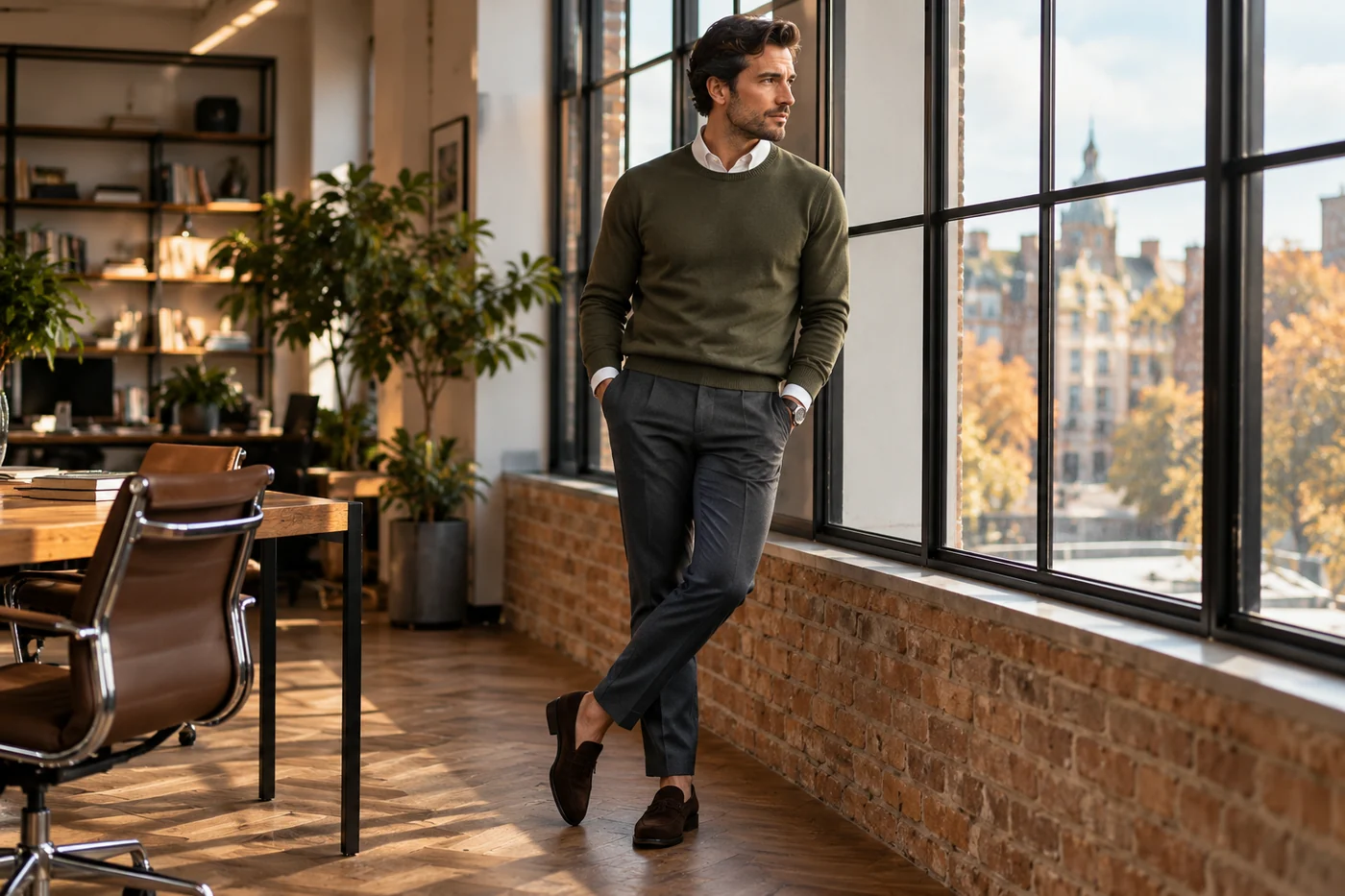
Combine a fine-gauge olive or navy jumper, grey tailored trousers and brown loafers. A crisp collar beneath the knit keeps the outfit composed for a video call and an unexpected in-person meeting. Keep a neat jacket available if the afternoon brings a presentation.
The first client meeting
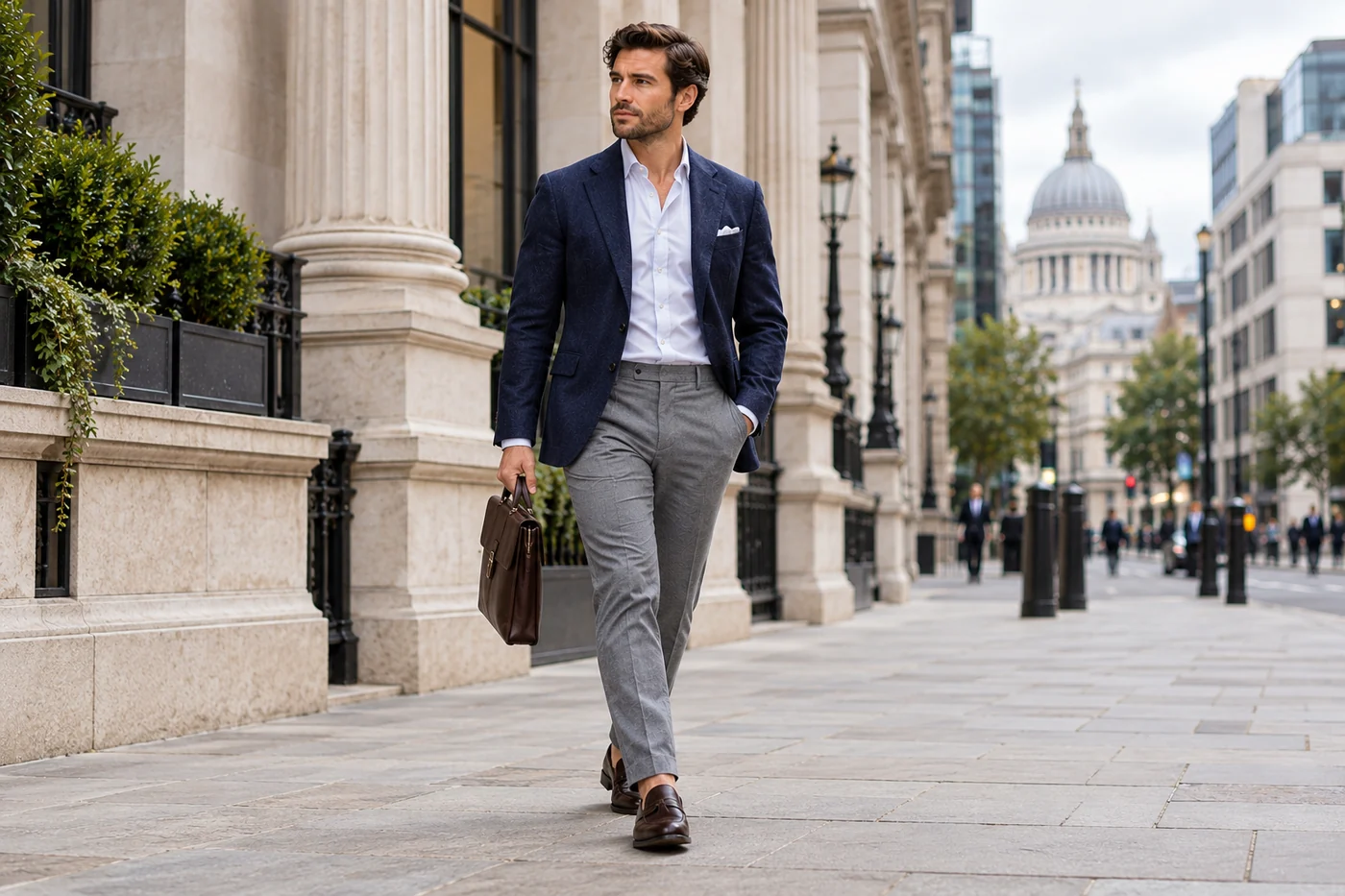
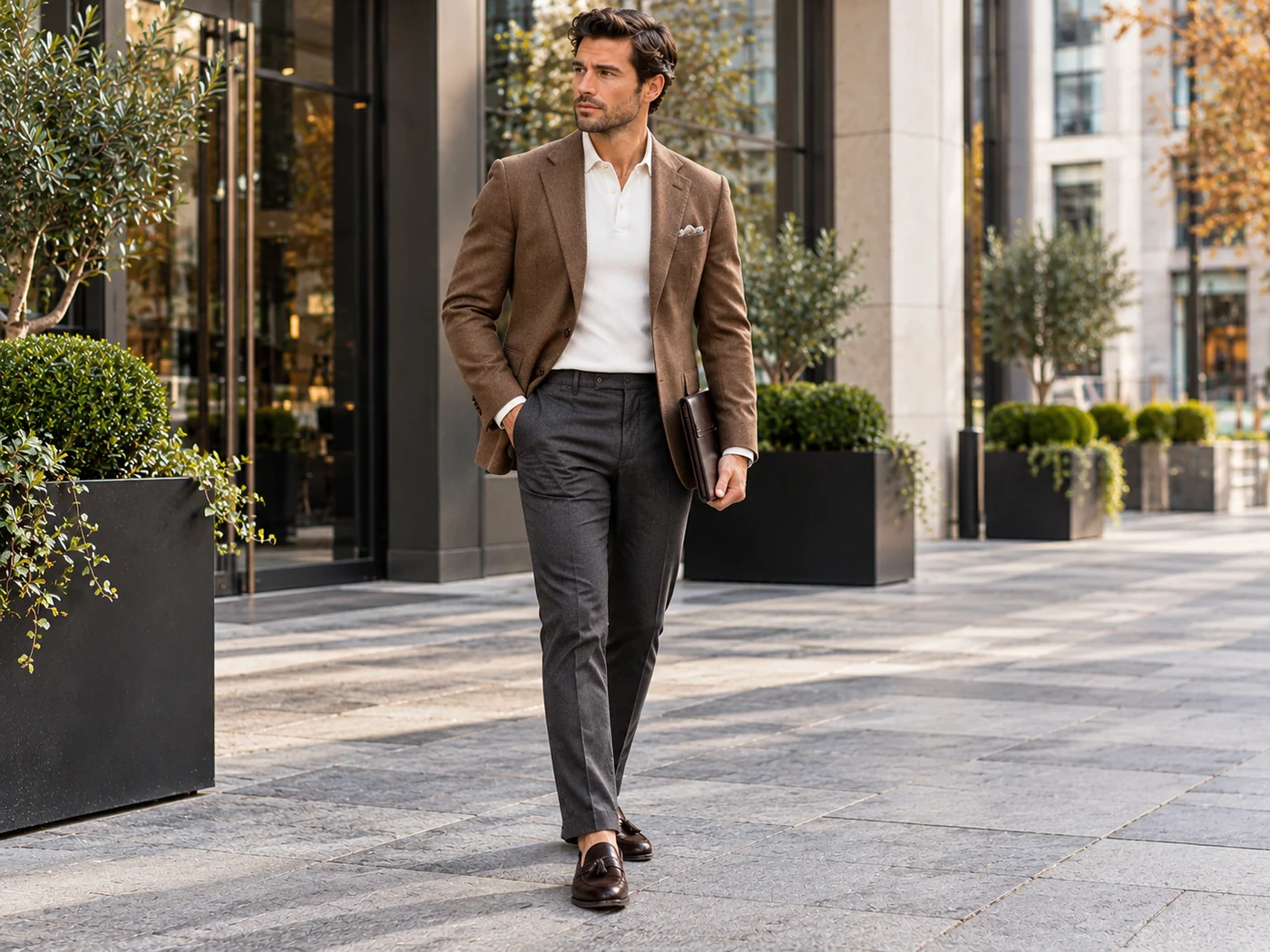
Wear a navy unstructured blazer, open-collar white shirt, charcoal wool trousers and polished dark leather shoes. This is a confident middle ground when no suit has been requested. Add a tie, or switch to a full suit, if the venue, client culture, or invitation calls for it.
The creative Friday
In a genuinely relaxed workplace, a textured kncoloro, pressed chinos and carefully maintained minimal trainers may be fine. Dark, un-distressed denim is only an option where the policy explicitly allows it. See smart casual versus office style for the more relaxed end of the spectrum.
For additional colour combinations, browse our men’s business casual outfit ideas; this page focuses on choosing the most appropriate formula for the people and task in front of you.
The five pieces that make an outfit look more professional
Prioritize fit, fabric, and grooming before buying more items. A modest wardrobe built around navy, charcoal, white, pale blue and muted earth tones is easier to dress up or down than a collection of statement pieces.
- One light-blue Oxford shirt: a useful starting point for a workday with or without a blazer. Check shoulder seams and the collar before buying.
- One pair of charcoal tailored trousers: a reliable upgrade from chinos for days with presentations or clients.
- One navy fine-knit jumper: works over a shirt without a bulky silhouette and layers beneath a coat.
- One unstructured navy blazer: adds formality without the look of a traditional matching suit.
- One smart pair of leather shoes: well-maintained loafers or Derbies can make even simple trousers and shirts look deliberate.
Our UK business casual clothing shopping guide helps prioritize purchases and budgets. If you need to choose between relaxed and dressier shirts, check office-ready shirt styles; for trouser fabric and cut, read chinos vs khakis.
Which shoes make relaxed workwear look smart?
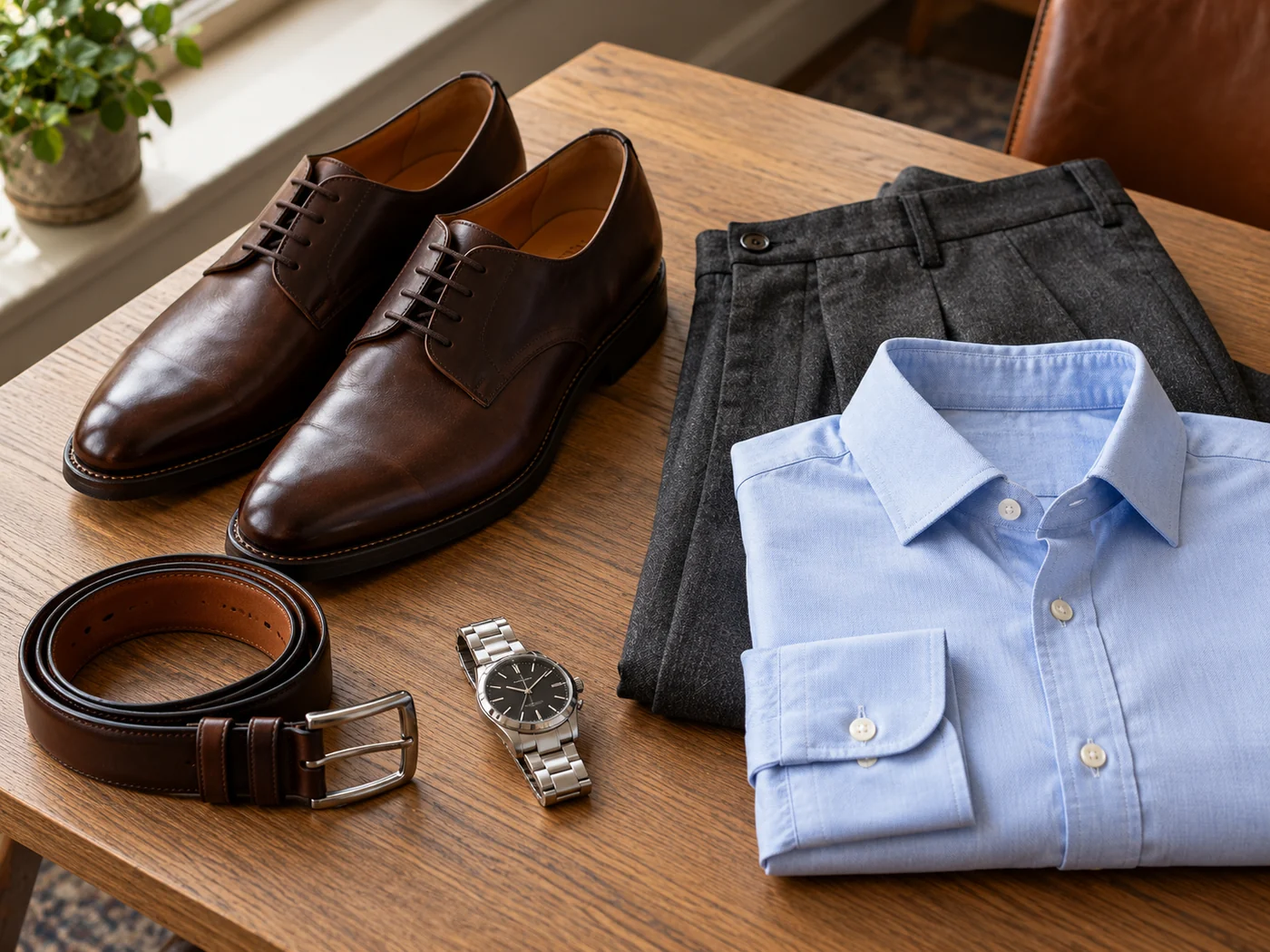
Dark brown or black Derbies are a safe starting point when the office policy is unclear. Loafers work well with tailored trousers and finer-gauge knitwear. Chelsea boots can suit winter commuting, particularly with dark trousers and an understated coat. Fit matters more than fashion: you should be able to walk, stand, and work comfortably.
Minimal leather trainers are only an option in offices that explicitly allow them. Avoid running shoes with prominent sports branding, muddy soles, and heavily worn pairs in client-facing settings. Compare business casual men’s shoes and when office trainers are acceptable before assuming sneakers meet your company’s definition of professional.
Keep leather conditioned, replace worn laces and check that trouser hems fall cleanly. These small maintenance choices often make a bigger visual difference than any other accessory.
How to adapt the look to the UK seasons
Summer: choose breathable cotton or lightweight wool trousers, a pale shirt and an unlined blazer when required. Don’t assume short sleeves or shorts are automatically acceptable in an office; local policy decides. A very thin fabric can also become transparent in direct sunlight.
Autumn and winter: use merino or other fine knitwear under a wool coat, with trousers heavy enough to drape neatly. Change into office shoes if your commute requires weatherproof boots. Wet-weather comfort matters, but a hiking shell or technical backpack may change the look of an otherwise formal presentation outfit.
Year-round: keep the same simple color palette, vary only fabric weights and layers, and choose items that can be worn separately. This avoids rebuilding an entire work wardrobe every season.
Common mistakes and simple fixes
- Too casual: replace a graphic tee, with a collared shirt or fine knit; change heavily worn trainers for loafers.
- Too formal: if a full suit is unnecessary, use a soft blazer with contrasting trousers and remove the tie.
- Bad proportions: shorten excessively long sleeves, choose trousers with a clean hem and make sure the jacket closes comfortably.
- Clashing textures: wear one strongly patterned item at a time and keep other pieces quiet.
- Ignoring the employer: never let an internet style guide override written dress or safety requirements.
A reliable final check is simple: does the outfit suit your workplace, your meeting and your actual working day? If the answer is yes, you probably do not need to buy another piece.
Frequently asked questions
How to dress casual professional without wearing a suit?
Start with an Oxford shirt or fine knit, tailored chinos or wool trousers, and clean leather shoes. Add a softly constructed blazer for client meetings. Choose calm colors and keep the fit neat; the goal is intentional, office-appropriate clothing without a matching suit.
What is the difference between business casual and business professional?
Business casual generally allows separate trousers and jackets, knitwear, and some flexibility with shoes. Business professional usually expects matching formal tailoring, a dress shirt, and more conservative footwear. A particular company’s policy takes precedence over generic definitions.
Is business casual professional enough for a client meeting?
Often, but not always. An everyday meeting may suit chinos, a shirt and blazer, while a first meeting in a conservative sector may warrant a dark suit. Use the invitation, client expectations and setting to choose the safer level of formality.
Do men need a blazer for a relaxed office?
No, minimalrily. A collared shirt or fine knit with tailored trousers can look suitably polished where the office policy allows. Keep a blazer handy for presentations or more formal visitors.
Can clean trainers work with office trousers?
Only if your employer allows them. Minimal leather trainers can look tidy with chinos or relaxed tailoring, but polished loafers or Derbies are safer for conservative and client-facing roles.
Not sure what to wear?
Use our Men's Outfit & Dress Code Generator to get a personalised outfit based on your occasion, workplace and weather.
Try the Outfit Generator →