
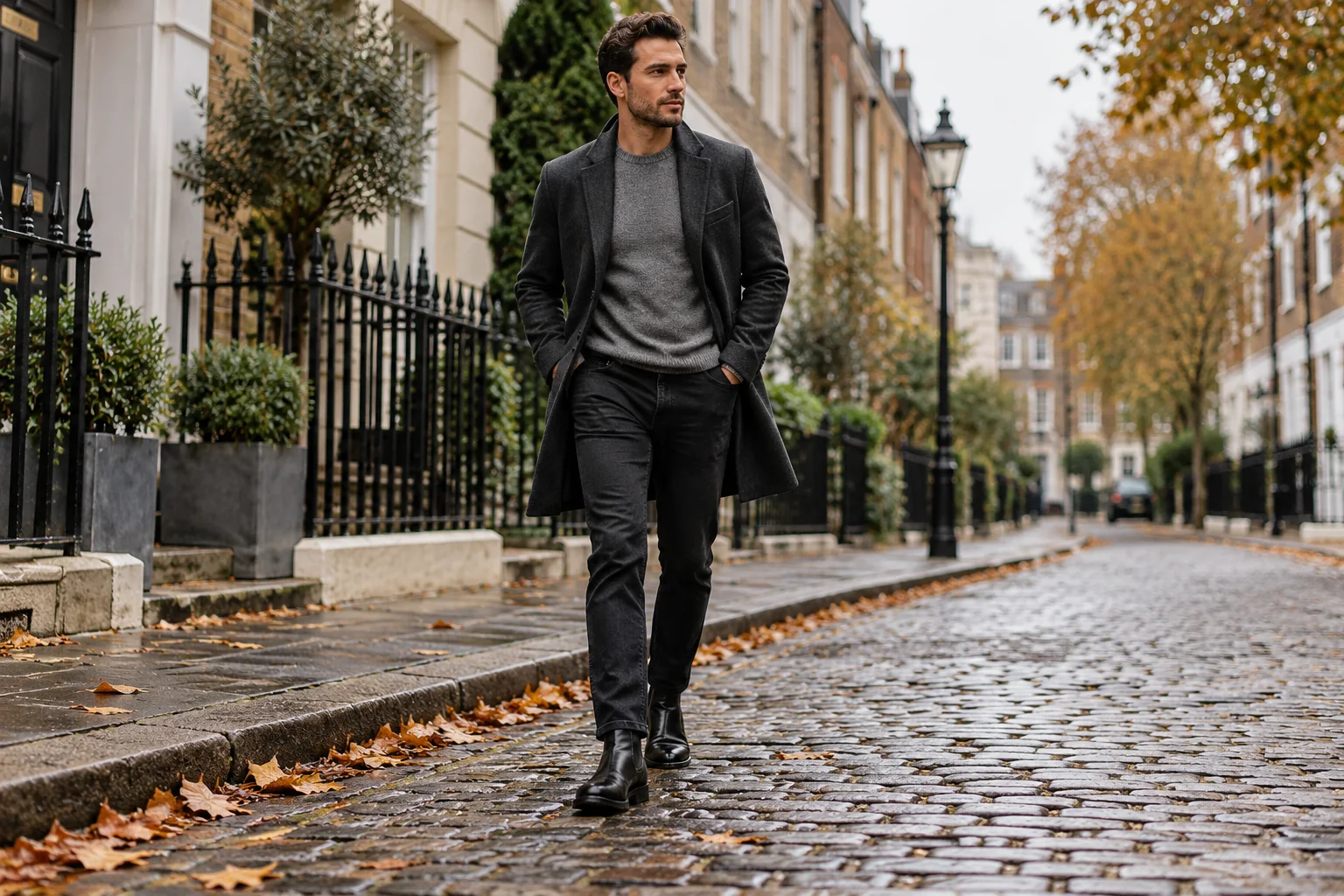
Quick answer: Chelsea boots are ankle-high, pull-on boots with elastic side panels. For an easy men’s outfit, wear black leather pairs with dark jeans or tailored trousers, and brown leather or suede pairs with blue denim and chinos. Aim for a tidy trouser hem, comfortable instep fit, and weather protection suited to your plans.
This UK guide to chelsea boots men covers black versus brown, suede versus leather, five practical outfits, sizing and buying checks. The goal is footwear that works with your existing clothes, not a costly one-trend wardrobe.
Table of Contents
What are Chelsea boots, and why do they work for men?
Chelsea boots are ankle-height, pull-on boots with elastic side panels and usually a pull tab. Unlike lace-up boots, the clean upper creates a neat line beneath jeans, chinos, and tailored trousers. The style has Victorian roots and became strongly associated with London’s fashion scene in the 1960s.
Today’s versions range from sleek black leather dress boots to rugged, thick-soled work-inspired pairs. They are not all equally formal or equally weather-resistant. Shape, sole, upper and color determine where a particular pair works best.
For an everyday wardrobe, a Chelsea boot often fills the gap between trainers and smart lace-up shoes. Compare the formality of other styles in our men’s casual footwear guide. If the design and fit are right, you can wear one pair from autumn weekends to many smart-casual settings.
Black or brown Chelsea boots: which color should you buy?
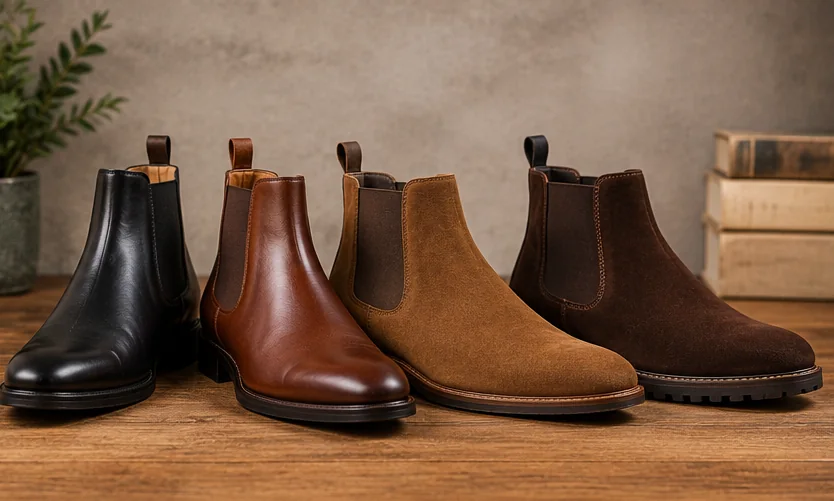
Black leather is cleaner and dressier; mid-brown leather pairs more easily with blue denim and earth tones. Choose the color you already wear most rather than relying on whichever one appears trendy.
| Boot colour | Best trouser pairings | Typical feel |
|---|---|---|
| Black leather | Charcoal, black, navy or dark-wash denim | Smart, minimal, evening-friendly |
| Dark brown leather | Indigo denim, navy chinos, olive, taupe | Versatile, slightly softer |
| Tan or brown suede | Stone chinos, blue jeans, cream and corduroy | Relaxed and textured |
Black leather Chelsea boots can work with charcoal tailoring or a sharp dark coat. Brown pairs are especially versatile with navy, ecru and grey jumpers. A matching belt may make a dressed-up outfit feel intentional, but exact colour matching is not essential for relaxed weekends.
If you are deciding between light and dark trousers, our chinos versus khakis explanation helps clarify the fabrics and typical cuts. For a small shoe collection, own one useful pair you will regularly wear before considering a second colour.
Leather vs suede: the right finish for UK weather
Choose smooth leather for easier everyday maintenance, and suede for a softer, textured look. Polished or matte leather suits smart outfits; suede pairs naturally with denim, corduroy and knitwear. Neither material alone guarantees waterproof protection.
Before buying, check the manufacturer’s construction, lining, sole traction, and stated weather resistance. An upper described as water-resistant is not necessarily fully waterproof. A suede protector designed for the exact material can help with light marks, but it cannot make unsealed boots waterproof.
For an office-and-weekend wardrobe, a simple leather boot offers more flexibility than a delicate fashion suede pair. If your clothes lean towards texture and heritage styling, brown suede Chelsea boots look excellent with a corduroy jacket or a brushed wool overshirt.
After wet weather, wipe leather with a soft cloth and allow boots to dry away from direct radiators or heaters. Brush dried suede with an appropriate suede brush. Always follow the care directions given for your specific footwear.
How to wear Chelsea boots with jeans
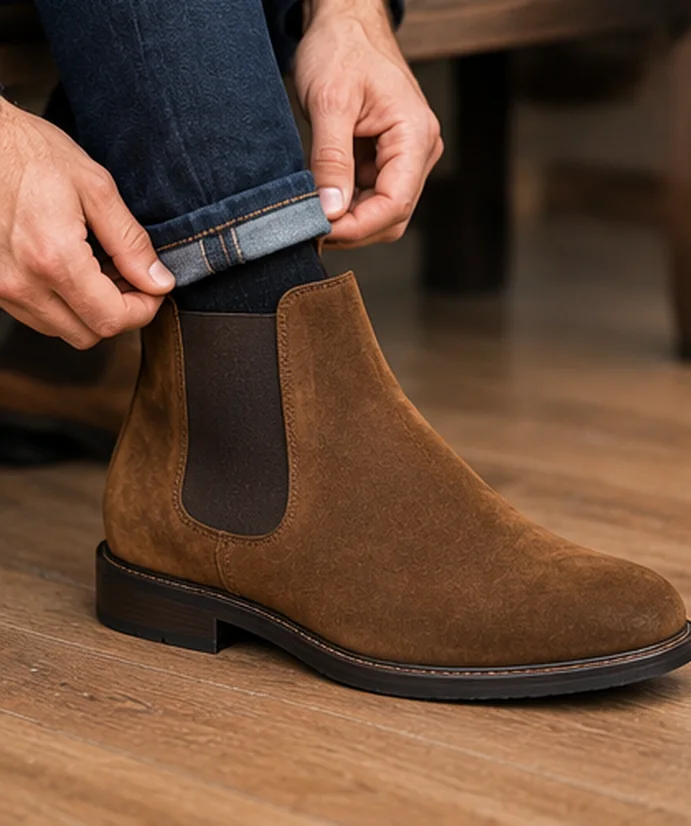
Straight or gently tapered jeans that rest neatly on the upper are the simplest pairing. The hem should meet the boot without long stacks of denim around the ankle. Skinny jeans can look too tight against a chunky sole, while very wide jeans may completely cover a sleek boot.
For an easy black-boot look, wear charcoal straight jeans, a dark crew-neck jumper and a wool coat. For brown boots, try medium-blue jeans, an off-white jumper and an olive overshirt. When the trousers fit properly, you rarely need a conspicuous cuff.
Some jeans benefit from one narrow turn-up, especially over a more substantial sole. Avoid folding the denim so high that an entire elastic side panel is exposed. Our guide to cuffing jeans explains how to achieve a cleaner finish.
Fit check: stand and sit in front of a mirror. Your sock should cover the ankle when seated, and your trouser hem should not catch awkwardly on the top of the boot when walking. The visual line matters more than a rigid measurement.
Chinos, tailored trousers and suits
Chelsea boots also work with chinos, wool trousers and some suits. For chinos, choose a clean straight or slim-straight silhouette, not a low-slung or excessively skinny cut. Dark leather with navy chinos, or brown suede with stone chinos, is a reliable smart-casual formula. Our men’s smart-casual guide has complementary shirt and knitwear options.
With a suit, select sleek leather, a discreet elastic insert, a rounded or slightly almond-shaped toe, and a relatively fine sole. Black pairs easily with a charcoal suit; dark brown can look refined with certain navy or earth-toned tailoring. Our charcoal suit outfit guide shows how to combine the rest of the outfit.
Rugged lug-soled Chelsea boots are useful casual footwear but generally not appropriate for the most formal business settings. Check your workplace dress code: a clean pair may suit business casual offices, while traditional formal dress codes may call for lace-up shoes.
Five easy Chelsea boot outfit formulas
1. Black leather with dark jeans
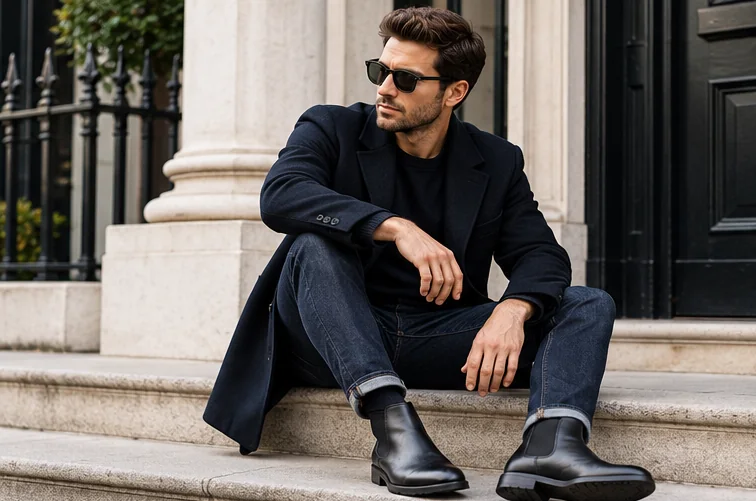
Black leather boots, straight charcoal jeans, a grey roll-neck and a charcoal coat. Keep the textures varied so a nearly monochrome outfit still looks interesting. This combination works for an evening meal, smart weekend plans or a relaxed creative office.
2. Brown leather for everyday weekends
Chocolate-brown boots, indigo jeans, an ivory crew-neck jumper and a dark green overshirt. This is a natural pairing for autumn walks, coffee and errands. The boots add structure without looking as formal as polished black shoes.
3. Brown suede with stone chinos
Mid-brown suede boots, stone chinos, a white Oxford shirt and a navy cardigan. The tonal palette feels soft but put together, making it a useful option for lunches, casual dates and relaxed family gatherings.
4. Polished black boots for a smart evening
Keep it simple: black boots, tapered charcoal wool trousers, a black fine-gauge knit, and a dark blazer. Avoid heavy soles or exaggerated pointed toes. The aim is a quiet, continuous line from trouser hem to boot.
5. Chunkier boots for cold UK days
Weather-suitable Chelsea boots with a grippy sole, dark jeans, a chunky jumper and a wool coat. The extra sole volume looks balanced beside a heavier knit. For outer-layer inspiration, see our pea coat guide and winter business casual outfits.
How should men’s Chelsea boots fit?
Your heel should feel reasonably secure, toes should move freely and the instep should hold the foot without painful pressure. New footwear can have slight heel movement, but the boot shouldn’t slip significantly as you walk. The elastic sides should stretch enough for entry without feeling loose after fastening; Chelsea boots have no laces to tighten.
Try boots with the socks you plan to wear most often, preferably late in the day when your feet are closer to their normal daily size. Walk on a clean indoor floor to check pressure across the top of the foot, heel stability, and flex at the ball of the foot.
UK sizing differs by brand and last. Don’t assume a UK 13 from one maker fits exactly like another. Look for actual size charts, width options, and return policies, especially online. For a genuinely roomy fit, use the retailer’s wide-fit designation instead of automatically sizing up, which may cause heel slip.
The correct shaft height should sit comfortably around the ankle and allow your trousers to move over it. A boot may look beautiful in pictures yet still be wrong for your instep: comfort and fit come first.
Clarks, Timberland, Barbour: how to compare brands
The best Chelsea boot fits your foot, suits your clothes, and meets your weather needs. Brand reputation alone cannot establish the best model or the right size. When comparing UK retailers or labels such as Clarks, Timberland and Barbour, look at the product specifications rather than treating every style from one brand as equivalent.
Check the upper material (leather, suede, or synthetic), lining, insole support, sole grip, elastic-panel quality, intended use, and the returns policy. Inspect construction and ask whether the sole can be repaired or replaced, as some designs are easier to maintain than others.
For practical manufacturer context, Clarks’ Chelsea boot styling guide discusses material, wet-weather choices and the limitations of suede protection. Stock, widths, size ranges and pricing vary by product and may change, so confirm them on the current UK product page before ordering.
If you are building a capsule wardrobe, you may gain more from versatile color and comfortable wear than from chasing a premium brand name. See our men’s capsule wardrobe essentials for the wider clothing context.
Are Chelsea boots waterproof enough for rain?
Not necessarily. The Chelsea silhouette itself says nothing about waterproofness. Water can enter through seams, elastic gussets, or the sole attachment unless the specific boot is designed and tested to resist it. Suede can mark readily in sustained wet conditions.
In a damp UK commute, prioritize a manufacturer-stated waterproof construction and a sole with useful wet-surface grip. Even waterproof footwear can be slippery on ice and polished wet surfaces. Wear the right socks, dry boots gradually, and use care products suited to their finish.
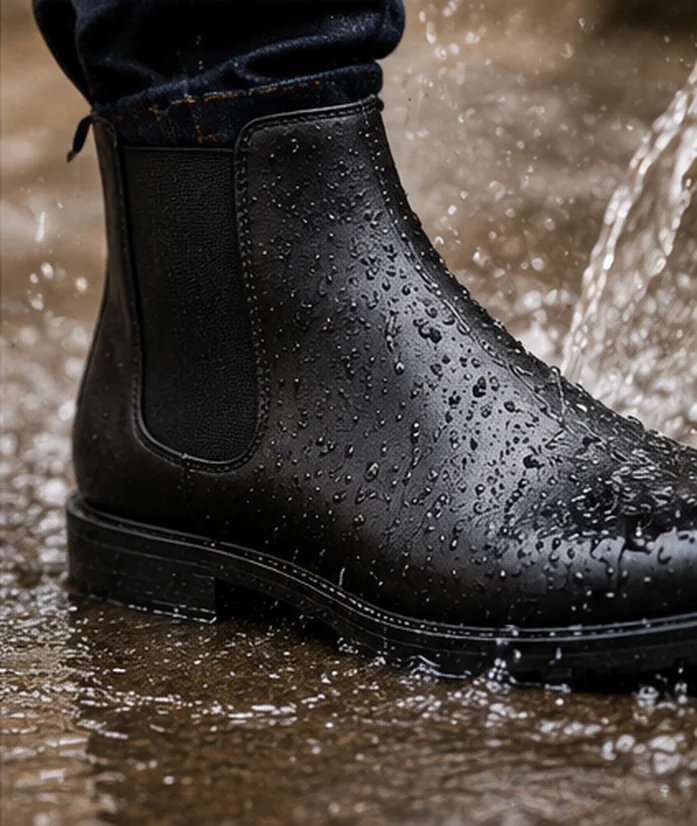
For occasional light rain, well-maintained leather might be enough if the manufacturer permits it, but don’t assume a sleek fashion pair can replace dedicated waterproof footwear for heavy rain or long muddy walks.
Frequently asked questions
Are Chelsea boots still in style for men?
Yes. Chelsea boots remain a familiar, versatile men’s footwear option because the clean pull-on shape works with denim, chinos and selected tailored outfits. Focus on fit, color and sole profile rather than chasing short-lived trends.
What jeans look best with Chelsea boots?
Straight and gently tapered jeans are easy starting points. Keep the hem near the top of the boot with little bunching; choose a proportionate sole so the boot does not disappear beneath very wide denim.
Can men wear Chelsea boots with a suit?
A sleek leather Chelsea boot can suit certain navy or charcoal suits and modern smart dress codes. Save very chunky soles and distressed suede for more casual outfits. Follow the event or workplace dress code.
Should you buy black or brown Chelsea boots first?
Choose black if your wardrobe is mainly charcoal, black and smarter tailoring. Choose mid-brown if you regularly wear blue jeans, navy chinos and earth-toned casual layers. Either works as a useful first pair.
Can you wear suede Chelsea boots in the rain?
Only within the manufacturer’s stated care and weather limits. Suede is prone to watermarks, and a protector doesn’t automatically make it waterproof. A purpose-built waterproof boot is safer for frequent wet-weather use.
Not sure what to wear?
Use our Men's Outfit & Dress Code Generator to get a personalised outfit based on your occasion, workplace and weather.
Try the Outfit Generator →