
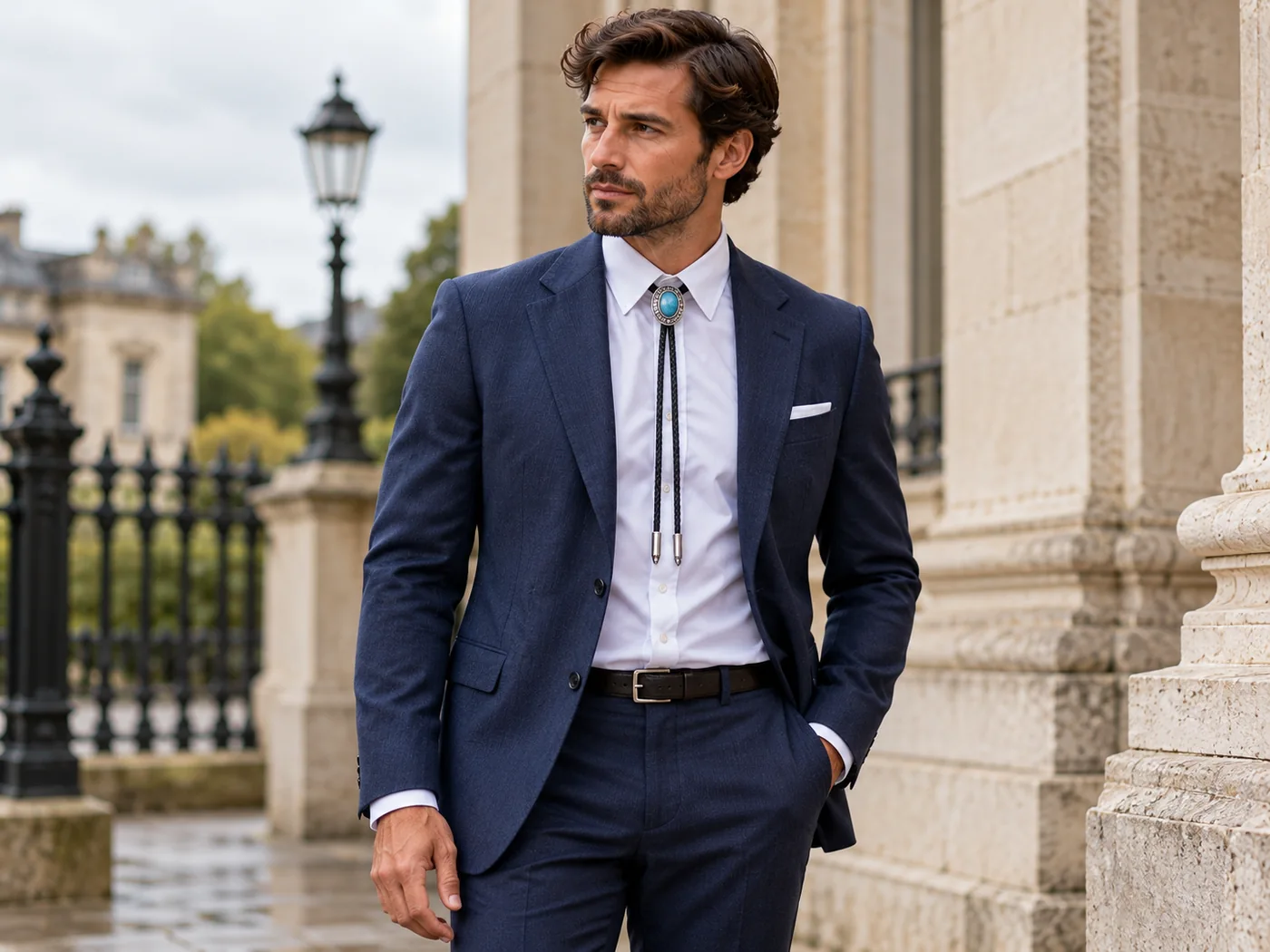
Quick answer: To wear a bolo tie, place the cord around your neck, centre the decorative slide and adjust its height to suit your shirt. With a suit, button the collar and move the slide up like a traditional tie knot. For casual outfits, open the collar and lower it slightly. Keep both cord tips even and comfortable.
This men’s guide explains how to wear a bolo tie correctly, including slide placement, suits, relaxed outfits, waistcoats and wedding dress codes. It also covers how to avoid costume-like styling and choose the right level of formality in the UK.
Table of Contents
How to put on a bolo tie correctly
A bolo tie has three working parts: a cord, an ornamental slide (sometimes called a clasp), and two decorative metal tips. Unlike a conventional necktie, it is adjusted by moving the slide up or down the cord rather than tying a knot.
- Choose a collared shirt. For a formal look, button it to the top; for a casual one, leave the top button or two undone.
- Place the cord around the back of your neck. Keep both ends hanging down your chest and the decorative side of the slide facing out.
- Hold both cord ends and gently move the slide upwards. Do not force a stiff mechanism. On some pieces you may need to operate a spring or clasp at the back.
- Centre the slide between the collar points. For a dressy outfit, position it close to the closed collar. For a relaxed look, allow it to rest a little lower.
- Level the tips and check your reflection. The cords should hang naturally rather than twist or sit trapped beneath the shirt collar.
The key is controlled placement, not a particular centimetre measurement. The slide should frame the face and complement the shirt rather than drag on the neckline. If you usually wear a traditional tie, compare the position with the knot in our Full Windsor knot tutorial; a dressy bolo generally sits around the same upper-chest area.
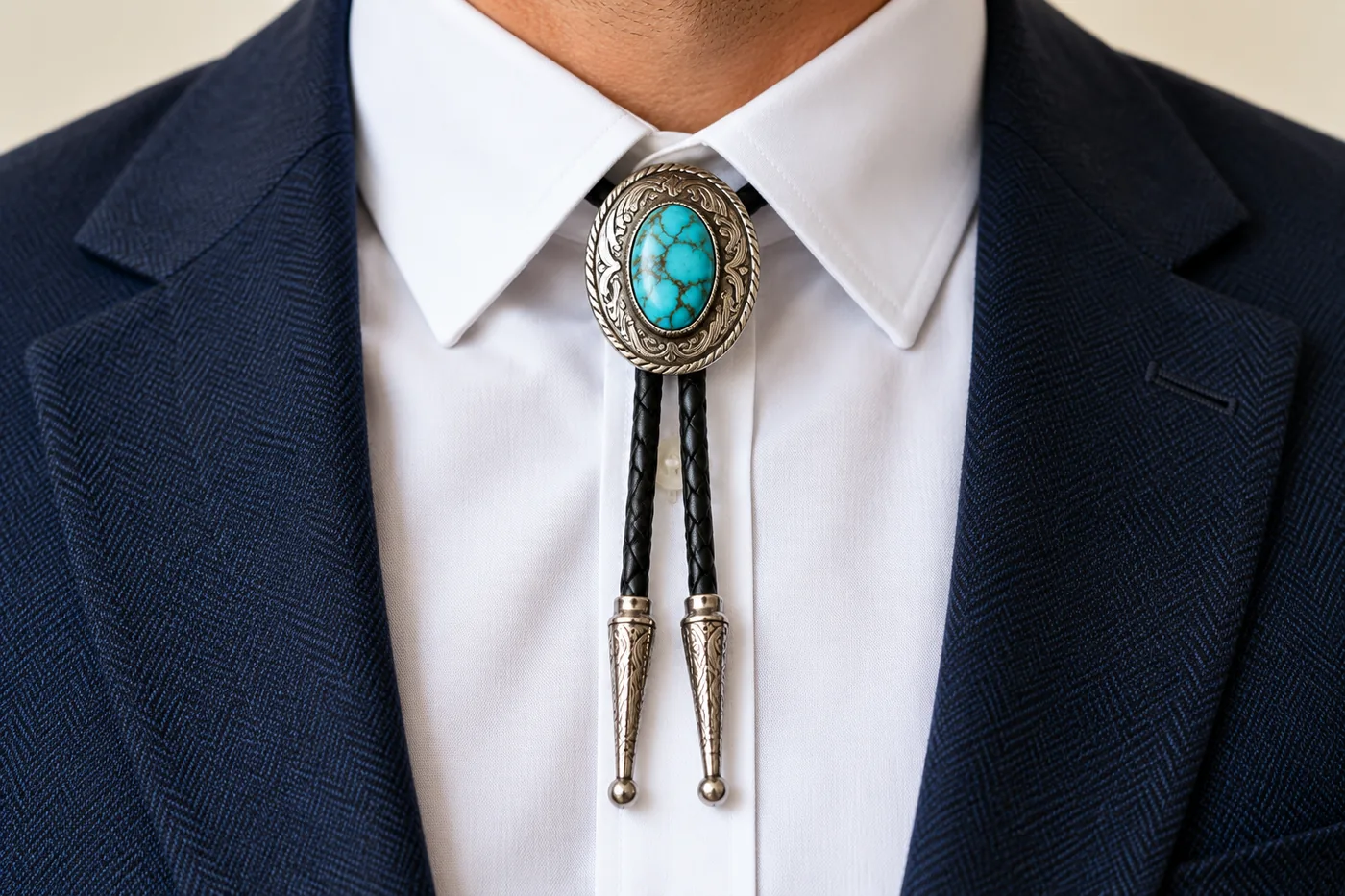
Quick troubleshooting: if the slide keeps dropping, examine its back mechanism and the thickness of the cord. A damaged clasp or a cord too thin for the slide may need repair or replacing, rather than being pulled harder.
Where should the clasp and cord tips sit?
For formal outfits, set the slide just beneath a fully buttoned collar. For casual outfits, lower it a little below an open neckline. There is no universal rule that every metal tip must reach an exact point on the chest; length depends on your height, the cord and the garment underneath.
| Outfit | Collar | Slide position | Overall effect |
|---|---|---|---|
| Suit or tailored blazer | Top button closed | Near collar button | Smart, deliberate |
| Waistcoat and shirt | Usually closed | High enough to clear the vest opening | Heritage-inspired |
| Denim or chambray shirt | Top button open | Several centimetres lower | Relaxed Western |
| Casual overshirt | Open as comfortable | Mid-upper chest | Low-key statement |
Allow the metal tips to fall evenly without touching your belt or snagging on buttons. Long tips can look awkward on a short torso; exceptionally short ends can make the slide feel crowded. Try different heights in front of a mirror before deciding.
Suit styling: collar and slide placement
Keep the suit simple and let the bolo become the focal point. A navy or charcoal suit, plain white or pale-blue shirt, slim dark cord and small silver or dark-stone slide is a reliable starting combination. Button the collar and push the slide up to sit much like a conventional tie knot. A bold oversized slide can compete with formal lapels.
For a more creative evening outfit, a discreet bolo can also complement a textured jacket and dark tailored trousers. The overall look is distinctive, though not automatically right for conservative business meetings or formal events. If your invitation specifies conventional formal wear, use our business formal dress-code guide first. For a contrasting monochrome outfit, our black shirt styling guide offers another smart option.
The shirt, shoes and watch still affect the result. Tuck the shirt, choose a suitable trouser break and wear polished footwear. For small tailoring details, see our guide to wearing cufflinks. Our men’s smart shoe styling guide covers how to choose shoes without making the outfit excessively Western.
Casual styling without looking like a costume
Pick one Western element rather than wearing every Western accessory together. A chambray shirt, dark jeans and suede boots can be enough. Leave the top button open and position the clasp slightly below the neckline. A modest turquoise or silver slide makes the accessory feel intentional without demanding a matching cowboy hat.
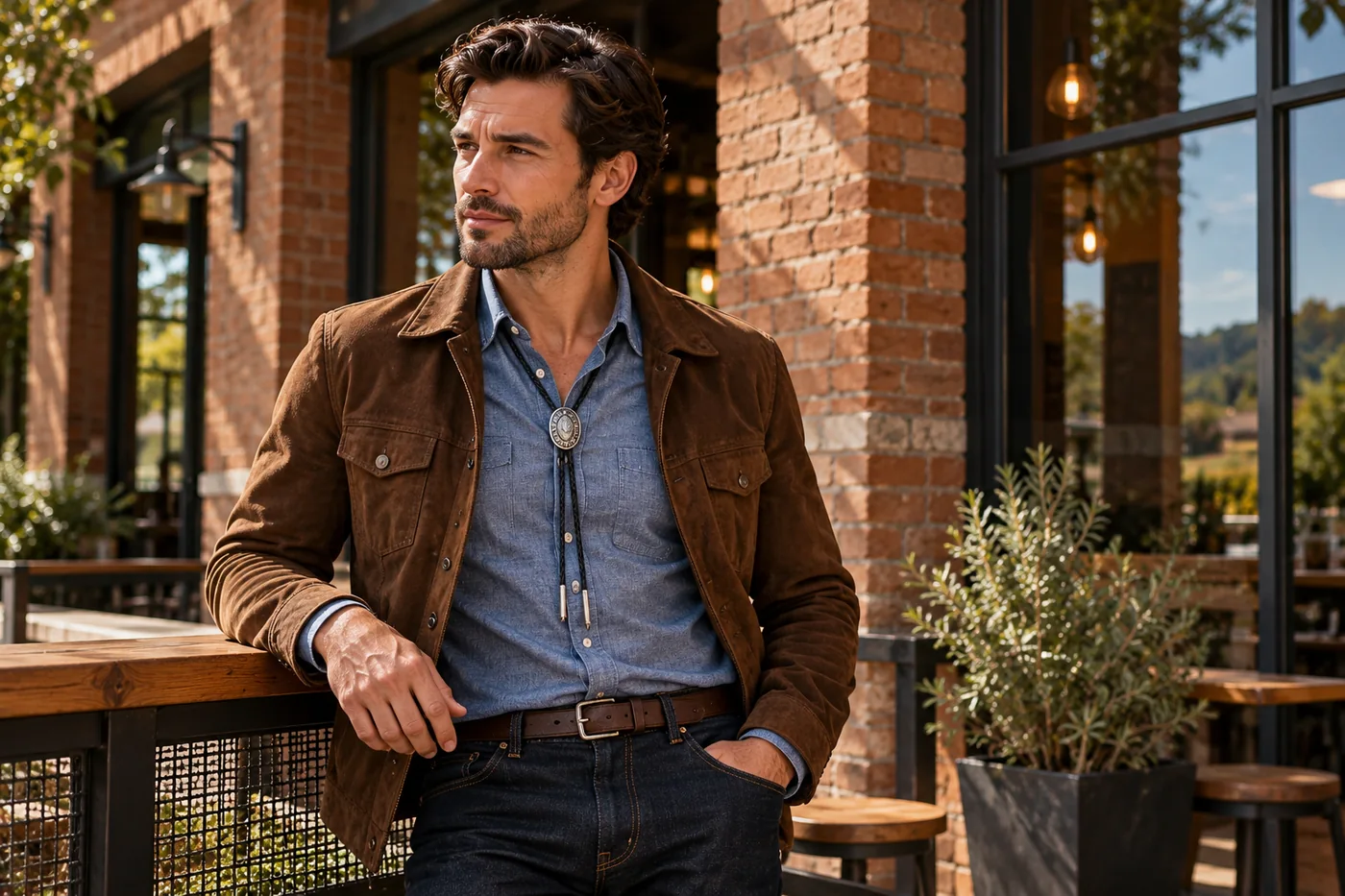
For a city-friendly combination, try a denim or Oxford shirt, suede jacket and simple leather footwear. For an evening variation, a dark shirt can set off silver jewellery; see our men’s black shirt styling guide. Neutral colours help the bolo stand out. If you’re exploring more relaxed dress codes, compare our dressy casual outfits for men before adding a full set of Western details.
Yellowstone-inspired styling can be a useful visual reference for rugged jackets and denim, but you do not need to imitate a television costume. A well-fitting shirt, restrained slide and clean trousers usually adapt better to real UK weekends.
Can you wear a bolo tie at a wedding?
Yes, if the couple’s dress code allows it. Bolo ties are most at home at Western-themed, rustic or creative weddings and may work at relaxed daytime ceremonies. For traditional black-tie or very conservative formal invitations, a bow tie or conventional necktie is the safer and often expected choice.
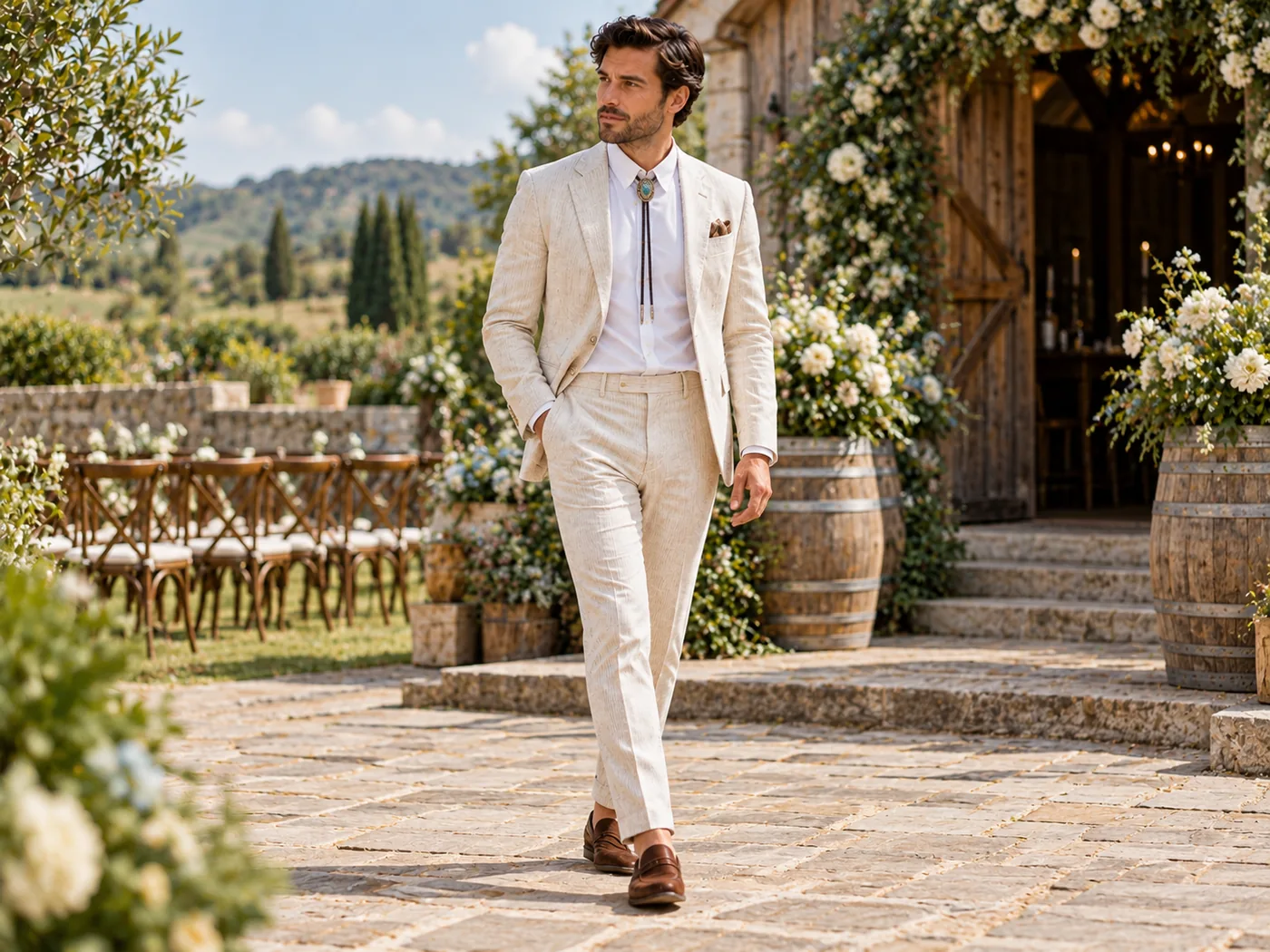
For a warm-weather wedding, a cream or navy suit, white shirt, polished shoes and refined silver-tone slide gives a smart look without becoming a costume. For summer suit fabric alternatives, read our seersucker suit for men guide. The stone or ornament should be in scale with the jacket and lapels. If you are the groom, coordinate with the wedding party before choosing distinctive neckwear; if you’re a guest, follow the stated dress code.
Wedding publisher The Knot’s guide to types of ties identifies the bolo as particularly suited to Western-style weddings. See our cocktail wedding attire guide for how invitation wording changes the outfit choice. For an outdoor summer wedding, compare a lighter seersucker suit as well.
How to style a bolo tie with a vest or waistcoat
A waistcoat frames the cord, so keep the slide clearly visible above the V opening. Try a plain cotton or wool waistcoat over a white or pale-blue shirt with tailored trousers. If the waistcoat already has tweed checks or strong texture, use a simpler metal slide instead of a large, colourful stone.
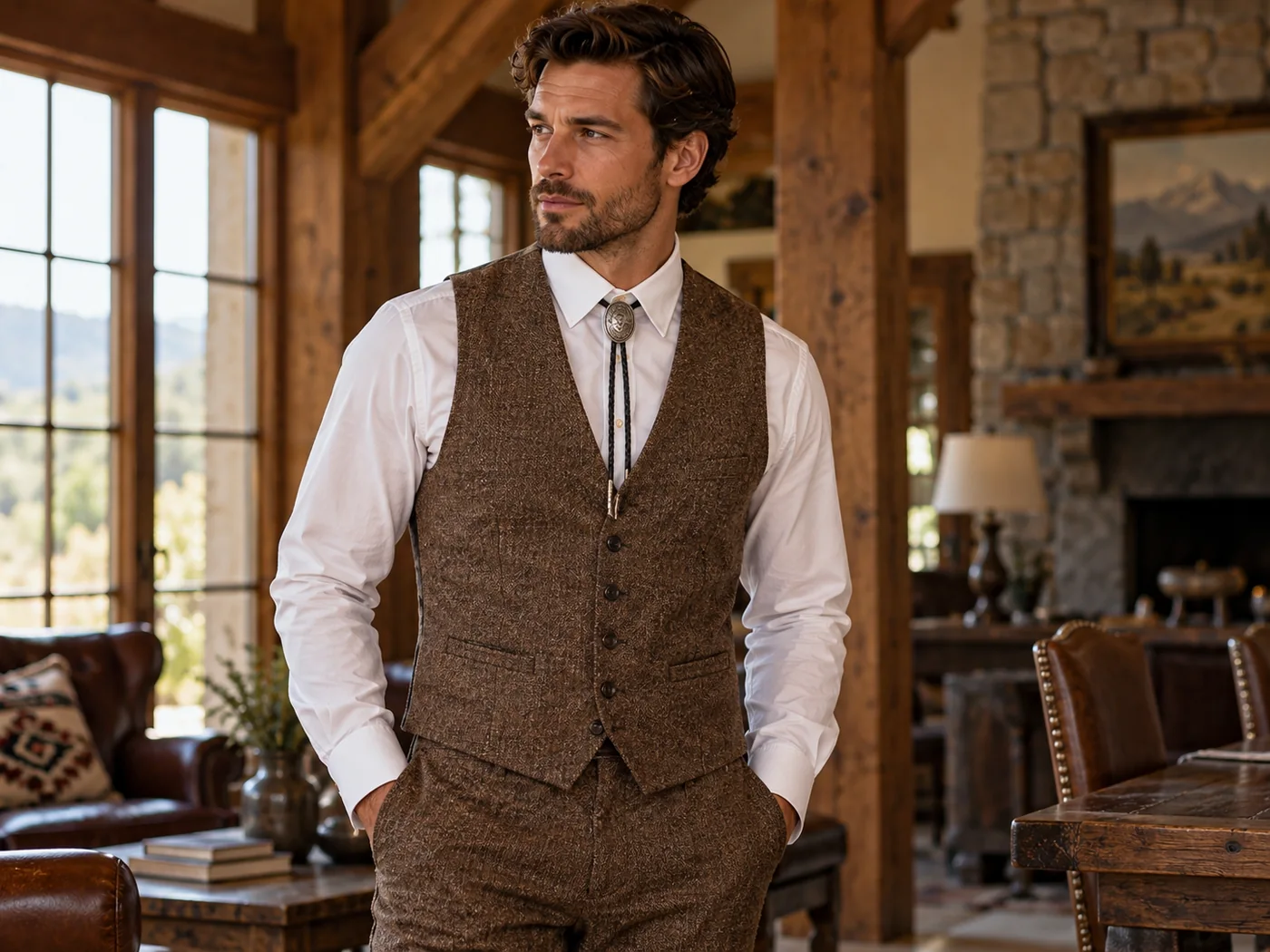
Button the shirt to the neck for a dressier effect, or loosen the top button for a casual Western-inspired outfit. Let the metal tips fall down the shirt front rather than getting trapped behind the waistcoat. For help deciding whether tweed fits the season and event, read our tweed for men guide. Dressier shirt cuffs can also benefit from simple cufflink styling.
Western bolo ties, cowboy styling and respectful choices
The bolo tie is strongly associated with the American West and Southwestern jewellery traditions, including designs made by Native American artists. Not every bolo tie has the same origin, maker or cultural significance. If buying a handcrafted or turquoise piece, check the maker, materials and stated provenance rather than assuming a mass-produced design is Indigenous-made.
A Western look can incorporate a pearl-snap shirt, suede jacket, darker denim or boots, but keep the number of signature pieces appropriate to the occasion. Avoid presenting ceremonial or heritage designs as novelty props. For a simpler modern look, a plain silver slide with a neat shirt is enough.
If you want additional understated accessories, our men’s accessories guide covers watches, belts and other elements that can support rather than compete with statement neckwear.
Common bolo-tie mistakes to avoid
- Wearing a loose slide with a formal shirt: push it higher or change to an outfit that genuinely calls for a relaxed neckline.
- Letting one cord end hang far lower: even out the tips before leaving.
- Forcing a damaged slide: check its mechanism rather than scraping the cord.
- Overloading the outfit: a large belt buckle, bold hat, decorative lapel pin and oversized slide can compete for attention.
- Ignoring the dress code: a bolo is not automatically a replacement for black-tie neckwear.
- Choosing the wrong shirt: collars that collapse or stand away from the neck make the accessory look untidy.
One final check: does the bolo look deliberate from a normal conversational distance? If it disappears entirely or dominates the outfit, try a different slide size, collar or jacket.
Frequently asked questions
How are you supposed to wear a bolo tie?
Place the cord around your neck, keep the decorative slide facing forward, move it to the desired height, centre it and let the ends hang evenly. Close your top shirt button for dressier looks; open it for casual wear.
Do you wear a bolo tie tight or loose?
High near a buttoned collar looks smarter. Lower against an open neckline looks more casual. It should never feel painfully tight or restrict your breathing.
Can men wear a bolo tie with a vest?
Yes. A simple waistcoat can frame the cord neatly. Position the slide above the waistcoat opening so it remains visible, and keep the metal tips free of the buttons.
Is a bolo tie acceptable instead of a tie at a wedding?
It may be suitable at Western-themed, rustic or creative weddings. Check the invitation or ask the couple. A conventional tie or bow tie is safer at a traditional formal or black-tie event.
Should a bolo tie be worn like a choker?
For a formal look the slide can sit at the collar, but the cord should remain comfortable. Don’t tighten it into the throat. A deliberately low slide gives a more relaxed accessory look.
Not sure what to wear?
Use our Men's Outfit & Dress Code Generator to get a personalised outfit based on your occasion, workplace and weather.
Try the Outfit Generator →