
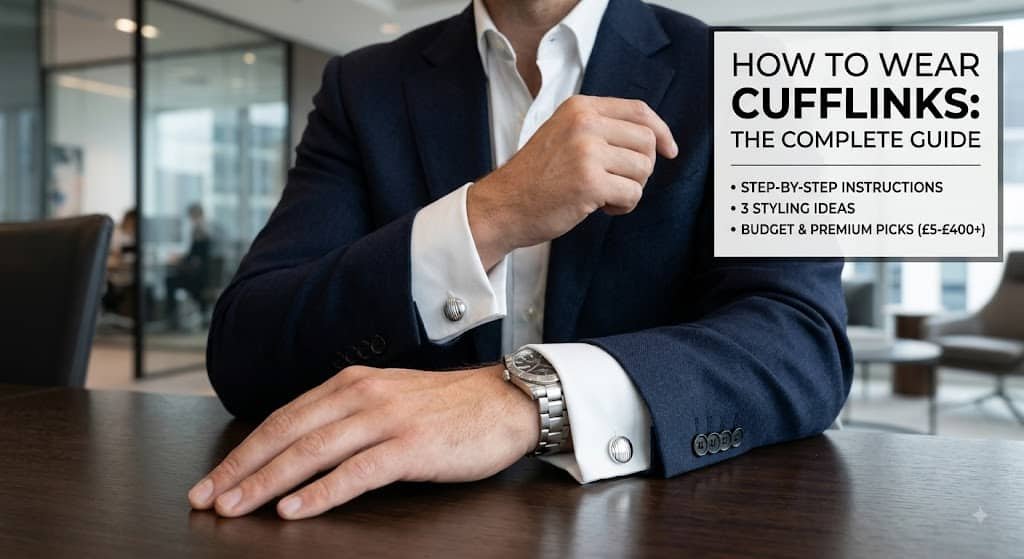
Quick Style Summary
Cufflinks are the easiest way to look sharp at work or any formal event, but only if you know how to wear cufflinks correctly. This guide covers everything from which shirts actually work with cufflinks to step-by-step instructions, real outfit ideas, and affordable brands for every budget.

Table of Contents
What to Expect
Ever stood at your wardrobe with a fancy pair of cufflinks in hand, wondering how the hell they actually go on your shirt cuffs? Or worse, fumbled with them for five minutes while your mates waited at the bar?
Here’s what we’ll walk you through: which shirts actually accept cufflinks, the four simple steps to put them on without looking like you’re performing surgery, three complete outfit combinations you can copy tomorrow, and our top product picks at every price point from £5 to £400+. We’ll also cover the difference between French cuffs and regular shirts, what mistakes to avoid, and exactly when cufflinks are appropriate (spoiler: more often than you think).
I’ve spent years styling professional men across UK and US offices. What I’ve learned is this: cufflinks aren’t complicated—they just need clear instructions.
What Are Cufflinks?
Think of them as jewelry meets function—they’re decorative AND practical. Instead of using buttons or fabric loops, you thread the cufflink through matching holes on both sides of the cuff, then close it from the back.
A professional man who wears cufflinks looks more intentional about his appearance. In finance, law, and executive roles, this matters. At weddings, it shows respect. On a first date, it says you made an effort.
Cufflinks also give you style flexibility that regular button cuffs don’t. You can wear the same shirt three different ways—buttons during the day, cufflinks at night, or studs with a tuxedo.
UK vs USA context: British offices tend to expect cufflinks more formally, especially in traditional industries. American tech hubs? Less so. But if you’re dressing for important meetings on either side of the Atlantic, cufflinks are a safe, sophisticated choice.
Which Shirts Accept Cufflinks?
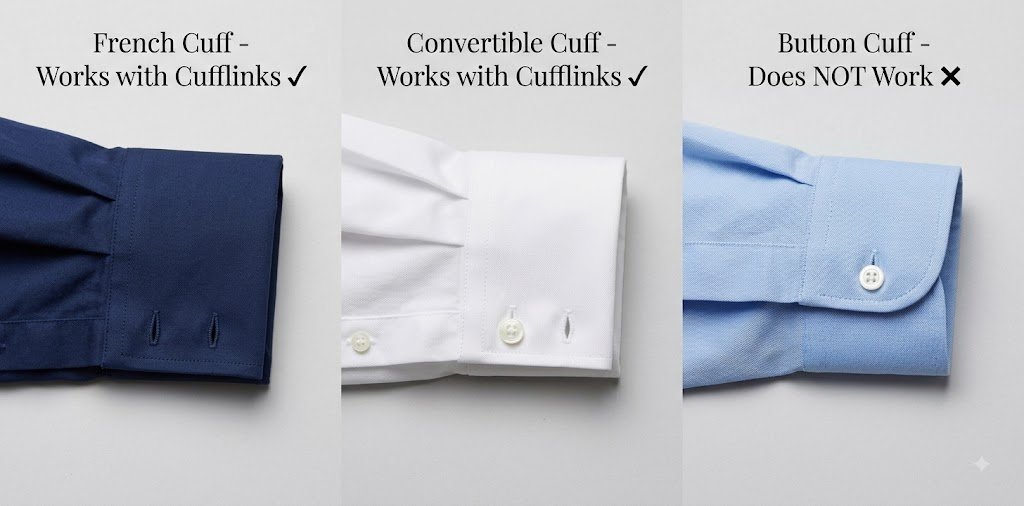
Not every shirt in your closet can handle cufflinks. Here’s what actually works:
French Cuff Shirts (The ideal choice): These are made specifically for cufflinks. Formal dressing is built around them. If you’re buying cufflinks, this is the shirt to pair them with.
Perfect for versatility—wear buttons during a casual Friday, swap them for cufflinks when you’ve got evening plans. Charles Tyrwhitt and other high-street brands make these. If you want one shirt doing double duty, this is your answer.
Button Cuffs (Won’t work, full stop) These have a button sewn into the cuff, no cufflink holes. Barrel cuffs, as they’re called, are designed for buttons only.
Can you modify a regular shirt? Yes, a tailor can actually remove the button and cut small buttonholes to accept cufflinks. It costs £15-30 per shirt. Worth it if you’ve got a favorite shirt you want to elevate.
Quick Reference Table: Shirt Cuff Types at a Glance
| Cuff Type | Holes for Cufflinks? | Works with Buttons? | Best For | Flexibility |
| French cuff | ✅ Yes (always) | ❌ No buttons | Formal, tuxedos, weddings | High—only wears with cufflinks |
| Convertible | ✅ Yes (also has holes) | ✅ Yes | Office day-to-night | Very high—flip between looks |
| Barrel (button) cuff | ❌ No | ✅ Yes | Casual, smart casual | Low—buttons only |
How to style cufflinks: Know your shirt type first.
How to Wear Cufflinks: 4 Simple Steps
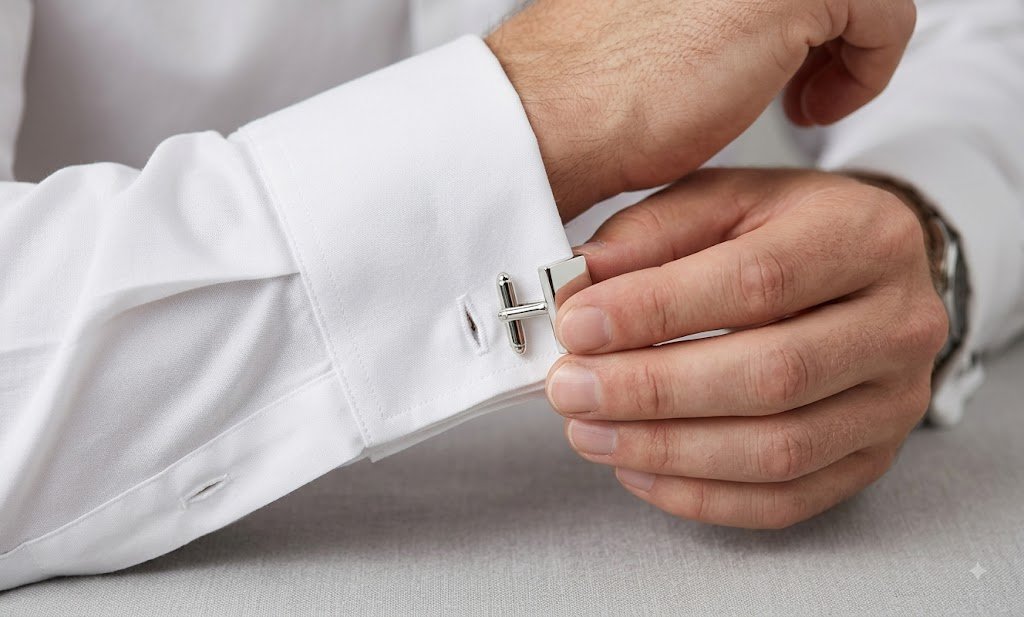
Let me break this down so you never fumble again.
Step 1: Extend your arm and fold the cuff back. Push your wrist forward slightly. Using your other hand, grab the end of the cuff closest to your hand and fold it back gently. The fold should be neat and clean. You’re creating a visible cuff that sticks out about an inch from your wrist.
Step 2: Pinch the two fabric layers together. This is the key part that trips people up. You’ve got two layers of fabric now—hold them so the edges lay flat against each other, away from your wrist. The inside fabric of each layer should face each other. Imagine you’re pinching a piece of paper between your thumb and finger.
Step 3: Align the cufflink holes. Look at both sides—you should see two small holes on each layer, perfectly aligned. If they’re not aligned, adjust your grip slightly. This takes practice, but after three or four times, it becomes automatic. You want the holes to match up cleanly.
Step 4: Insert the cufflink. For swivel-back cufflinks (the most common type), hold the cufflink horizontally and thread the post through both holes. You’ll feel a slight resistance—that’s normal. Once it’s through, rotate the swivel back 90 degrees. It locks in place. Done.
Pro tip: It takes two minutes the first time. By the tenth time, you’ll do it without thinking. Don’t overthink the process—speed comes naturally.
How to Style Cufflinks: 3 Complete Outfit Combinations
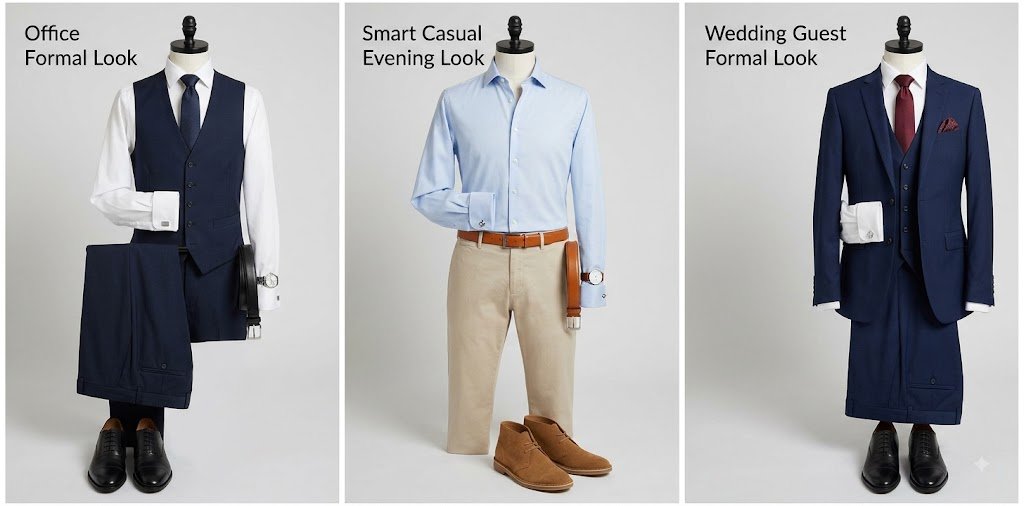
Outfit 1: The Office Formal Look
Top: Navy oxford shirt (100% cotton, soft collar) Bottom: Charcoal slim-fit wool trousers Shoes: Black leather oxfords (Clarks or similar) Cufflinks: Silver knot cufflinks (Charles Tyrwhitt, £49.95) Accessories: Dark navy knit tie, silver watch, black leather belt
Best for: Client meetings, presentations, important office days (age 25-45)
Why it works: Navy and charcoal are the most professional combination. Silver cufflinks add refinement without being loud. The soft collar of an Oxford shirt is formal enough for most UK offices. This outfit says “I know what I’m doing” without trying too hard.
Seasonal swap: In summer, switch the wool trousers for lightweight navy chinos. In winter, add a navy wool sweater under the shirt.
Outfit 2: The Smart Casual Evening Look
Top: Pale blue dress shirt (linen blend, for breathability) Bottom: Beige slim-fit chinos Shoes: Tan suede desert boots Cufflinks: Silk navy knot cufflinks (TM Lewin, £5) Accessories: Caramel leather belt, minimal watch, no tie
Best for: Drinks after work, casual dates, weekend social events (age 25-40)
Why it works: Pale blue works with warm tones (tan, caramel). The silk knots keep it relaxed—not too formal for a date, but polished enough to show you made an effort. Linen breathes better for evening wear. Skip the tie here—cufflinks alone make the statement.
Seasonal swap: Winter = add a caramel wool sweater over the shirt. Summer = stick with the linen, lose the sweater.
Outfit 3: The Wedding Guest Formal Look
Top: White crisp cotton dress shirt (French cuff only) Bottom: Navy three-piece suit (wool, properly tailored) Shoes: Polished burgundy or black leather oxfords Cufflinks: Sterling silver cufflinks (Links of London, £150) Accessories: Navy silk tie, burgundy pocket square, silver cufflinks, matching waistcoat
Best for: Weddings, formal evening events, black-tie adjacent occasions (age 25-50)
Why it works: White + navy is the classic formal combination. Three-piece (with waistcoat) shows proper effort at a wedding. Sterling silver cufflinks are investment pieces—these will last 20+ years. The burgundy pocket square and oxfords add a personal touch without breaking the formal code.
Why this is more impressive than most guests: Most men wear a suit. This is a suit done right. Cufflinks here signal you understand formal dressing.
Best Cufflinks — Our Top Picks at Every Price Point
1. TM Lewin Silk Navy Knot Cufflinks
Price: £5 / $7 | Available at: TM Lewin (UK online) | Best for: Budget-conscious professionals, everyday wear, trying cufflinks for the first time | Key features: Silk elastane blend, stretch design, holds shape, washable | Why it works: Honestly, for five quid, this is remarkable value. The silk doesn’t feel cheap—it’s smooth and maintains shape through regular use. Navy knots work with almost any shirt. If you’re nervous about losing expensive cufflinks, start here. Honest con: Not as durable as higher-end options. After two years of heavy rotation, the elastane can lose some stretch. But for the price? You can buy five pairs.
2. Charles Tyrwhitt Silver Knot Cufflinks
Price: £49.95 / $60 Available at: Charles Tyrwhitt (UK + US online) Best for: Professionals wanting versatile, elegant everyday cufflinks Key features: Stretchy elastane-viscose yarn, round design, engraved logo, gift-boxed Why it works: Charles Tyrwhitt knows professional dressing. These knots are quality—they feel substantial but not heavy. Silver goes with everything from navy suits to casual blazers. The round shape is classic, won’t date. Most guys buy one pair here and live in them. Honest con: Slightly pricey if you want multiple colors. The logo engraving is subtle but visible—if you prefer minimal branding, consider alternatives.
3. Links of London Sterling Silver Cufflinks
Price: £150 / $180 Available at: Links of London (UK + US boutiques) Best for: Mid-range investment, office professionals, men wanting something that’ll last decades Key features: 925 sterling silver, polished finish, multiple designs, hallmarked Why it works: This is where quality jumps noticeably. Sterling silver feels different—heavier, smoother, more refined. Links of London designs are sophisticated without being pretentious. Honest con: Sterling silver tarnishes if not worn regularly. If you only wear cufflinks once a month, they’ll need occasional cleaning. Also more expensive to replace if lost.
4. Tateossian Gold Ribbed Knot Cufflinks
Price: £250 / $315 Available at: Tateossian (UK London flagship + US) Best for: Premium, modern dressing, men who want engineering-focused design Key features: Gold plating, mechanical precision, London-made, distinctive ribbed texture Why it works: Tateossian is to cufflinks what Rolex is to watches—they obsess over quality. These ribbed knots are unique; you won’t see them on every banker. The ribbed texture catches light beautifully. London-made means real craftsmanship. If you’re wearing cufflinks three times a week, these are worth every penny. Honest con: Expensive entry point. Gold plating will eventually wear (5-7 years of heavy use). But the base metal is quality, so replating is affordable.
5. Montblanc Stainless Steel T-Bar Cufflinks
Price: £420 / $500 | Available at: Montblanc boutiques (UK + US) | Best for: Luxury investment, men who wear cufflinks weekly, professional executives | Key features: Stainless steel, T-bar design, subtle Montblanc logo, precision engineering, lifetime quality | Why it works: Montblanc doesn’t compromise. These are built to last a lifetime—literally. The stainless steel never tarnishes, never fades. T-bar design is mechanical precision. If you’re buying one pair of cufflinks and wearing them forever, this is the sensible luxury choice. These work with everything: suits, blazers, formal shirts, even smart-casual with the right outfit. Honest con: The price. But spread over 30 years? About £14 per year. Not unreasonable for something you wear twice a week
Cufflink Styles Explained: Know Your Types
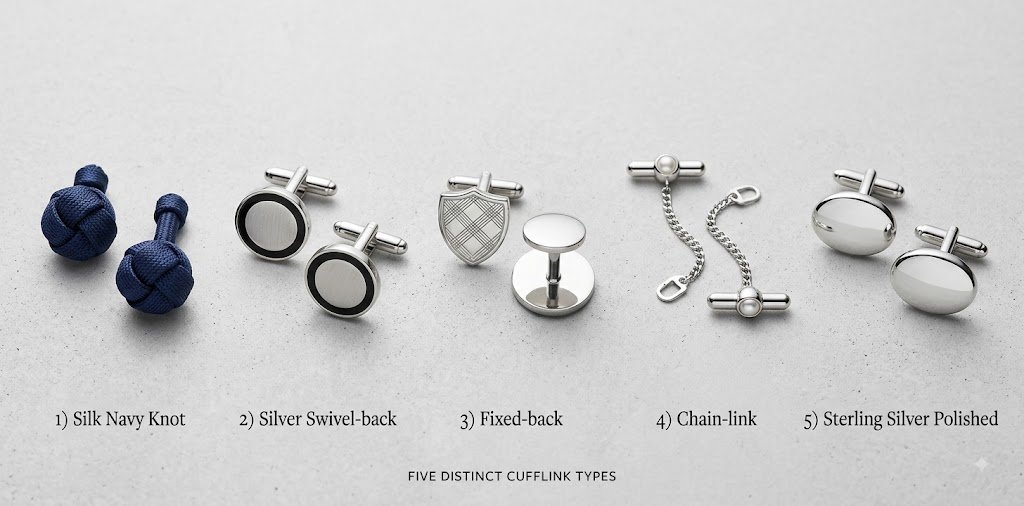
Swivel Back (Most common, easiest): The back rotates 90 degrees to lock into place. Thread it through horizontal, rotate to vertical, done. This is what most men buy. Reliable, never fails if you fit them right.
Fixed Back (Traditional): Both ends are solid—no moving parts. You thread one end through, then the other. These look more formal but require both holes aligned perfectly. Vintage cufflinks often use this design.
Slightly fussy to put on because you have to thread both ends, but the chain adds elegance. Common in black-tie.
Silk Knot (Casual, versatile): Made from silk or elastane yarn tied in a knot. These stretch to fit through holes, making them nearly impossible to mess up. Perfect for cufflinks beginners. Less formal than metal, but still appropriate for most professional settings.
Common Mistakes to Avoid
Mistake 1: Wearing cufflinks on button cuffs. Check the cuff type first. Button cuff? Leave the cufflinks in the box.
Why it’s a problem: Button cuffs aren’t designed for cufflinks. You’ll stretch the fabric or tear it trying to force them.
Instead, try: Identify if your shirt is French cuff or convertible before buying cufflinks. If you love a button-cuff shirt, ask a tailor about modification.
Mistake 2: Mismatching metals. Wearing gold cufflinks with a silver watch and a white gold ring looks chaotic. Your metals should coordinate.
Why it’s a problem: Mismatched metals scream “I grabbed whatever was in the drawer.” Professional appearance relies on cohesion.
Instead, try: Pick one metal family—all silver, or all gold, or all rose gold. Stick with it. One watch, one belt buckle, one set of cufflinks.
Mistake 3: Overstyling for the office. Those mechanical Tateossian gears are cool, but maybe save them for evening. For the 9-5 office, understated silver or gold knots work better.
Why it’s a problem: In conservative offices, bold cufflinks can read as trying too hard. Save the showiness for social events.
Instead, try: Office = simple, classic cufflinks (knots, plain silver). Events = experiment with personality.
Mistake 4: Wearing them too loose or too tight. If they’re too loose, they’ll slide up your arm and look sloppy. Too tight pinches your wrist and cuts circulation. You want snug but comfortable—like a watchband.
Instead, try: Test before you buy. If buying online, check the return policy. Try them on before committing to expensive pieces.
Why it’s a problem: Cufflinks need the double-cuff structure. Short sleeves don’t have this. It’s structurally impossible and aesthetically weird.
Instead, try: Reserve cufflinks for dress shirts and formal long sleeves only. Short sleeves stay button-free.
Budget Guide: Cufflinks at Every Price Point
Under £50 / $50 (Budget-Friendly Entry Point)
Where to shop:
- UK: TM Lewin, ASOS, H&M, Uniqlo
- USA: ASOS US, Amazon, Gap
- Both: Uniqlo, ASOS (international)
What to prioritize: Quality over quantity. Buy one good pair instead of five cheap pairs. Look for silk knots or metal if you want them lasting 2-3 years.
Best value picks in this range:
- TM Lewin Silk Knots: £5-15 (astonishing value)
- Charles Tyrwhitt Knots: £15-35 (reliable, professional)
- ASOS house brand: £20-40 (decent quality, risky returns)
Pro tip: Buy multiples of the same style here. TM Lewin navy knots at £5 each means you can have them in navy, black, and burgundy for £15 total. Rotation keeps them fresher longer.
£50-150 / $50-150 (Sweet Spot for Most Men)
Where to shop:
- UK: Charles Tyrwhitt, M&S, John Lewis, Links of London
- USA: J.Crew, Nordstrom, Bloomingdale’s
- Both: ASOS (premium line), Zara
Best quality-to-price ratio: This is where serious cufflinks start. Sterling silver becomes accessible. You can wear these 2-3 times weekly without worrying about durability. Expected lifespan: 5-10 years with normal care.
Investment pieces worth buying here:
- Charles Tyrwhitt Silver: £45-65 (workspace staple)
- Links of London Entry Range: £120-150 (real sterling silver, lifelong piece)
Why this tier makes sense: You’re not overpaying for branding, and you’re getting quality that won’t embarrass you. Most professional men live in this price range and look fantastic.
£150+ / $150+ (Premium Investment)
Where to shop:
- UK: Deakin & Francis, Tateossian (London), Montblanc boutiques, John Lewis premium
- USA: Tateossian US, Montblanc US, Harrods US, high-end department stores
Worth spending more on:
- Engineering precision (Tateossian mechanical designs)
- Heritage craftsmanship (Deakin & Francis since 1786)
- Materials (18K gold, rare gemstones)
- Personalization (engraving, bespoke services)
Why invest at this level: You’re buying something you’ll own for life. The materials are better. The craftsmanship is visible. If you wear cufflinks 50+ times yearly, this pays for itself over a decade.
Real talk: Luxury cufflinks aren’t a status symbol—they’re a practical investment in something you actually use. If cufflinks are part of your daily professional uniform, spending £250-500 once makes financial sense.
UK vs USA Style Differences: What You Need to Know
Office Culture: UK offices, especially in finance and law, treat cufflinks as standard formal wear. Expected on important client meetings. American tech hubs? Less common. Traditional American finance (NYC, Boston)? Expected just like the UK. The difference: American casualization has spread further than UK offices.
Brand Availability UK: Charles Tyrwhitt, TM Lewin, Reiss dominate. Easy to find in shopping centers. USA: Brooks Brothers, Jos A Bank, Nordstrom more common. Less “everyday” availability.
Fit Preferences: UK men generally prefer slightly slimmer shirts. USA varies wildly by region—California more relaxed, East Coast more tailored.
Pricing Reality: Same cufflink might be £50 in the UK, $75 in the USA. Not a simple conversion—US pricing is often higher. Always check both markets when buying.
Shipping hack: If you find cufflinks in UK stores but live in the USA, UK online retailers often ship internationally. Sometimes cheaper than US retailers.
When to Wear Cufflinks: The Occasion Guide
Black-Tie & Tuxedo (Essential): If you’re wearing a tuxedo, cufflinks are non-negotiable. They’re part of the formal dress code. Most tux shirts come with French cuffs designed specifically for cufflinks.
Business Formal (Expected in finance, law, consulting): Client meetings, presentations, important negotiations? Cufflinks are a smart move. They signal that you take the meeting seriously. In the UK, this is almost expected. In the USA, it’s a noticeable positive.
Weddings (Strongly recommended): As a guest, cufflinks show respect for the occasion. They’re not required, but they’re noticed, especially at formal evening weddings.
Casual Professional (Optional flex): Smart casual office environment? Cufflinks can work if you’re wearing a proper dress shirt. But it might read as overdressed depending on your workplace culture. Know your office.
Casual Friday (Usually no): If your office does casual Friday, skip the cufflinks. Wear them with your regular button-cuff shirt instead.
Social events, dates, informal gatherings (It depends): For a nice dinner out? Probably overkill. Read the situation.
Frequently Asked Questions
Q: What exactly are cufflinks? A: Small decorative fasteners that hold dress shirt cuffs closed. They’re threaded through matching holes on both sides of a French or convertible cuff. They’re both functional (keeping the cuff closed) and aesthetic (adding polish to your look). Think of them as the formal equivalent of buttons, but more elegant.
Q: Can I wear cufflinks on a regular shirt with buttons? A: Not safely, no. Button cuffs aren’t designed for cufflinks. Trying to force cufflinks onto button cuffs will either damage the shirt or look wrong. If you want to wear cufflinks, buy a French cuff or convertible cuff shirt.
Q: Which brand should I buy? A: Start with TM Lewin (£5) or Charles Tyrwhitt (£49) if you’re new to cufflinks. These are reliable, affordable, and give you a feel for what works for you. For investment pieces (wearing 2-3 times weekly), move to Links of London or Tateossian. If you wear cufflinks almost daily, Montblanc or Deakin & Francis last forever.
Q: Are cufflinks appropriate for the office? A: Absolutely, if your office is business formal or business casual. In UK finance, law, and consulting? Definitely appropriate. In USA tech or creative industries? Less common, but still professional. Know your workplace culture. When in doubt, they’re a safe, sophisticated choice.
Q: Do cufflinks fit differently in the UK vs. the USA? A: The mechanism is identical—both countries use the same hole sizes and cufflink standards. But UK shirts tend to run slimmer in the wrist area, so double-check sizing when ordering from across the Atlantic. Swivel-back cufflinks (the most common type) are universal and work everywhere.
Final Style Notes
Here’s the thing: cufflinks are simpler than you’re making them. Once you’ve put them on three times, it’s automatic. Don’t overthink it.
The real power of cufflinks is that they make ordinary shirts extraordinary. A basic navy dress shirt becomes elevated. A pale blue shirt goes from casual to smart-casual. This is inexpensive style leverage—£50 of cufflinks can transform your entire wardrobe.
Wear them to three different events and see how people react. You’ll notice compliments. You’ll notice you feel more confident. That’s the cufflinks effect.
Want to go deeper? Read our guides on smart casual shoes, how to dress for your body type, and interview outfit ideas. All of these pair beautifully with what you’ve learned here.
Not sure what to wear?
Use our Men's Outfit & Dress Code Generator to get a personalised outfit based on your occasion, workplace and weather.
Try the Outfit Generator →