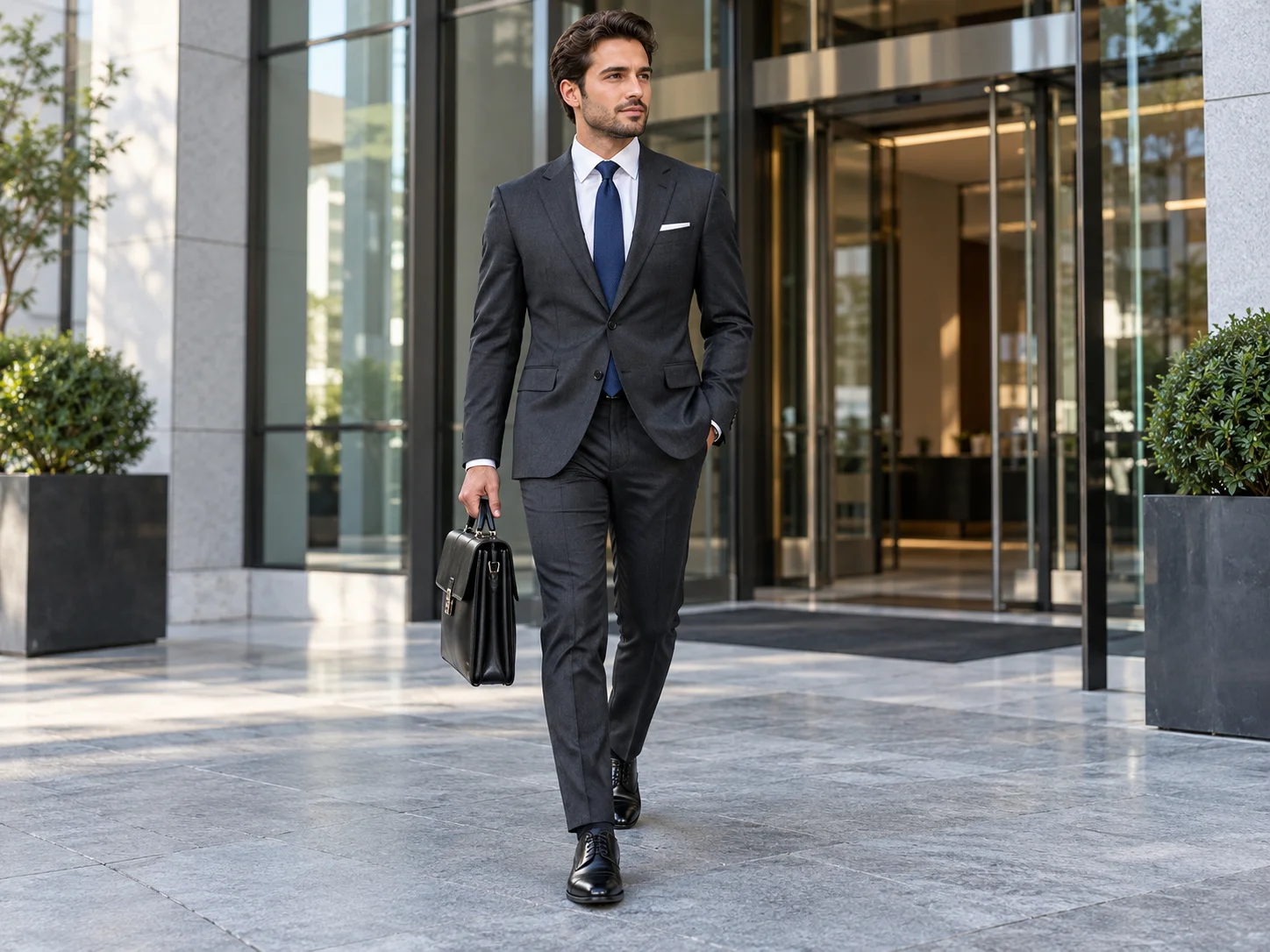
Quick answer: Business formal is a conservative dress code for important professional occasions. For men, the safest outfit is a matching navy or charcoal suit, a long-sleeved white or pale-blue dress shirt, a restrained tie, and polished leather shoes. Wear it for executive meetings, formal client events, and occasions where the invitation specifically requests formal business dress.
A smart outfit is not necessarily a formal one. An expensive blazer with chinos may look polished, but a coordinated suit communicates a different level of occasion. The practical challenge is knowing when that extra formality matters—and how to wear it without looking as though you are heading to a wedding.
In the UK, dress-code language is not perfectly standardized. A traditional financial firm may expect full suiting for daily work; a creative agency may use the same wording only for an important reception. Treat the host’s or employer’s instructions as more important than any general style rule.
Table of Contents
What does a business-formal dress code mean?
It means structured, conservative tailoring rather than relaxed separates. For men, the safest interpretation is a two-piece suit made from matching fabric, a collared dress shirt, a tie, and proper leather shoes. Keep colors and accessories restrained so they don’t distract from the purpose of the meeting.
The term is often used for board meetings, corporate award presentations, important client dinners, interviews in traditional industries and formal networking occasions. Some invitations allow more flexibility, but don’t assume a polo shirt, open collar, or trainers will be acceptable.
For the wider UK suit vocabulary, our lounge suit dress code guide explains why a standard day suit isn’t the same as a tuxedo or black-tie outfit.
What to wear: six formal-business essentials
1. A matching suit, not a blazer and separate trousers
Start with a single-breasted, two-button suit in navy or charcoal. Both colors work across executive meetings, business dinners and presentations. Mid-grey is a useful third option; black can work but often feels more severe in daylight. A subtle pinstripe may suit a traditional workplace, while bold windowpane checks require more confidence in the organization’s culture.
The jacket shoulders should lie cleanly, the button should fasten without pulling, and the trousers should fall neatly over your shoes. If you are choosing between greys, our charcoal grey suit guide shows practical shirt and footwear combinations.
2. A freshly pressed dress shirt
White is the lowest-risk shirt for a high-stakes event. Pale blue also works, especially under navy or charcoal. Choose a conventional point or spread collar, tidy cuffs, and an opaque fabric that does not show through under bright lights. The collar must be comfortable when the top button is fastened.
Avoid Hawaiian prints, conspicuous logos and casual flannel shirts. The shirt should remain tucked when you sit, stand or reach for your bag.
3. A restrained tie
A navy, burgundy or muted-pattern tie complements most dark suits. In a conservative setting, a tie is still a sensible default, even if some modern workplaces have abandoned it. If the invitation expressly says ties are optional, an open collar can work—but confirm before arriving.
The tip should finish near the waistband. A four-in-hand suits many collars, while the Full Windsor knot tutorial offers a fuller knot for wider collars and certain formal settings.
4. Polished leather dress shoes
Black Oxford shoes are the safest choice for conservative events. Black Derbies also work, and dark brown leather pairs well with navy or medium-grey suits when the venue is less rigid. Keep soles tidy, wear socks dark enough to cover your ankles when seated, and match the belt color to the shoes.
5. Minimal accessories
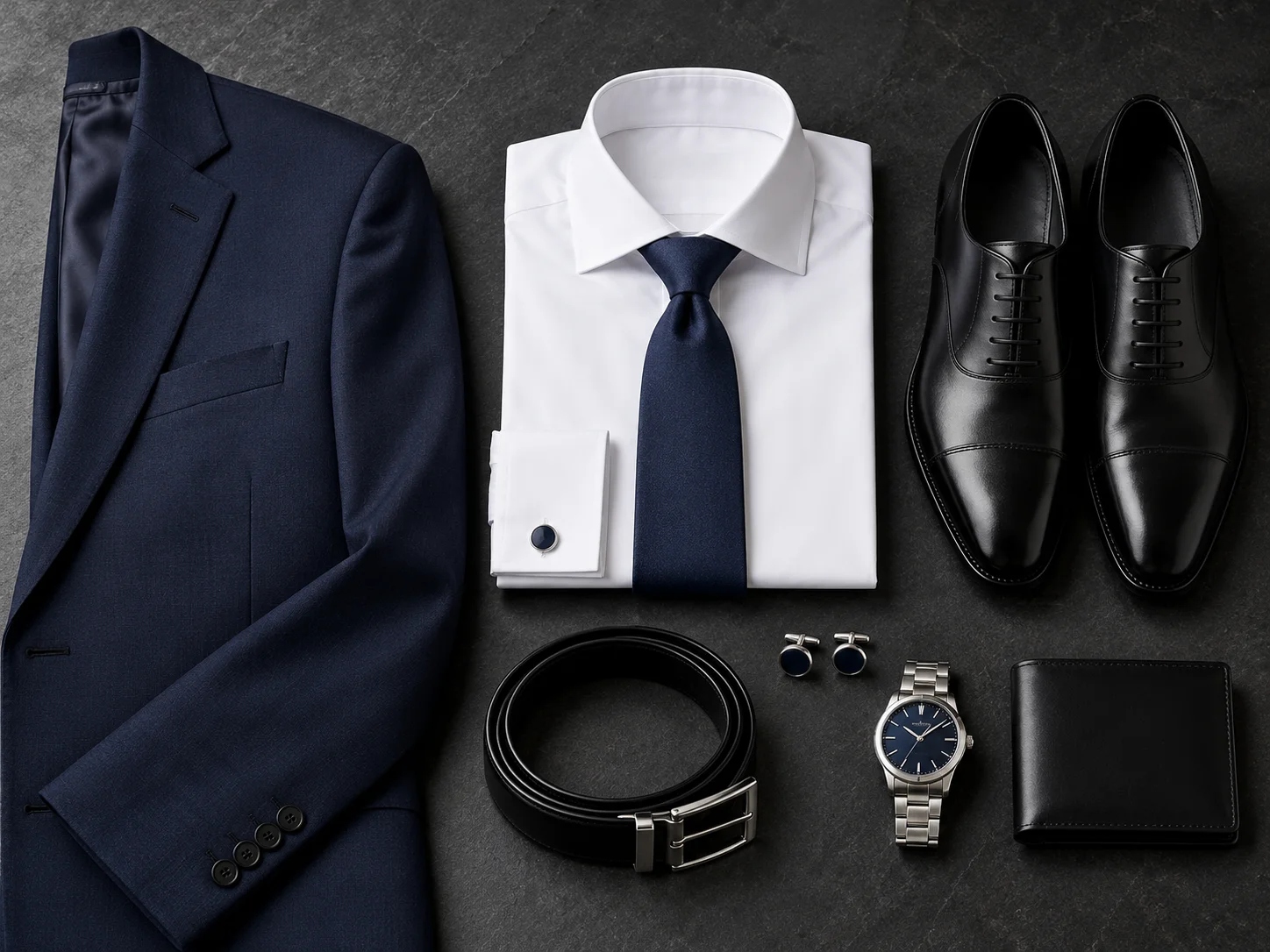
A simple watch, neatly folded pocket square and subtle cufflinks are enough. Accessories should finish the outfit, not dominate it. Our cufflinks guide helps if your shirt has French cuffs. Avoid oversized jewelry, novelty ties and overly strong fragrance.
6. The right coat and work bag
A structured overcoat or neat trench coat is appropriate when traveling to a formal occasion. The coat should cover the suit jacket beneath it and be removed indoors. A slim leather briefcase or understated portfolio looks better than a bulky gym bag.
For outerwear proportions, see our men’s trench coat guide.

Four reliable outfits for formal business events
Executive meeting: Navy suit, white shirt, navy tie with subtle texture, black Oxfords and a black belt. The contrast is balanced and unobtrusive.
Corporate awards or reception: Charcoal suit, pale-blue shirt, burgundy tie, polished black Derbies and a simple watch. A white pocket square is optional.
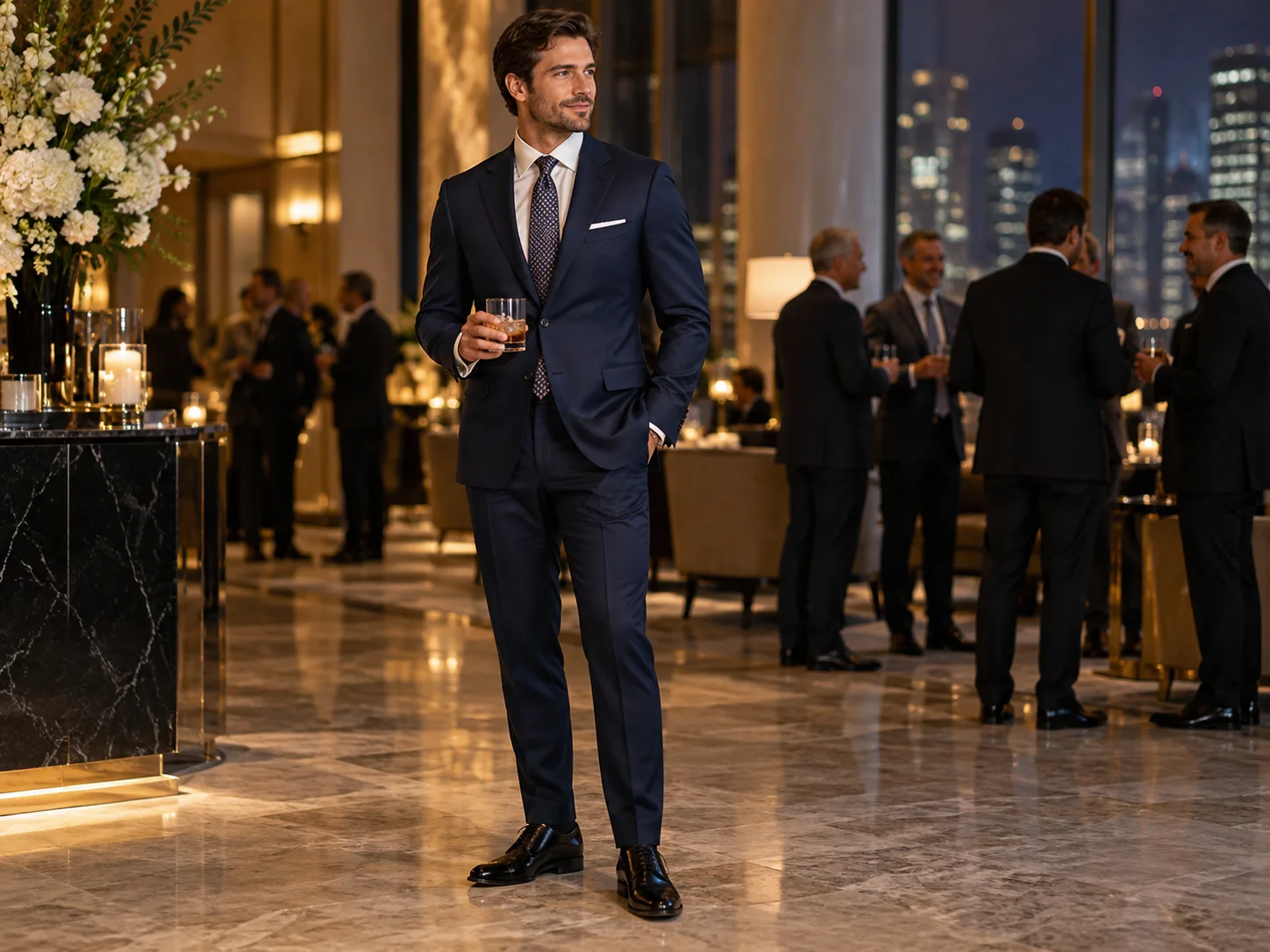
Senior client dinner: Dark navy suit, crisp white shirt, deep green or burgundy tie and black leather shoes. Do not switch to eveningwear unless the invitation specifies black tie.
Formal daytime presentation: Mid-grey suit, white shirt, navy tie and dark leather shoes. This combination is slightly lighter visually but still properly coordinated.
Each outfit uses the same framework, with changes in fabric tone and accessories rather than radical departures. If you already own one well-fitting navy suit, rotating shirts and ties is often more useful than owning several statement suits.
Business formal vs business professional: is there a difference?
Usually there is significant overlap. Many career centers and employers use the terms interchangeably for a matching suit, dress shirt, tie, and polished shoes. Where an organization distinguishes them, it may reserve the more formal wording for especially important meetings or events, while using the professional label for everyday client-facing office dress.
Our separate business professional attire for men guide explains the everyday workplace and interview interpretation in more detail. This article focuses on event-level decisions and what to wear when the invitation raises the formality.
Do not assume the label always means a three-piece suit, black suit or dinner jacket. Those are styling choices or different dress codes, not automatic requirements.
Business casual vs business formal: what changes?
| Item | Formal business event | Business casual workplace |
|---|---|---|
| Jacket | Matching suit jacket | Blazer may be optional |
| Trousers | Matching suit trousers | Tailored separates or chinos |
| Shirt | Long-sleeved dress shirt | Oxford shirt or other neat collared style |
| Tie | Recommended unless told otherwise | Usually optional |
| Shoes | Polished Oxfords or Derbies | Loafers or other suitable smart shoes |
| Setting | Board meeting, formal reception, high-stakes client event | Regular office day, informal meeting |
The most visible distinction is coordination. A blazer and stone chinos can be stylish, but they don’t replace matching tailoring when a full formal dress code is specified.
Our business casual for men guide covers the less structured option. For interviews in workplaces that explicitly allow it, see business casual interview outfits.
Is formal business dress the same as black tie?
No. A standard business suit, shirt, and tie is professional tailoring for day-to-evening wear. Black tie normally means a dinner jacket or tuxedo, a suitable formal shirt, black bow tie, and appropriate evening shoes. An ordinary black suit does not automatically become black tie just because it’s dark.
If the invitation specifies cocktail attire, that is another dress code with its own conventions. Our cocktail attire for men guide explains those differences.
How to stay formally dressed in summer and winter
Summer: lighter construction without losing structure
Lightweight wool or a breathable wool blend works well for warmer UK months. A half-lined jacket can feel cooler than a heavily padded one. Navy and medium grey remain easy to wear; very pale suits are less dependable for conservative daytime meetings.
Wear a breathable long-sleeved shirt, thin dress socks and tidy leather shoes. It may be sensible to remove the jacket during travel or at a desk, but keep it available when meeting clients or entering the event.
Winter: layering that still fits over tailoring
Choose a wool overcoat or a smart weather-resistant trench with enough room for your jacket. A muted scarf is practical for the journey. Avoid a thick jumper under a suit jacket if it causes pulling or ruins the intended silhouette.
Rain protection matters in the UK: a wool suit may handle brief moisture but is not rainwear. Dry wet shoes naturally and use proper leather care products.
Common mistakes that make a formal outfit look wrong
- A suit that is too tight: pulling buttons and strained shoulders are more distracting than a modestly priced suit with clean alterations.
- Visible trainers or sports socks: they can undermine the dress code even if the suit looks expensive.
- Leaving the tie at home without checking: especially risky for an unfamiliar company or high-stakes event.
- Too much shine: glossy fabrics and loud ties can look theatrical under office lighting.
- Confusing formal business dress with black tie: an evening tuxedo is not everyday corporate clothing.
- Ignoring the organiser: a company-specific instruction can override any general guide.

Frequently asked questions
What does business formal mean for a man?
It generally means a matching tailored suit, collared dress shirt, tie and polished leather dress shoes. Navy and charcoal are the most versatile choices for traditional offices and important client events.
Is a tie required for formal business attire?
A tie is the safest choice when the code is explicit. If the host or employer says ties are optional, you may dress down slightly, but don’t assume an open collar is acceptable at every formal meeting.
Can you wear a black suit to a formal business event?
Yes, provided it fits well and is styled with a clean shirt and restrained accessories. Navy or charcoal is often easier to reuse for regular office meetings; black tends to look more severe in daylight.
Does business formal mean semi-formal?
Not necessarily. The labels refer to different contexts and are used inconsistently. A business invitation usually means conservative professional suiting, while semi-formal social events may allow different styling. Check the specific invitation when in doubt.
If an invitation still leaves room for interpretation, use the men’s outfit generator to compare possible combinations, then confirm any hard dress-code requirements with the organizer.
For another authoritative perspective, the Creighton University Career Center describes conservative suit-and-tie dressing as the reliable formal approach. The most reliable final check is simple: a matching suit, a pressed shirt, an understated tie, polished leather shoes, and a clean fit. When an invitation explicitly says business formal, dress to that standard rather than treating it as an invitation to improvise.
Not sure what to wear?
Use our Men's Outfit & Dress Code Generator to get a personalised outfit based on your occasion, workplace and weather.
Try the Outfit Generator →