

Quick style summary
What is fast fashion? It is a clothing business model that produces trend-led garments rapidly and cheaply, which can lead to wardrobes that wear out faster, generate more waste, and make dressing for work more complicated for professional men.
Key Points
- Fast fashion means: rapid production, frequent new styles, high volumes and relatively low prices.
- Why it matters: it can encourage people to buy more clothing and wear individual pieces less.
- Better approach: buy fewer versatile pieces and judge garments by fit, fabric, construction and expected wear. This helps professional men feel more confident in their wardrobe choices, making dressing simpler and more dependable.
- For work: Oxford shirts, chinos and simple knitwear usually outlast short-term fashion trends.
European Parliament describes the model as the constant provision of new styles at very low prices, while the UK Parliament has characterised it by faster turnarounds, more collections and lower pricing.
Table of Contents
Everything You Should Know About Fast Fashion
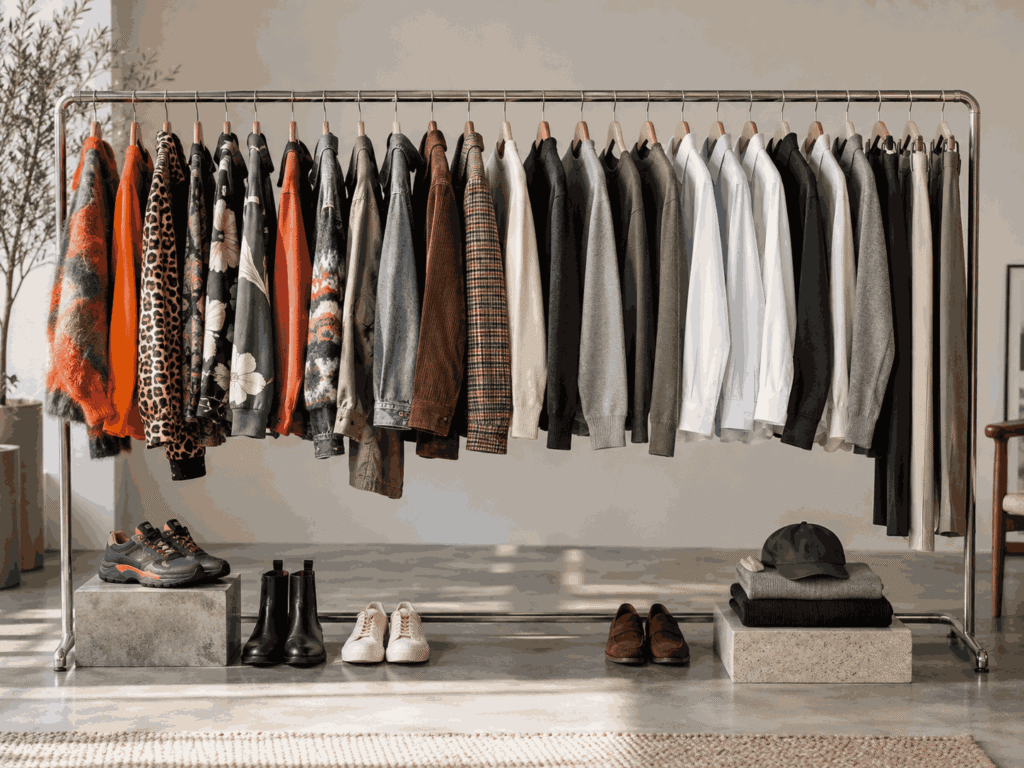
Ever bought a shirt because it looked good online, worn it twice and then wondered why it no longer fits your wardrobe?
That cycle is one reason fast fashion matters. Fashion trends now move rapidly through social media, including recurring 90s fashion, 2000s fashion and Y2K fashion influences. The problem is not enjoying a trend. It is buying pieces with no realistic role beyond that trend.
For professional men, a better test is simple: could you wear the item to work, dinner and a weekend event, and still want it next year?
That principle also fits naturally with our guide to men’s business casual outfits.
What Is Fast Fashion and How Does It Work?
Fast fashion is an accelerated retail model designed to respond quickly to changing demand. The UK Parliament traces the development of the model to the 1980s and highlights frequent collections, short lead times and lower prices as common characteristics.
It matters because speed changes how clothes are bought and discarded. UNEP reported in 2025 that around 92 million tonnes of textile waste are produced each year globally and that clothing production doubled between 2000 and 2015 while garment-use duration fell.
That does not mean every inexpensive shirt is automatically bad, or that every premium garment is sustainable. Price alone tells you very little.
Instead, inspect the fabric, seams, buttons, fit and whether you genuinely expect to wear it regularly. This approach empowers professional men to make smarter choices that support a sustainable wardrobe and personal style.
For office wardrobes, cotton Oxford cloth, linen, merino wool and sturdy chino fabric can work across seasons when chosen carefully.
Fast Fashion vs a Longer-Lasting Wardrobe
| Factor | Fast Fashion Approach | Longer-Lasting Approach |
| Buying | Frequent trend purchases | Fewer planned purchases |
| Style | Short fashion cycles | Versatile colours and cuts |
| Fit | Buy quickly | Try, measure and alter |
| Fabrics | Varies considerably | Prioritise useful construction |
| Wardrobe | More individual pieces | More outfit combinations |
The useful distinction is behaviour, not just branding. A £30 shirt worn 100 times can be a more sensible wardrobe purchase than a £150 shirt worn twice.
How to Style Trends Without Rebuilding Your Wardrobe
Outfit 1: Reliable Office Base
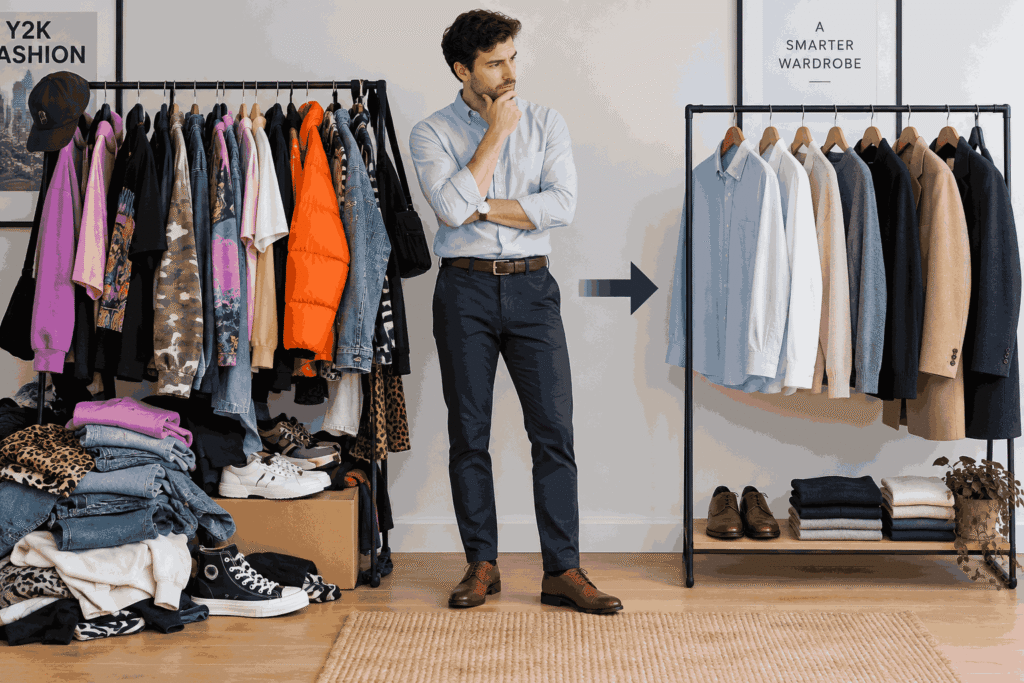
- Top: pale blue cotton Oxford shirt
- Bottom: navy straight-fit chinos
- Shoes: brown leather derbies
- Extras: brown belt and simple watch
- Best for: office days and meetings
- Real scenario: presentation in a London or New York office
- Temperature: 15 to 20°C / 60 to 70°F
- Care: wash shirt and chinos according to their labels; air-dry where practical
Outfit 2: Subtle Y2K Influence

Use a slightly relaxed white Oxford shirt with charcoal trousers (pants) and clean leather trainers (sneakers). The wider silhouette nods to Y2K fashion without turning your whole outfit into a 2000s costume.
Best for: creative, tech and hybrid workplaces.
Temperature: 18 to 24°C / 65 to 75°F.
Outfit 3: Autumn Smart Casual
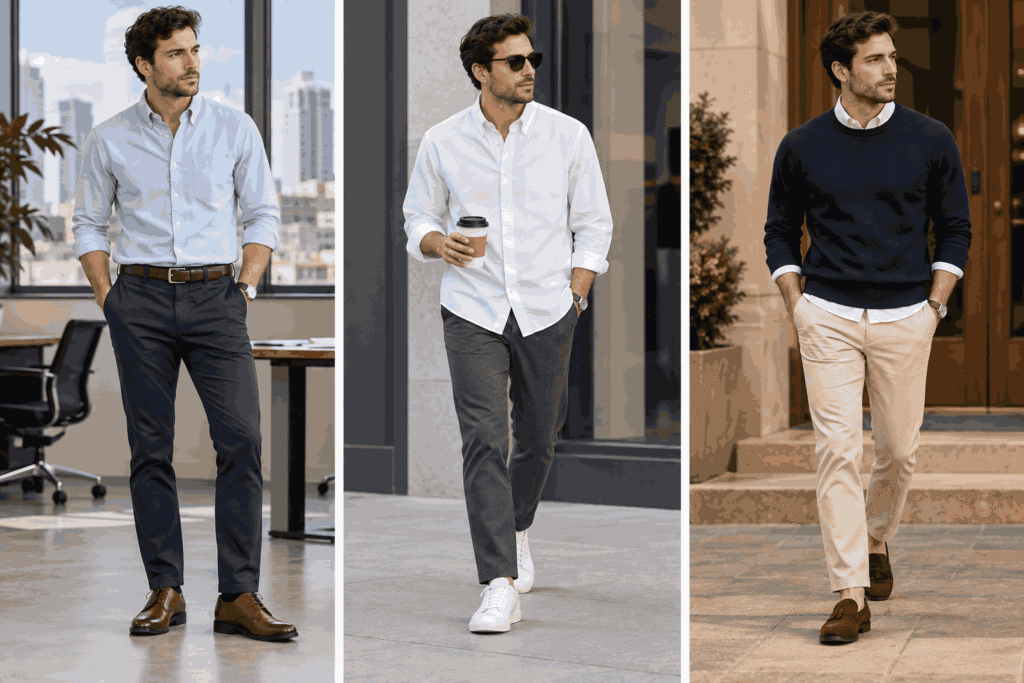
Wear a navy merino jumper (sweater), white shirt, stone chinos and dark brown loafers.
This works especially well in September and October because the layers can come off as temperatures change.
Best for: client lunches and date nights.
Temperature: 10 to 18°C / 50 to 65°F.
Five Practical Wardrobe Picks
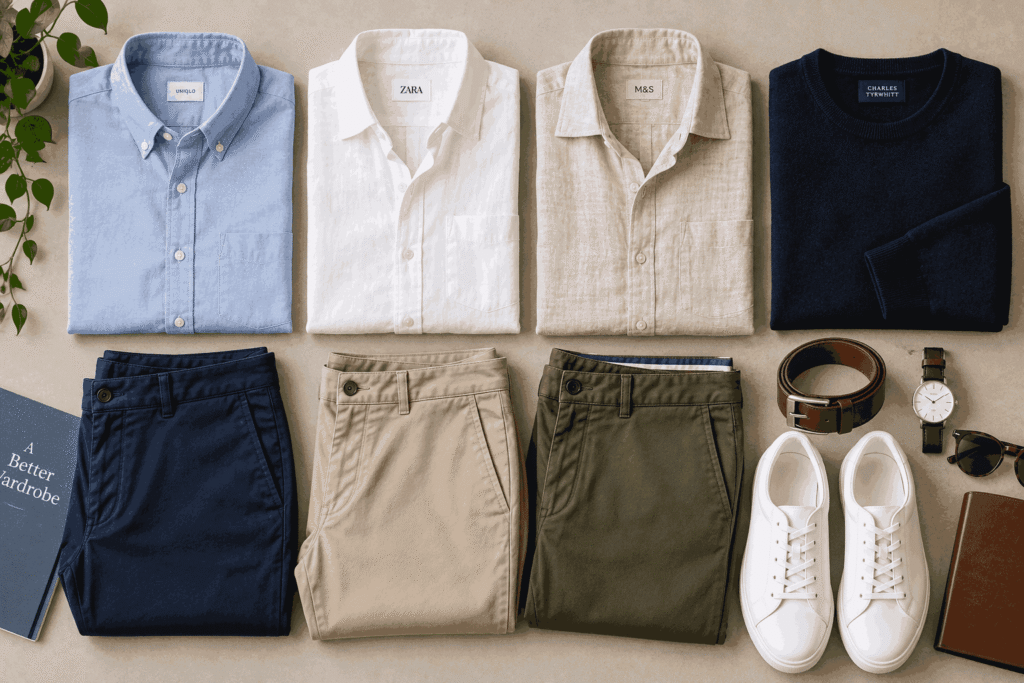
These are wardrobe examples, not sustainability certifications. A mainstream brand having environmental programmes does not automatically make every garment sustainable.
Price: £ 34.90/$ 49.90 Available in: Both Best for: everyday office wear, such as meetings or casual Fridays, thanks to its classic design and durability.
Price: £34.90 / $49.90
Available in: Both
Best for: everyday office wear
Why it works: cotton Oxford construction and a simple shape make it easy to repeat.
Downside: relaxed cuts may feel too casual in conservative offices.
2. Uniqlo Oxford Slim Shirt
Price: £29.90 / around $49.90
Available in: Both
Best for: cleaner business-casual outfits
Downside: slim cuts can restrict men with larger shoulders or arms.
3. Uniqlo Premium Linen Shirt
Price: regular UK price £39.90 / US $49.90; promotions vary
Available in: Both
Best for: hot offices and summer travel
Downside: linen wrinkles easily.
4. Next 100% Cotton Straight-Fit Chinos
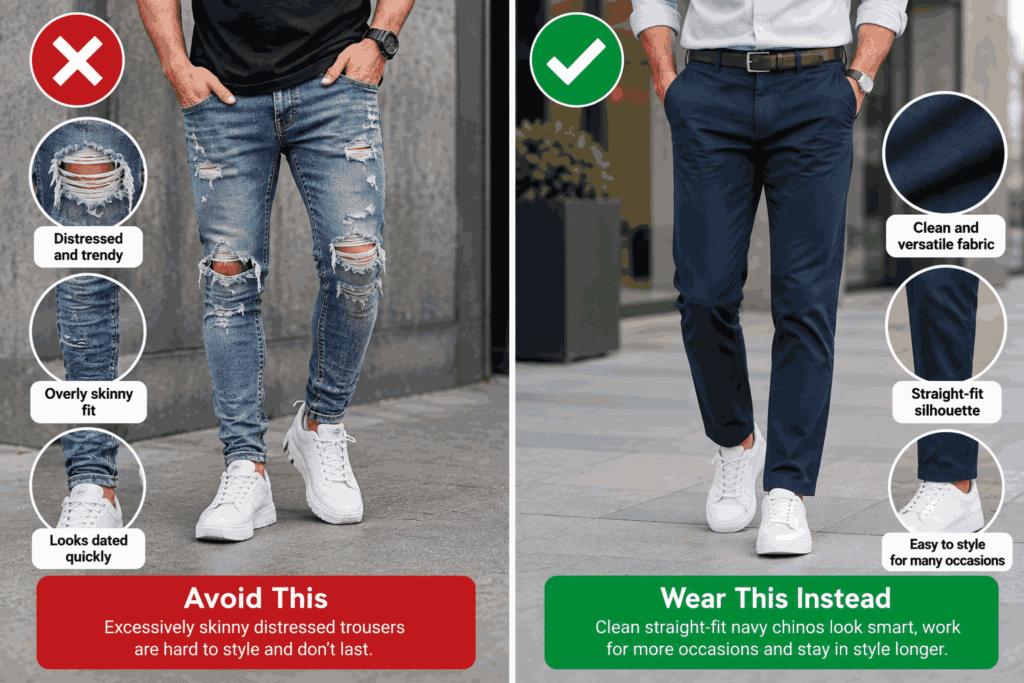
Price: £20 / approximately $27
Available in: UK
USA alternative: look for a comparable straight chino at Gap.
Downside: limited stretch compared with blended chinos.
5. Charles Tyrwhitt Pure Merino Crew Neck Jumper
Price checked in the UK: £79.95 / approximately $108
Available in: UK; check current US range.
Best for: autumn and winter layering
Downside: merino requires more careful washing than cotton.
Prices change by market, promotion, colour and size.
UK vs USA Fashion Differences
UK professional wardrobes often lean slightly more formal, particularly in finance, law and traditional client-facing offices. In the US, tech, startup and creative workplaces often allow more casual combinations.
Weather matters too. London rain rewards practical layers, while Texas heat makes breathable cotton and linen far more useful. New York requires proper cold-weather layering later in the year.
The principle stays the same: build around your actual climate and workplace, not your social feed.
Style Swaps: Five Fast Fashion Mistakes
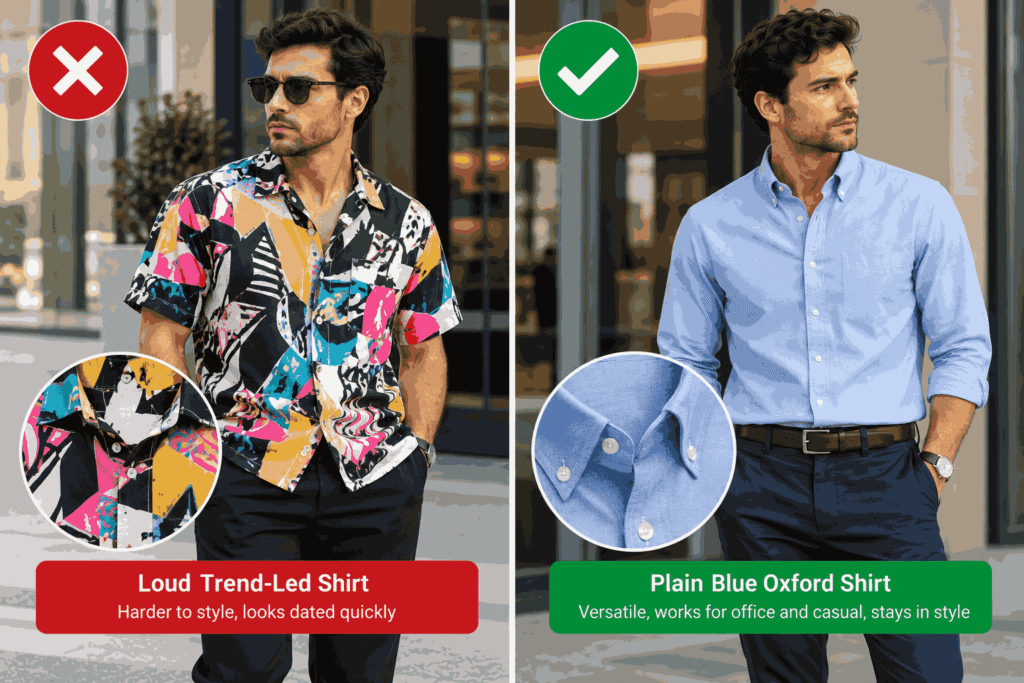
Don’t: buy another novelty shirt for one trend.
Do: choose a white or blue Uniqlo Oxford Shirt, £34.90 / $49.90.
Don’t: buy trousers because an exaggerated silhouette is briefly fashionable.
Do: try Next Straight-Fit Cotton Chinos, £20 / approximately $27.
Don’t: replace knitwear every season because the colour changes.
Do: choose neutral merino such as the Charles Tyrwhitt Merino Crew Neck, £79.95 / approximately $108.
Don’t: recreate 90s fashion or Y2K fashion head to toe.
Do: use one period-inspired silhouette with modern basics.
Don’t: assume a sustainability label makes a purchase necessary.
Do: first ask whether you will realistically wear the garment 30, 50 or 100 times.
Budget Guide: Every Price Point
Under £50 / $50: focus on Oxford shirts, polos, T-shirts and chinos from Uniqlo, Next, Gap, Old Navy or ASOS. Fit matters more than owning another colour.
£50 to £150 / $50 to $150: consider better knitwear, shirts, trousers and footwear. Charles Tyrwhitt, J.Crew and Banana Republic are worth comparing.
£150+ / $150+: spend more where construction genuinely matters, such as tailoring, coats and leather footwear. A bigger price tag alone does not guarantee longer life.
Seasonal Notes
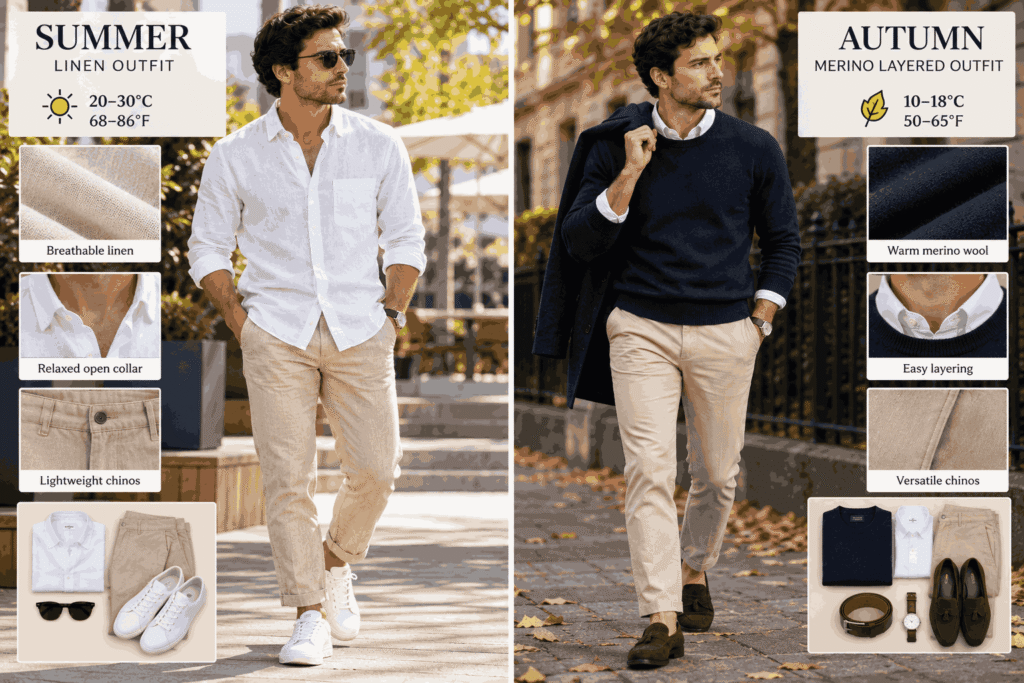
Summer: use linen, lightweight cotton and pale colours around 20 to 30°C / 68 to 86°F.
Winter: add merino, wool trousers and structured outerwear below roughly 12°C / 54°F.
For unpredictable UK weather, keep a lightweight waterproof layer nearby. In hotter US regions, minimise unnecessary layers and prioritise breathable fabrics.
What to Wear for Specific Occasions
Date Night: navy Oxford shirt, stone chinos and loafers.
Job Interview: light blue shirt, charcoal trousers and dark leather derbies. Skip experimental fashion trends.
Client Meeting: white Oxford shirt, navy tailored trousers and a blazer. Conservative clothing lets your presentation do the talking.
Frequently Asked Questions
Q: What is fast fashion?
A: It is a high-volume fashion model built around quickly producing and selling new, trend-responsive styles, usually at relatively accessible prices. Frequent turnover is one of its defining characteristics.
Q: Can fast-fashion clothes still work for the office?
A: Yes. Judge the individual garment by fit, fabric, condition and dress-code suitability. A clean cotton Oxford shirt can work even if the retailer operates at large scale.
Q: Is Fashion Nova legit?
A: Fashion Nova is an established online fashion retailer. Whether a Fashion Nova Men item suits your workplace is a separate question. For professional use, prioritise restrained colours, clean fits and versatile pieces rather than promotion-driven buying.
Q: Is Uniqlo fast fashion?
A: People classify Uniqlo differently because it is a large global apparel retailer but focuses heavily on recurring basics rather than only rapid micro-trends. Uniqlo also publishes sustainability and material targets. Treat labels cautiously and assess the product and your buying habits.
Q: Is UK office fashion different from US office fashion?
A: Often slightly. Traditional British offices can lean more formal, while American tech and creative workplaces frequently allow polos, chinos and clean trainers.
Q: Can I shop better on a limited budget?
A: Yes. Buy fewer colours, avoid duplicate pieces and prioritise garments that create several outfits. Cost-per-wear matters more than chasing expensive labels.
Q: I’m 45, not 25. Do current fashion trends still work?
A: Yes, but use trends selectively. Change one silhouette, colour or accessory rather than rebuilding your wardrobe around every new aesthetic.
Q: What if my office is very conservative?
A: Ignore most trend cycles at work. Stick with Oxford or dress shirts, tailored trousers, wool knitwear, polished leather shoes and restrained colours.
Final Style Notes
Understanding what is fast fashion does not mean giving up fashion or refusing every affordable retailer. It means separating useful clothes from disposable buying habits.
Build around pieces that fit properly, combine easily and suit your real life. Then experiment with a trend only when it adds something useful.
For your next wardrobe step, read our guides to smart casual, men’s business casual outfits and casual outfits for men.
Not sure what to wear?
Use our Men's Outfit & Dress Code Generator to get a personalised outfit based on your occasion, workplace and weather.
Try the Outfit Generator →