
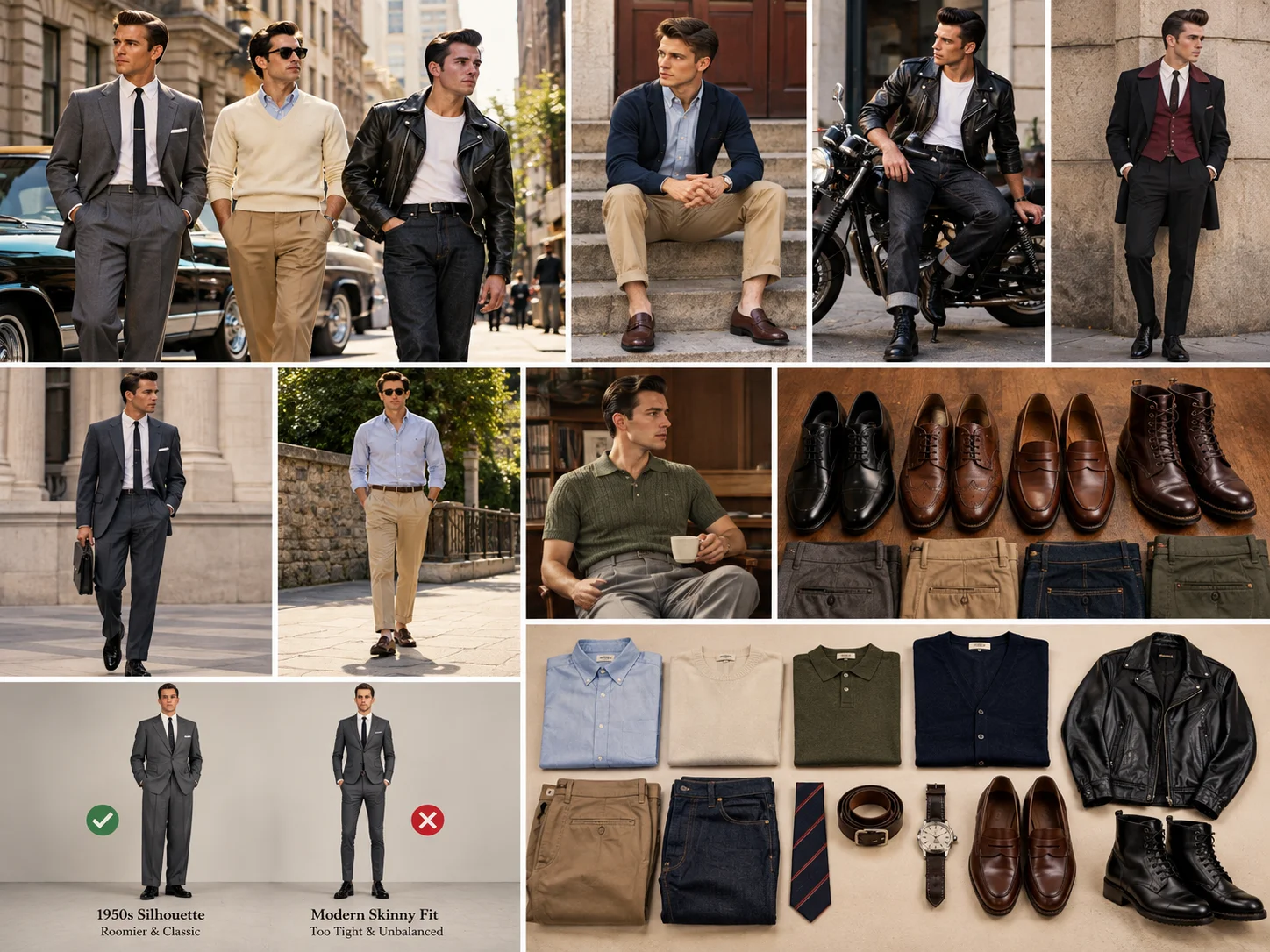
50s mens style was not one single uniform. The decade mixed conservative tailoring with a fast-growing casual youth culture. Men still wore suits for work and formal occasions, but American collegiate clothing, leather jackets, jeans, knitwear and British Teddy Boy tailoring gave younger men new ways to dress.
If you want the look today, the safest approach is to borrow the proportions and key pieces rather than copy an entire costume. Think higher-rise trousers, clean Oxford shirts, loafers, textured knitwear, roomier tailoring and one strong period reference at a time.
Quick Answer: What Defines 50s Mens Style?
- Tailoring: structured jackets, fuller trousers, pleats and higher rises.
- Business: grey or navy suits, white or pale shirts, narrow ties and polished leather shoes.
- Collegiate casual: Oxford shirts, chinos, crewneck sweaters, cardigans and penny loafers.
- Rebel casual: white T-shirts, dark jeans, leather jackets and boots.
- British youth style: long Edwardian-inspired jackets, narrow trousers and bold grooming.
- Modern rule: keep the silhouette relaxed and deliberate, not skinny or theatrical.
Table of Contents
What Did Men Actually Wear in the 1950s?
Men’s clothing in the 1950s sat between two worlds. Formal daywear remained important, but casual clothing became much more visible. The Fashion History Timeline at FIT notes that menswear moved towards greater informality during the decade, while youth cultures in Britain and the United States helped normalise styles that previous generations would have considered too casual for everyday wear.
Business suits were still common, often with fuller trousers than modern slim fits. Narrow ties became popular, and colour began appearing more often in shirts, knitwear and evening accessories. At the same time, jeans, white T-shirts and leather jackets gained cultural visibility among younger men, while British Teddy Boys adapted Edwardian-inspired tailoring into a distinctive youth look.
Four Key 1950s Mens Style Looks
1. Ivy League and Collegiate Style
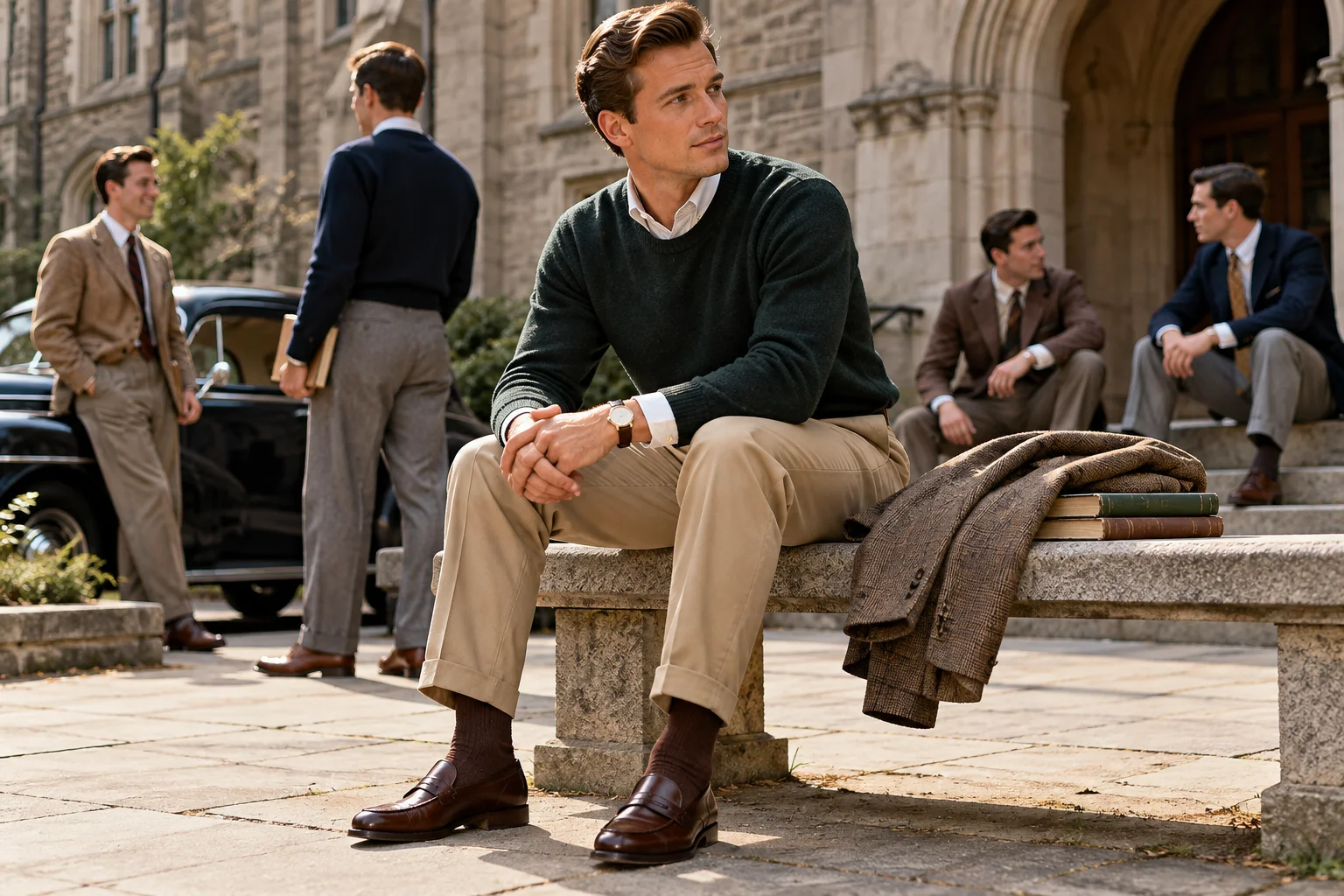
The American collegiate look is one of the easiest ways to use 1950s influence today. Start with a button-down Oxford shirt, khaki trousers, loafers and a crewneck sweater or cardigan. A tweed sport coat can add structure without pushing the outfit into full business dress.
For a modern office, this translates naturally into business casual for men: clean shirt, straight or gently tapered trousers, knitwear and leather shoes.
2. Greaser and Rebel Style
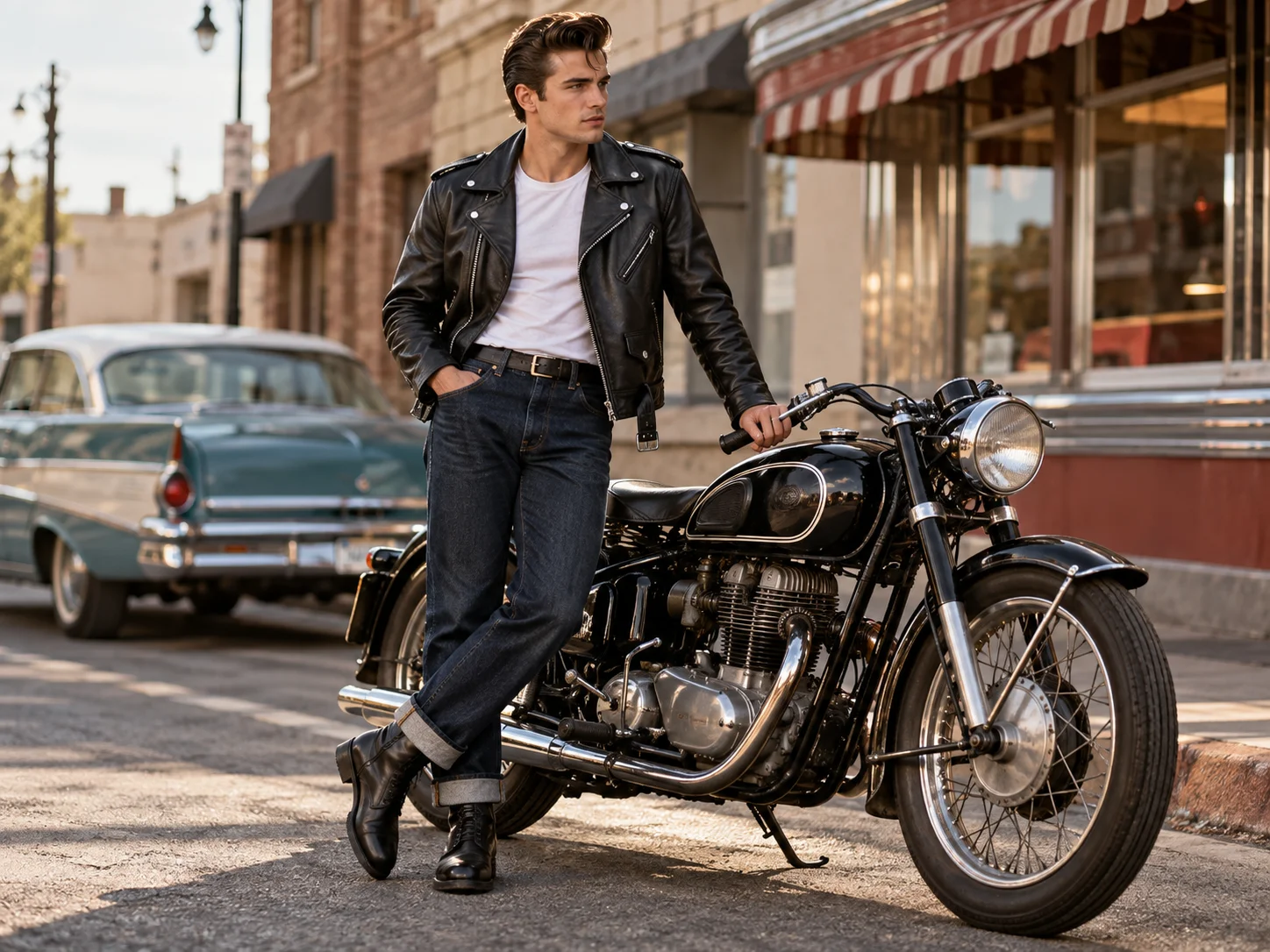
The classic rebel formula is simple: white T-shirt, dark straight-leg jeans, black leather jacket and sturdy boots. The key is restraint. Modern distressed denim, oversized logos and aggressive biker accessories can turn a clean 1950s reference into costume very quickly.
Keep the jeans dark, the T-shirt plain and the jacket relatively simple. This works best as casual weekend wear rather than office clothing.
3. British Teddy Boy Style
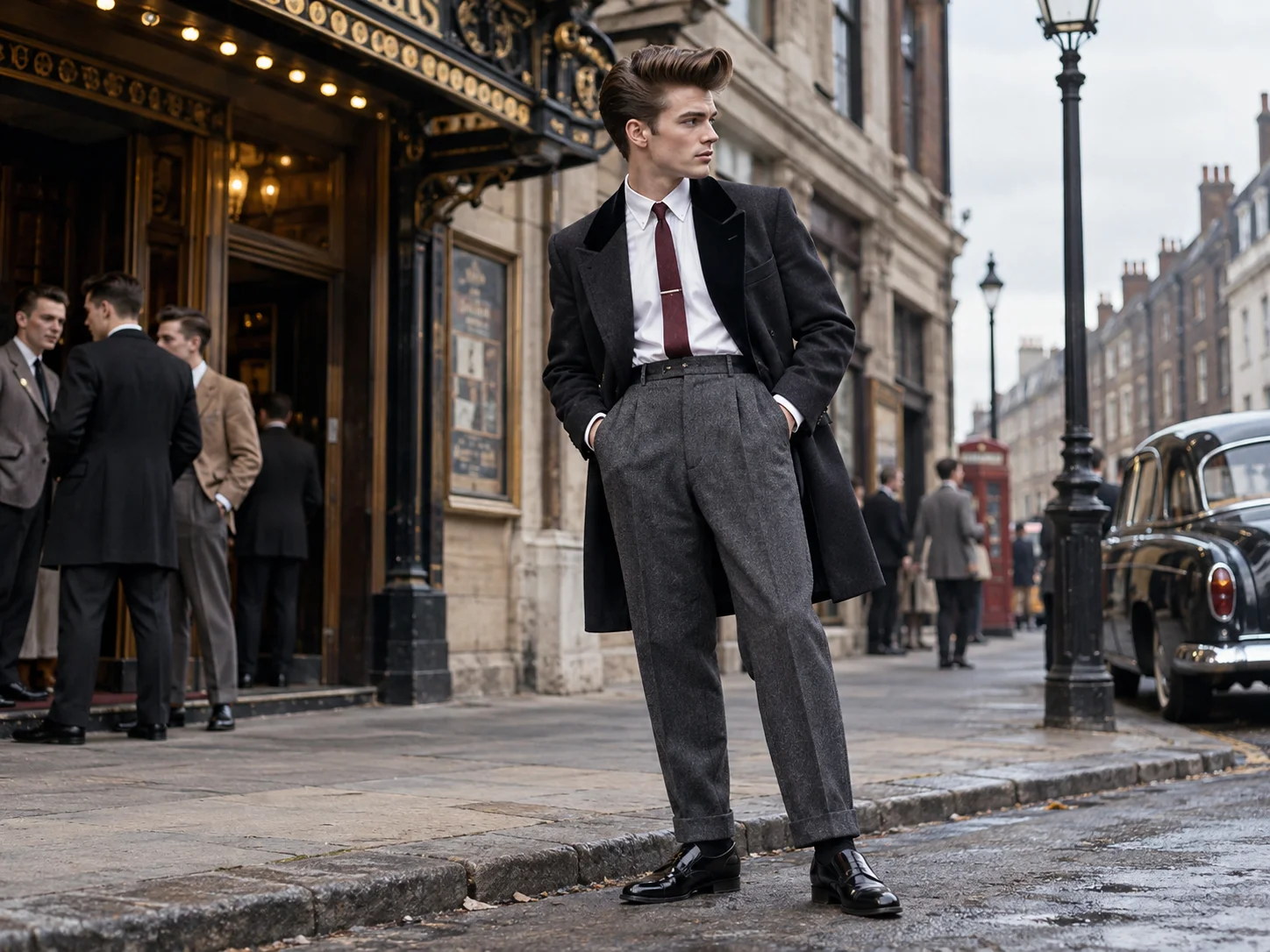
Teddy Boy style emerged in Britain from Edwardian-inspired tailoring and was adapted by younger working-class men. Long jackets, narrow trousers, dress shirts, slim ties and carefully styled hair created a sharper, more theatrical silhouette than American rebel clothing.
Today, borrow one or two elements rather than copying the full outfit. A longer structured coat with high-rise trousers can look excellent; adding every period detail at once can feel more like fancy dress.
4. Business and City Tailoring
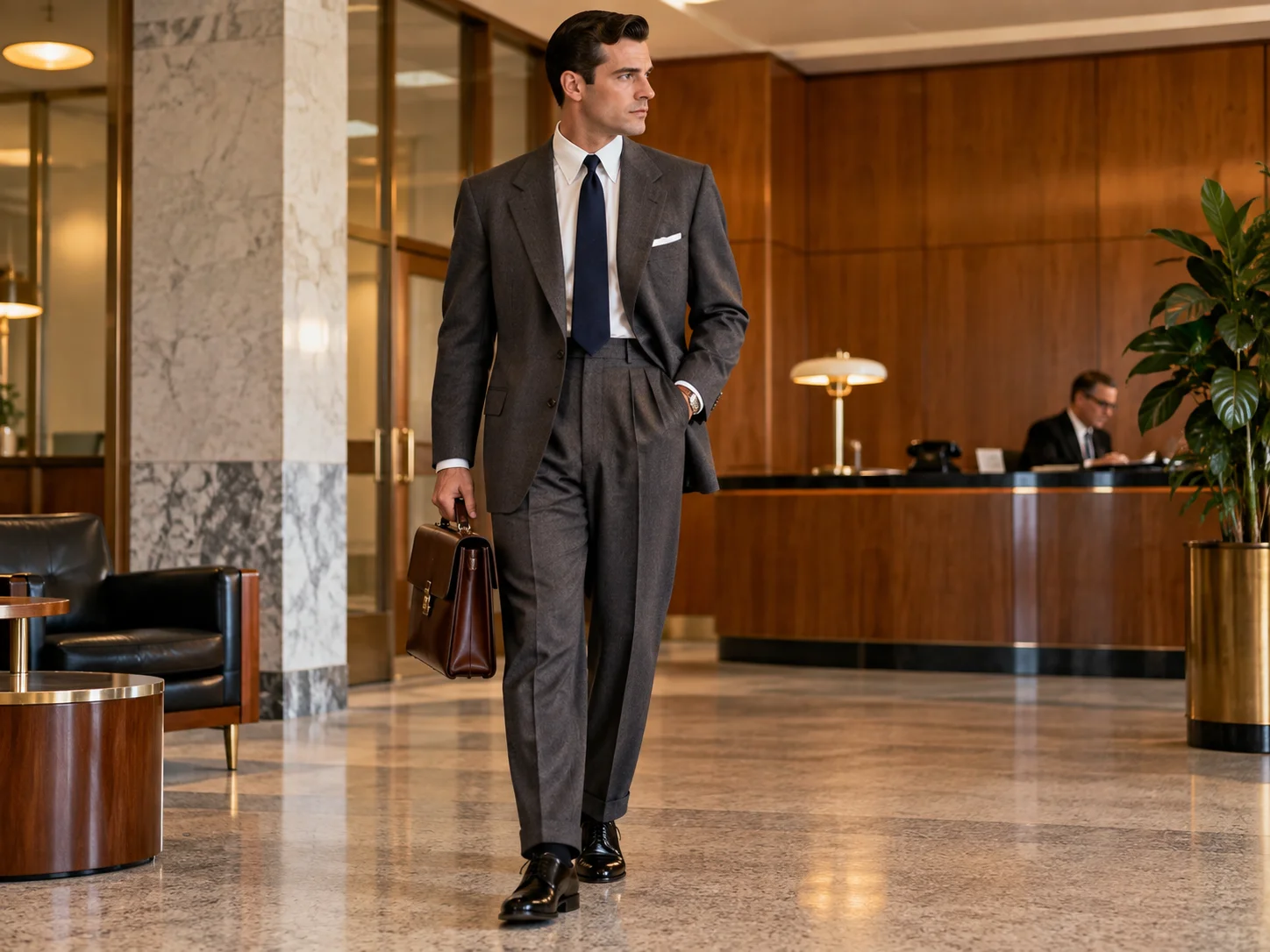
The conservative side of 50s mens style still looks familiar: grey or navy suit, white shirt, dark tie and polished Oxfords. The main difference is proportion. Jackets and trousers generally had more room than today’s close-cut tailoring, especially through the chest, seat and leg.
If you prefer tailoring but work in a less formal environment, use the same logic with modern smart casual pieces rather than wearing a full period suit every day.
Essential 1950s Menswear Pieces
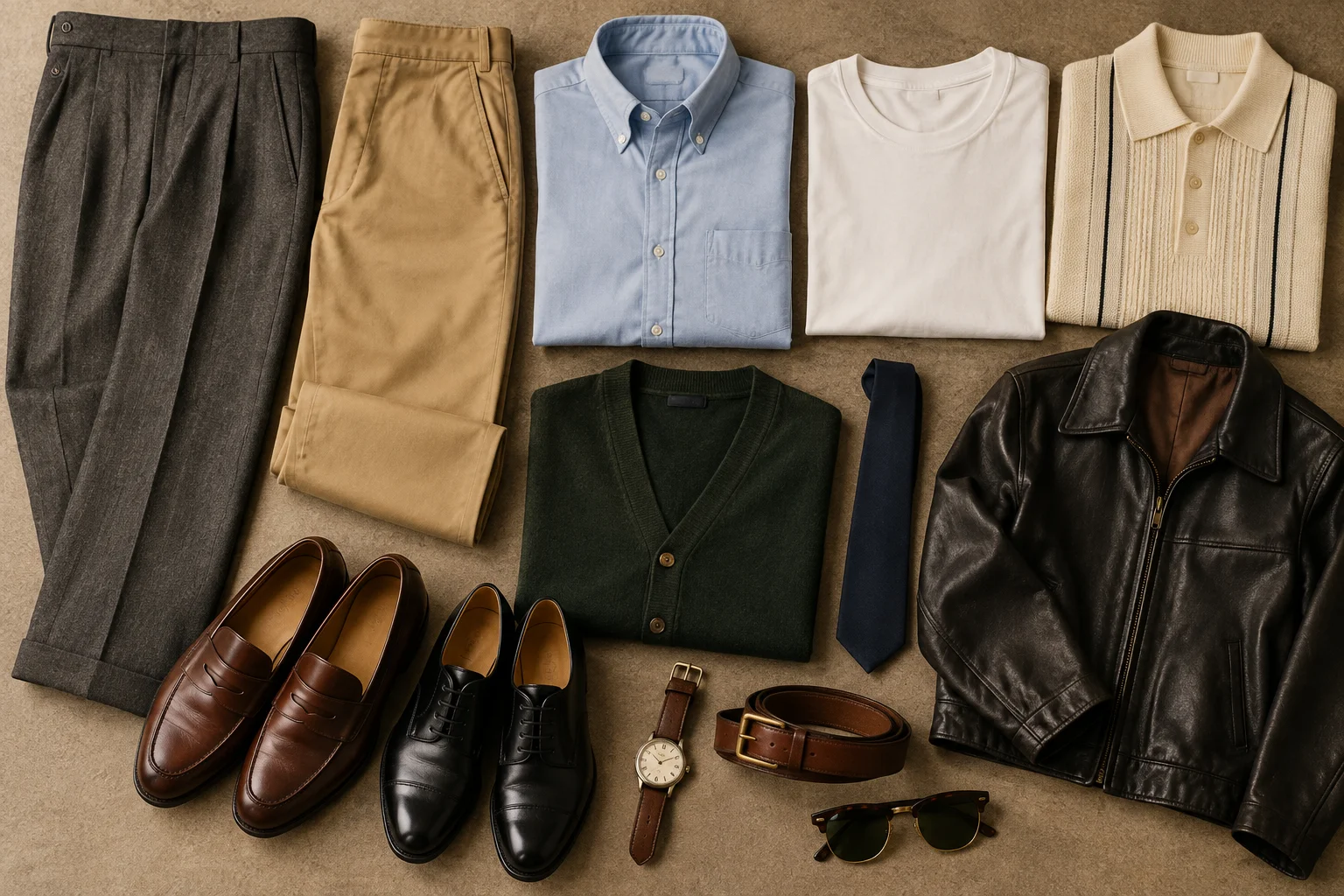
| Piece | 1950s role | Best modern use |
|---|---|---|
| Oxford shirt | Clean collegiate and casual staple | Office, weekends, layering |
| High-rise trousers | Core tailored proportion | Business and smart casual |
| Khaki chinos | Relaxed American casualwear | Office and weekends |
| Crewneck sweater | Collegiate layering | Autumn/winter business casual |
| Cardigan | Soft alternative to a jacket | Office and relaxed evenings |
| Knit polo | Dressier leisurewear | Dates, dinners, warm offices |
| Leather jacket | Youth/rebel statement | Casual weekend wear |
| Penny loafers | Collegiate footwear | Chinos and tailored trousers |
| Black Oxfords | Business and formal footwear | Suits and interviews |
How Should a 1950s-Inspired Suit Fit?
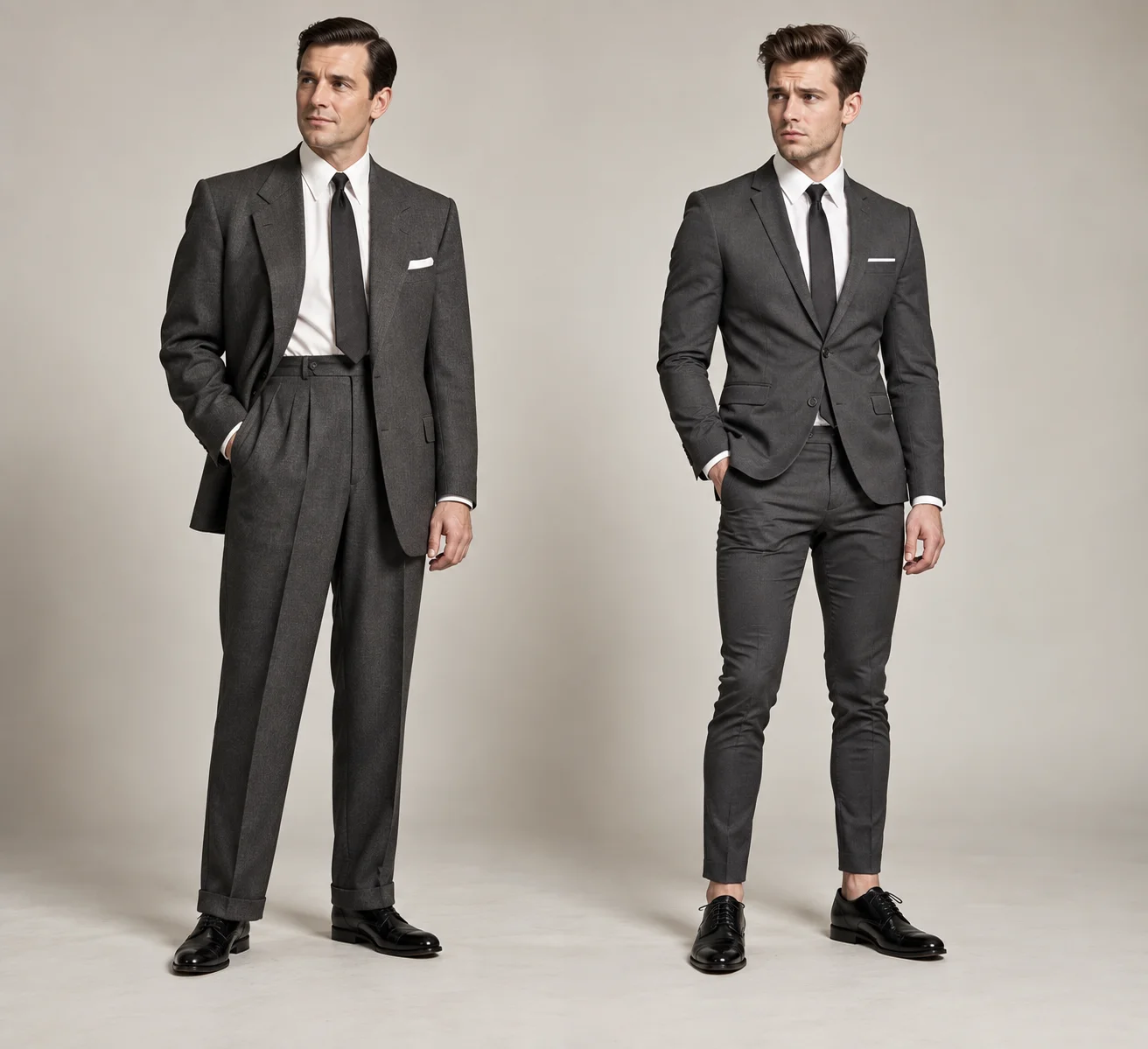
A 1950s-inspired suit should look structured, not tight. The jacket needs enough room for the lapels to lie flat and the button to close without pulling. Trousers should sit higher on the waist and fall in a cleaner, fuller line than modern skinny cuts.
| Area | Better 50s-inspired fit | Avoid |
|---|---|---|
| Shoulders | Clean, natural line | Visible dents or overhang |
| Chest | Room to button comfortably | X-shaped pulling |
| Trouser rise | Mid to high rise | Very low rise |
| Leg | Straight or softly tapered | Skin-tight taper |
| Length | Traditional jacket length | Very cropped jacket |
Shirts and Knitwear
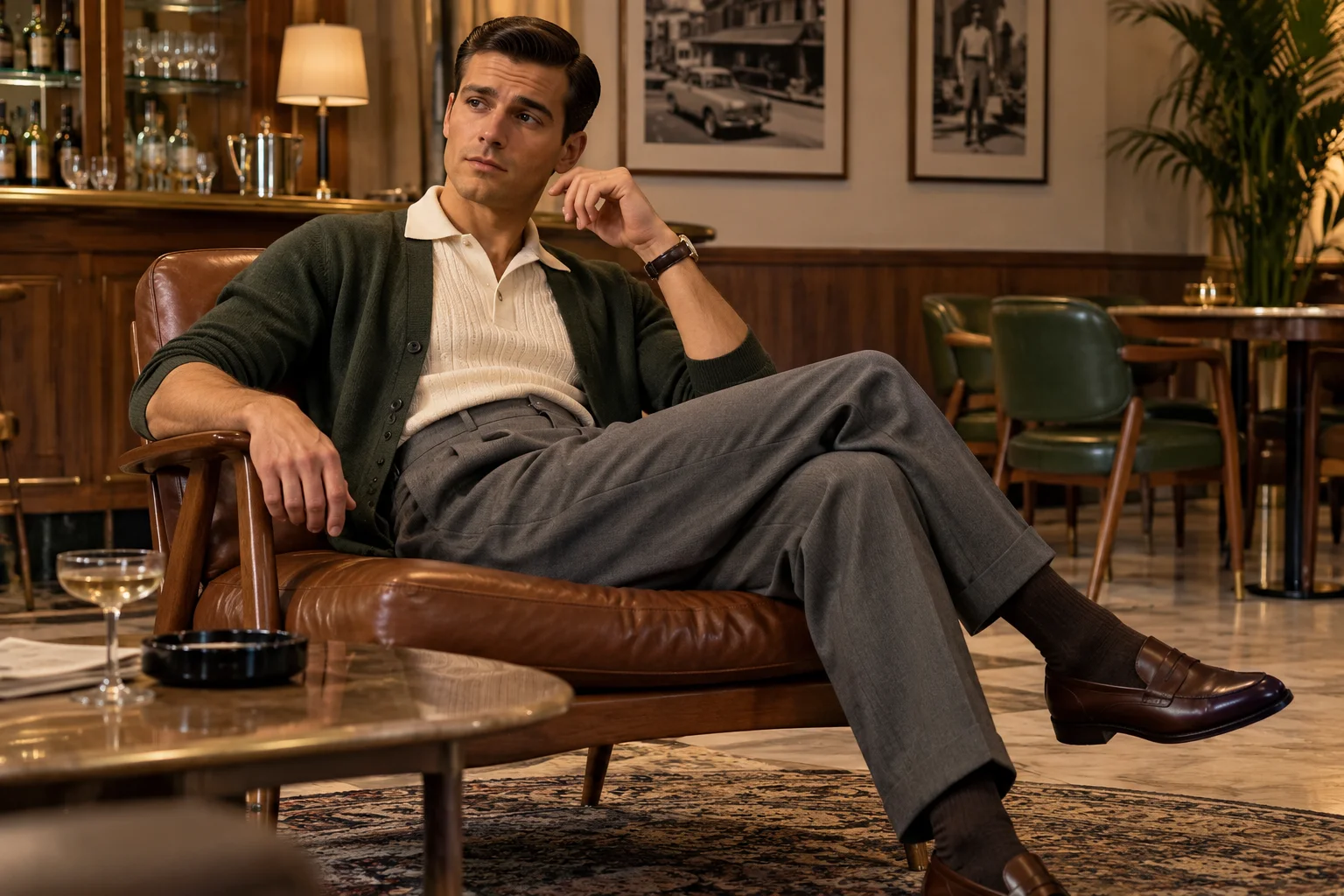
White and pale-blue shirts are the easiest starting point. Button-down Oxfords work especially well for collegiate outfits, while smoother dress shirts suit formal tailoring. If you want more options, our business casual shirts guide covers modern office-friendly shirt types.
Knitwear is equally useful. Crewnecks, cardigans and fine-gauge knit polos add 1950s character without making the outfit look theatrical. For modern versions and fit guidance, see the guide to types of sweaters for men.
Trousers, Chinos and Denim
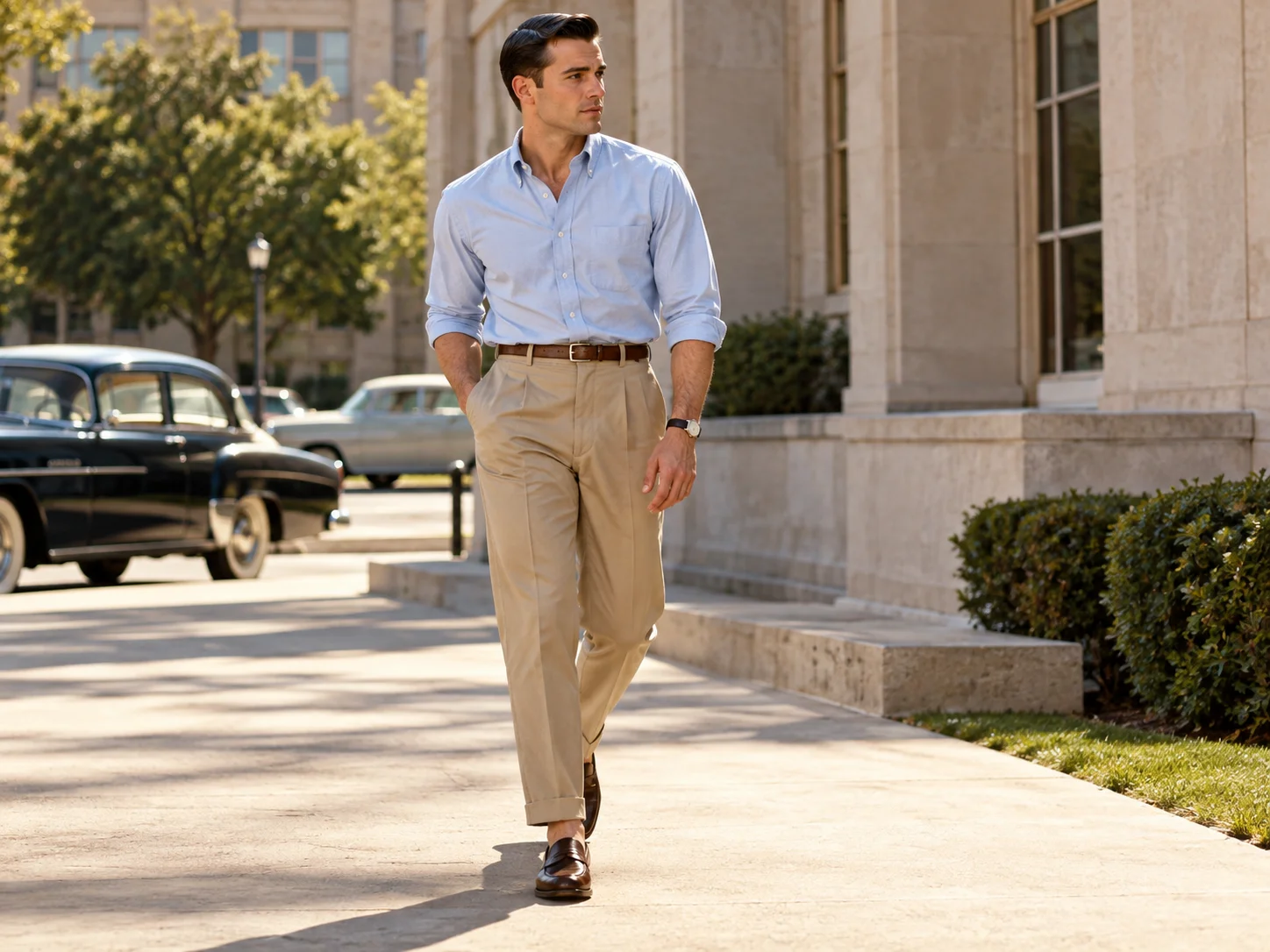
For the cleanest 50s mens style, trousers should usually sit higher than modern low-rise cuts. Grey flannel trousers, pleated wool trousers and khaki chinos all work well. If you are deciding between the two main casual trouser options, our chinos vs khakis guide explains the practical differences.
Denim belongs to the casual, youth-driven side of the decade. Choose dark straight-leg jeans with a simple T-shirt or casual shirt. Avoid pairing heavily distressed jeans with formal tailoring if your goal is a believable period-inspired look.
Shoes That Work With 50s Mens Style
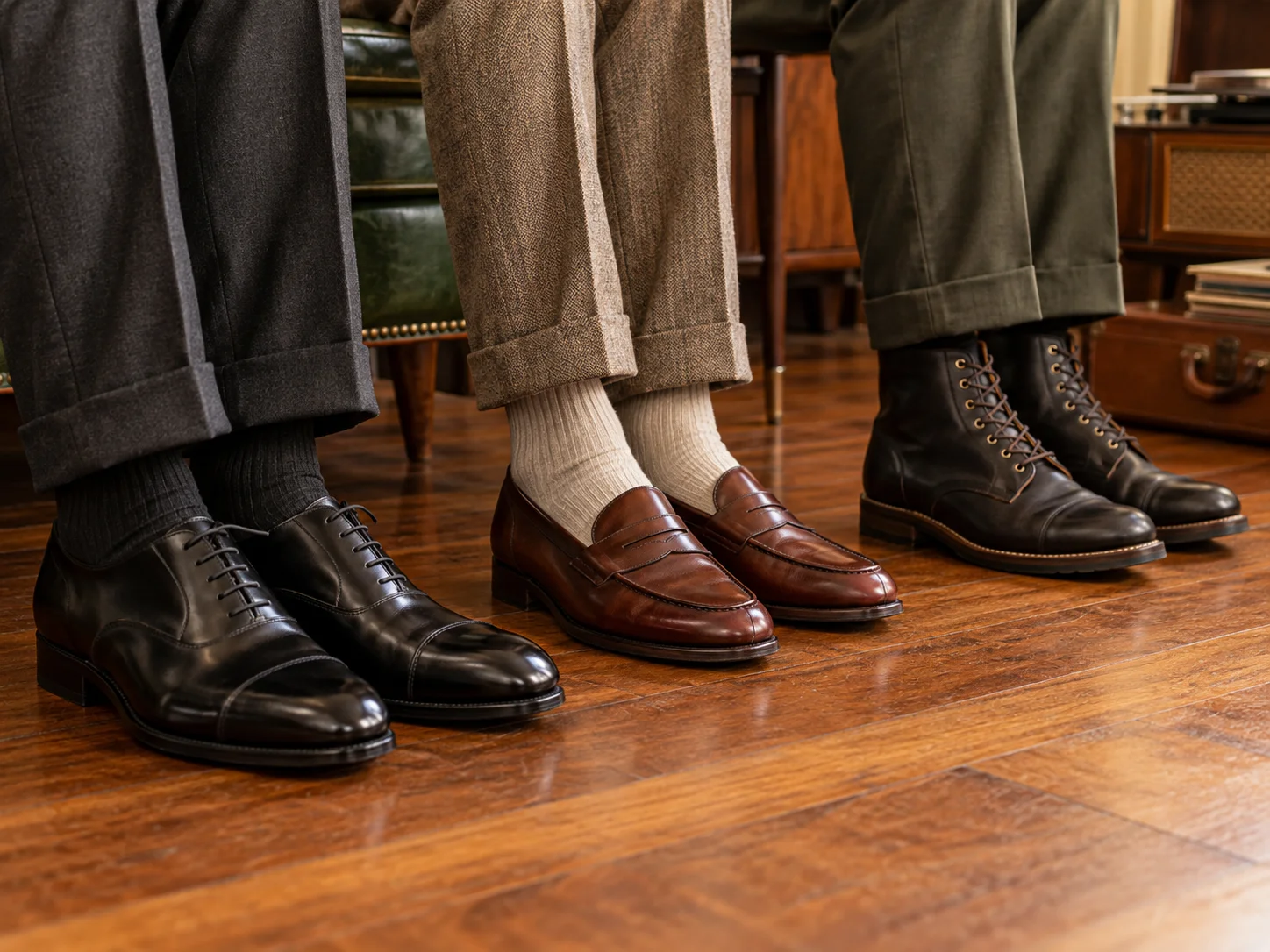
Footwear is one of the easiest ways to control the formality of the outfit:
- Black Oxfords: best with suits and formal business clothing.
- Brown penny loafers: ideal with chinos, flannel trousers and collegiate outfits.
- Derbies or brogues: versatile middle ground for smart casual wear.
- Black boots: strongest with leather-jacket and denim outfits.
For current office-friendly options, see our business casual shoes guide.
Modern 50s-Inspired Outfits
Office Outfit
Charcoal suit + white shirt + navy tie + black Oxfords. Keep the suit comfortable through the chest and trousers rather than choosing an ultra-skinny cut. This gives you the decade’s formal shape without looking like reproduction clothing.
Smart-Casual Outfit
Light-blue Oxford shirt + khaki trousers + brown penny loafers + optional cardigan. This is one of the easiest combinations to wear in a modern office. If the weather is warm, a clean men’s short sleeve shirt can give you a similar relaxed mid-century feel without heavy layering.
Weekend Outfit
White T-shirt + dark straight jeans + simple black leather jacket + black boots. Keep everything clean and fitted without being tight. Avoid oversized graphics and highly distressed denim.
Dinner or Date Outfit
Knit polo + pleated charcoal trousers + brown loafers. The textures make the outfit feel intentional, while the absence of a tie keeps it modern. For more combinations, see our men’s business casual outfits.
How to Wear the Look Without Looking Like a Costume
The biggest mistake is combining every period reference at once. A pompadour, leather jacket, cuffed jeans, boots, vintage sunglasses and a classic car may work in an editorial image, but everyday style is more convincing when only one or two elements carry the 1950s influence.
- Choose period proportions before period accessories.
- Prefer solid colours and subtle textures over novelty prints.
- Use one retro statement piece, then keep the rest simple.
- Do not make the suit artificially tight to look “modern”.
- Avoid fake vintage distressing when clean originals would have looked sharper.
- Let grooming support the outfit without turning into a character costume.
UK vs USA 1950s Mens Style
The biggest difference is the youth-style reference. In Britain, Teddy Boy tailoring created a distinctive dressed-up subculture using longer jackets, narrow trousers and Edwardian details. In the United States, youth style became strongly associated with jeans, white T-shirts, leather jackets and casual collegiate clothing.
Formal business clothing overlapped much more. Grey and navy suits, narrow ties, leather shoes and conservative shirts worked on both sides of the Atlantic. For a modern wardrobe, the UK influence is easier to express through structured tailoring, while the American influence translates well through chinos, Oxford shirts, loafers, knitwear and denim.
Frequently Asked Questions
What is 50s mens style?
It is men’s fashion inspired by the 1950s, including structured suits, higher-rise trousers, Oxford shirts, loafers, knitwear, straight-leg denim, leather jackets and British Teddy Boy tailoring.
What did men wear casually in the 1950s?
Casual options included chinos, knitted polos, sweaters, cardigans, button-down shirts, jeans and T-shirts. Younger men helped make denim and leather jackets more visible as everyday youth fashion.
Were men’s suits slim in the 1950s?
Not in the modern skinny-fit sense. Many suits retained more room through the chest and trousers than contemporary slim tailoring, although some late-decade and British youth styles used narrower lines.
Can I wear 1950s mens style to work?
Yes. The easiest office version is a white or blue shirt, higher-rise tailored trousers, loafers or Oxfords, and optional knitwear or a structured jacket. Keep the styling subtle rather than theatrical.
What shoes fit a 1950s-inspired outfit?
Black Oxfords suit business tailoring, brown penny loafers work with chinos and collegiate looks, and simple black boots work with jeans and leather jackets.
How do I make 50s mens style look modern?
Use the decade’s proportions and materials, but simplify the accessories. Straight trousers, clean knitwear, leather shoes and one retro reference usually look more natural than recreating a full historical outfit.
Final Style Notes
The strongest part of 50s mens style is not nostalgia. It is the balance between clean structure and practical casualwear. The decade gave men formal tailoring, collegiate basics, rebellious denim and distinctive British youth style in the same period.
For a modern wardrobe, start with high-rise or mid-rise trousers, an Oxford shirt, knitwear and good leather shoes. Add a leather jacket, penny loafers or fuller tailoring only when the rest of the outfit is simple. That gives you the character of 1950s menswear without making the clothes look like a costume.
Not sure what to wear?
Use our Men's Outfit & Dress Code Generator to get a personalised outfit based on your occasion, workplace and weather.
Try the Outfit Generator →