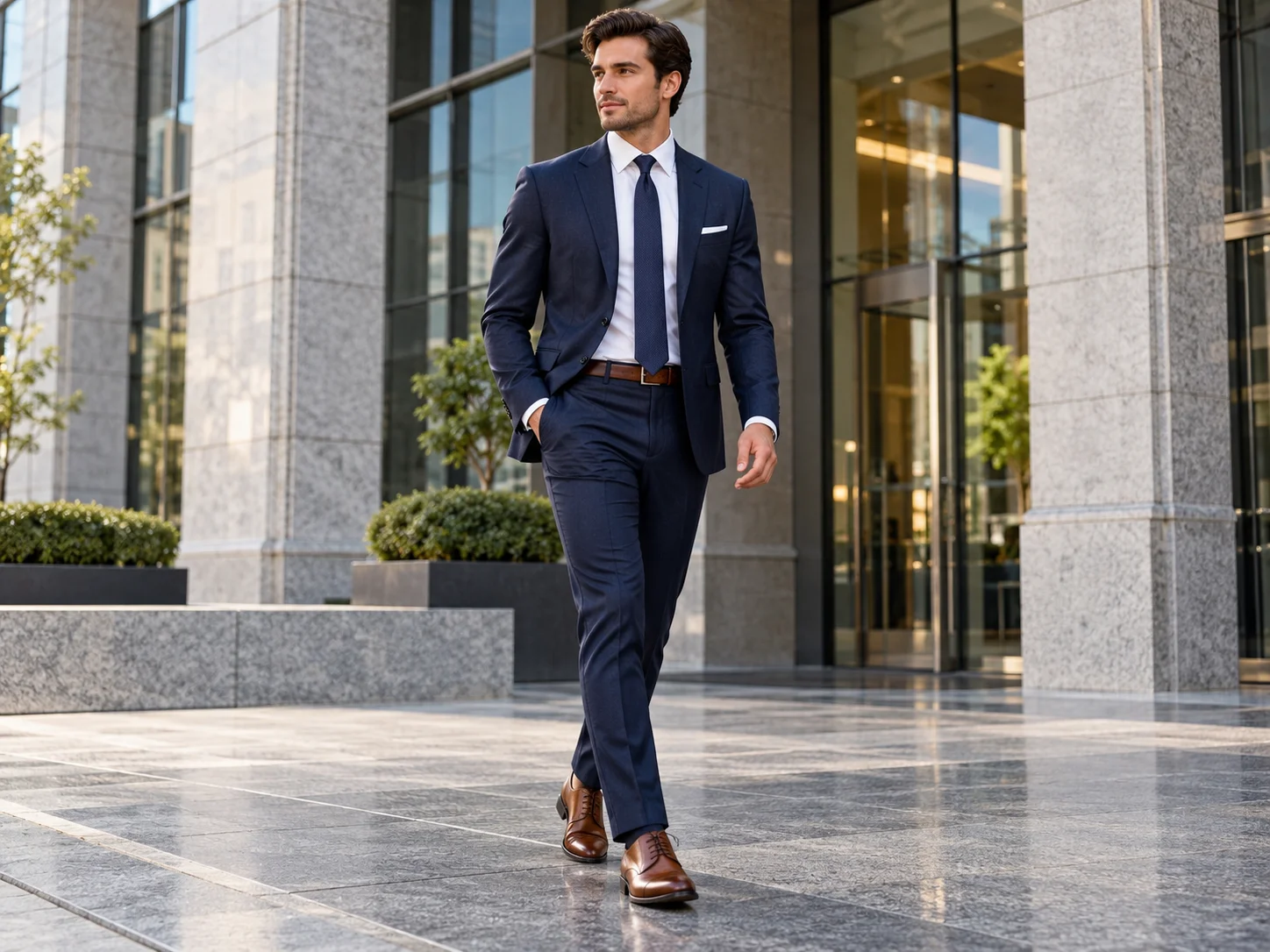
Quick answer: Business professional attire for men means a matching tailored suit, long-sleeved dress shirt, conservative tie, and polished leather shoes. Navy and charcoal suits are dependable choices for interviews, client meetings, and traditional offices. If an employer specifies this dress code, a blazer with chinos or an open-collar shirt may be too relaxed; check the invitation before dressing down.
The search phrase “business professional attire men” points to a formal workplace dress code, not the blazer-and-chinos combinations found in many modern offices.
UK expectations vary by employer, sector, and role; written instructions take priority.
Table of Contents
What does “business professional” mean?
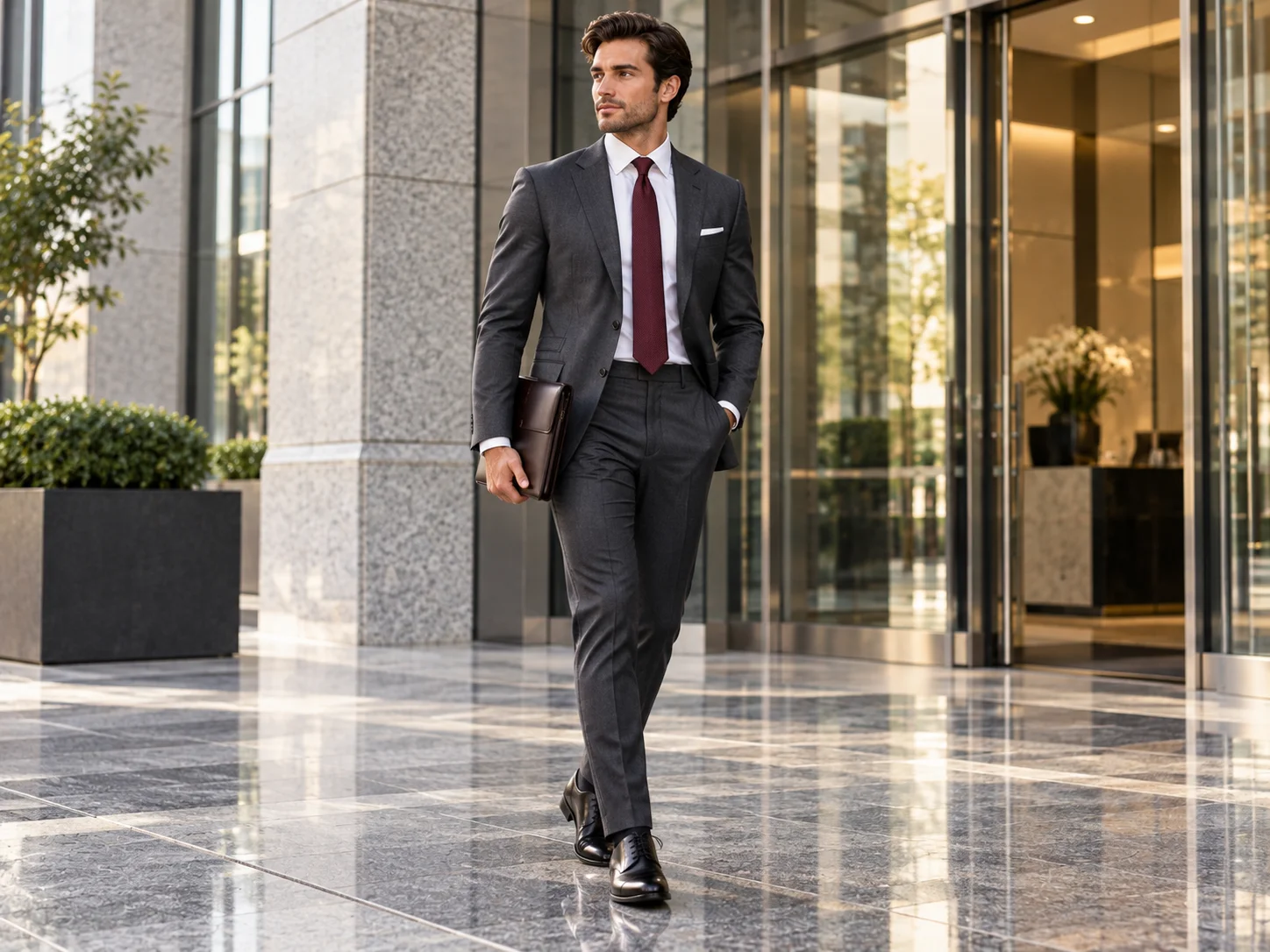
Business professional is a conventional office dress code built around structured, coordinated tailoring. For men, the safest interpretation is a matching two-piece suit with a collared shirt, tie, leather dress shoes, and understated accessories. The jacket and trousers should be made from the same cloth, not two pieces that merely look similar.
It suits formal interviews, financial-services environments, and senior client meetings. It is not black tie or evening dress, although the lounge suit dress code shares some garments.
For professional business attire for men, polished fit matters as much as the individual items. A reasonably priced suit that fits cleanly will look more appropriate than an expensive one with pulling buttons, long sleeves, or trousers pooling over the shoes.
The five parts of a reliable professional outfit
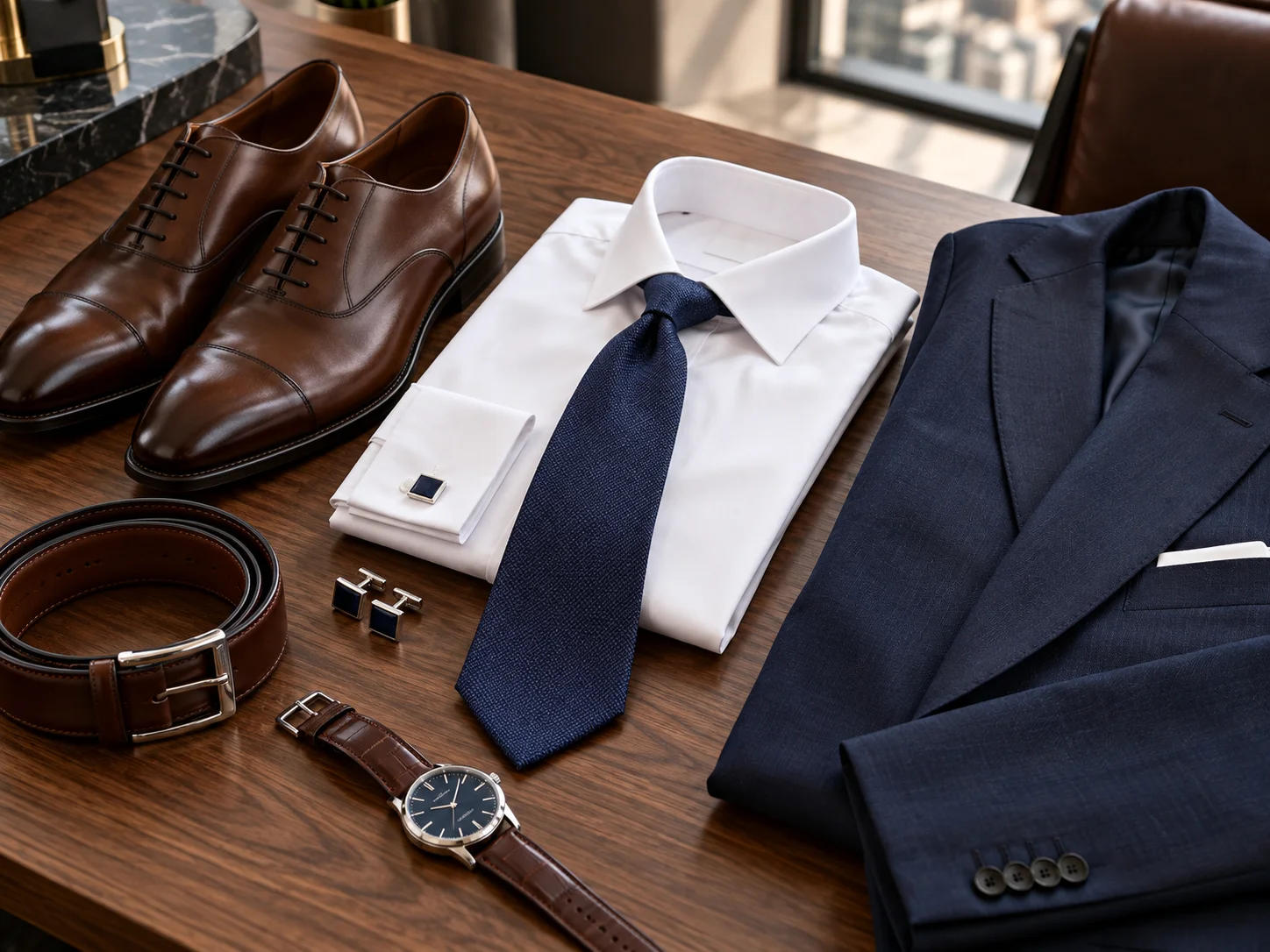
1. A matching suit in navy or charcoal
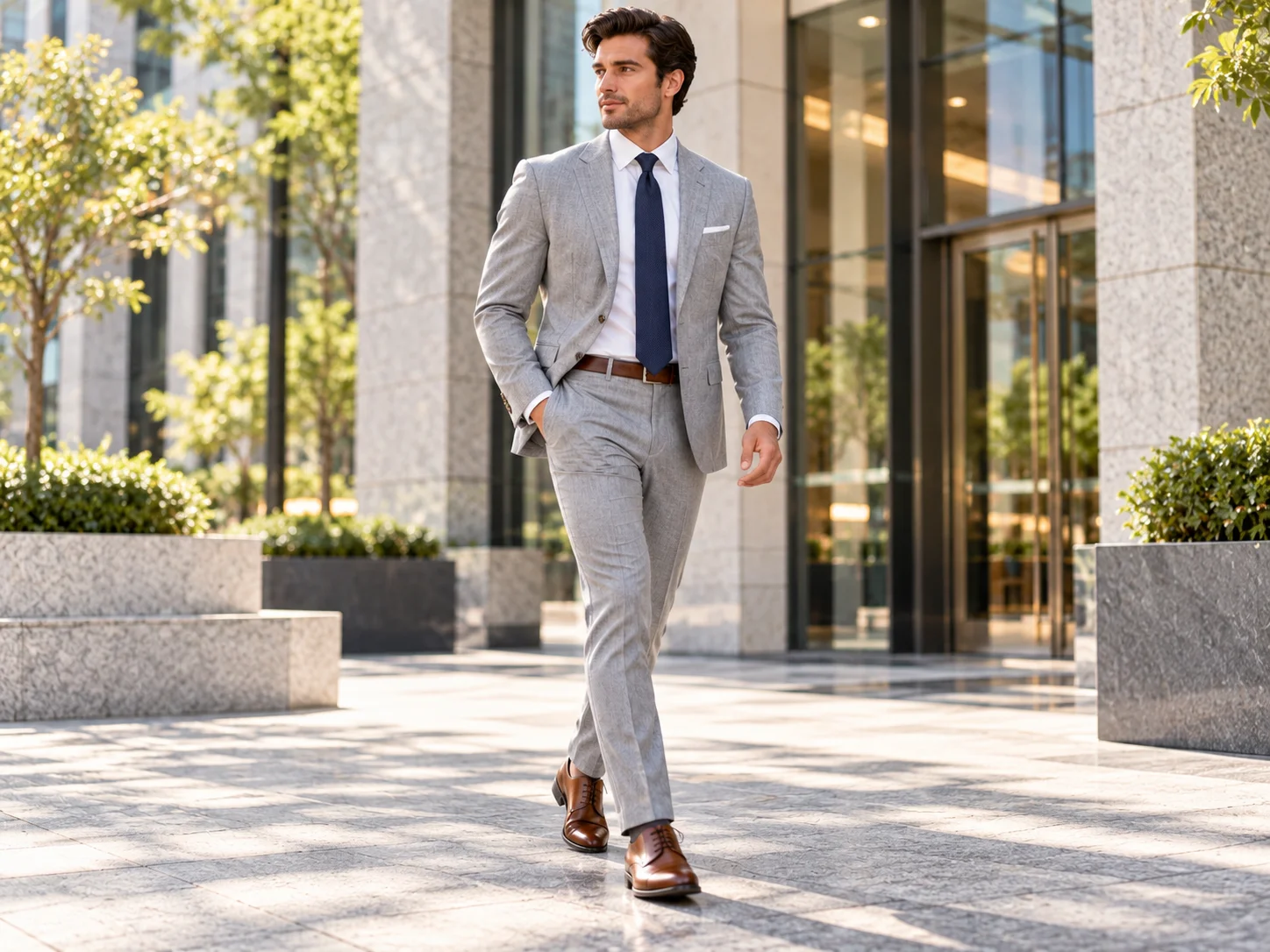
A single-breasted, two-button suit is a safe starting point. Mid-grey can also work, especially in daylight or warmer months. Black is acceptable in many settings, but navy or charcoal often feels more natural for everyday business.
Subtle texture or a fine pinstripe may be suitable where company culture allows it; loud checks are harder to judge on a first visit. For color matching and footwear, see the site’s charcoal grey suit guide.
The jacket should lie smoothly at the shoulders and close without pulling. Trousers should break neatly over the shoes. Sleeve and trouser alterations can make a major difference.
2. A pressed long-sleeved dress shirt
White is the simplest and most versatile option, with pale blue a close second. Choose a conventional point or spread collar and a smooth or subtly textured fabric. The collar must sit comfortably with the top button fastened; if it strains, the tie will not fix the problem.
Tuck the shirt in, leave a sliver of cuff visible, and avoid distracting patterns. Unlike many business casual shirts, polos and short-sleeved options generally do not meet the formal code.
3. A discreet tie
For the safest interpretation of “business professional,” wear a tie. Navy, burgundy, deep green, and muted patterns work well against white or pale blue shirts. The tie should complement the suit without matching the shirt so closely that the entire outfit becomes flat.
A four-in-hand or half-Windsor suits most collars; the tie tip should reach about the belt line. For a wider knot, use the Full Windsor tutorial.
4. Clean leather dress shoes
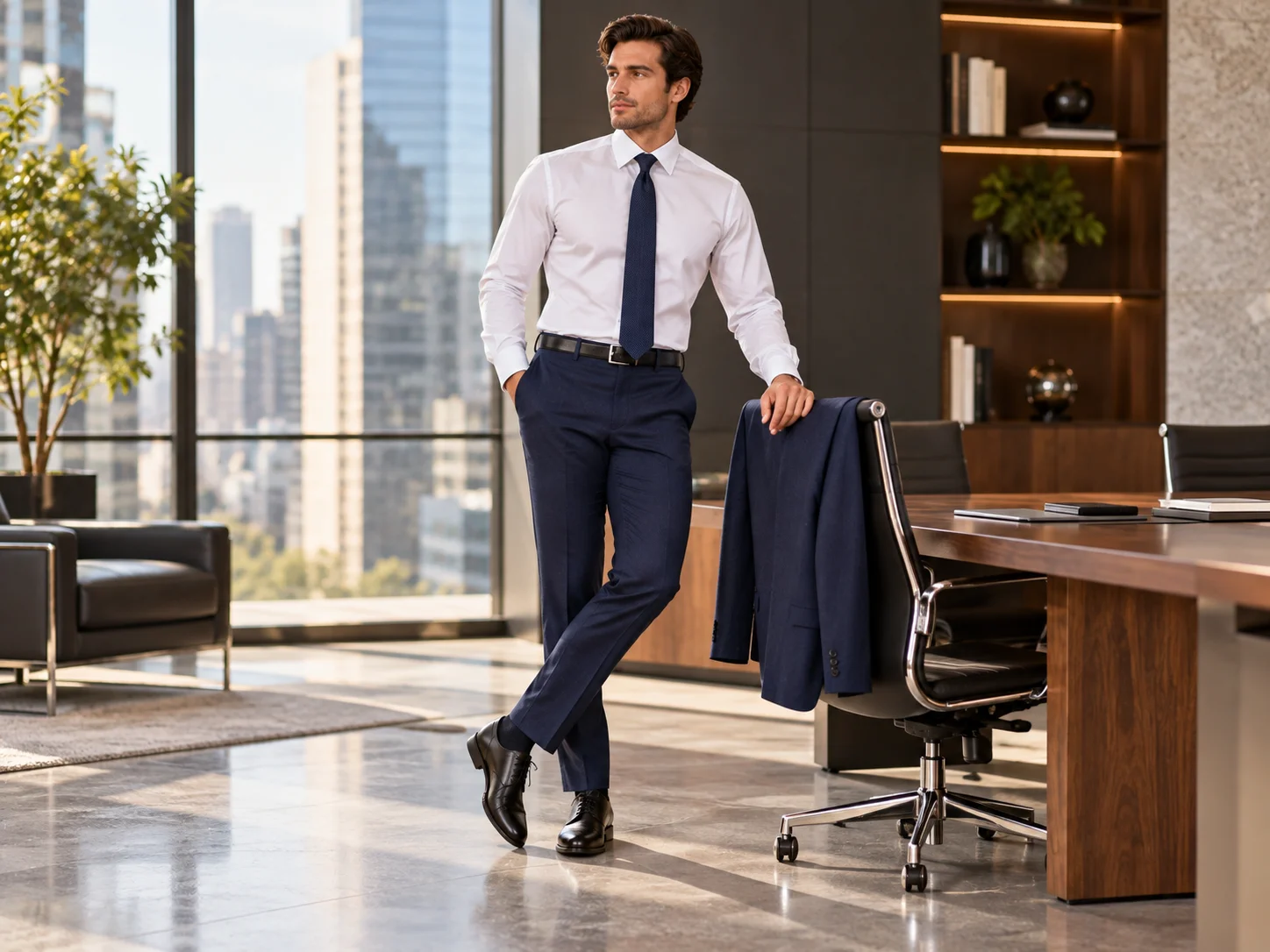
Polished Oxfords and Derbies are the safest choices. Dark brown can also work well with navy, depending on the employer and occasion. Avoid bulky trainers, heavily distressed boots, and casual slip-ons when the dress code is explicit.
Match your belt to the shoes’ overall tone. For less formal alternatives, compare the options in the men’s shoe guide, but do not assume every casual shoe belongs in a formal workplace.
5. Minimal finishing details
A plain belt, discreet watch, tidy work bag, and neat grooming complete the outfit. Check for lint, creases, and scuffed shoes.
Business professional attire vs. business casual
The distinction mainly depends on how much structure and formality is required. A matching suit and tie are a reliable starting point for business professionals; business casual allows coordinated separates and usually doesn’t require a tie.
| Clothing | Business professional | Business casual |
|---|---|---|
| Jacket | Matching suit jacket normally expected | Blazer is optional in many offices. |
| Trousers | Matching tailored suit trousers | Chinos or tailored separates are often suitable. |
| Shirt | Pressed long-sleeved dress shirt | Oxford shirt or other neat collared shirt |
| Tie | Safest to wear unless told otherwise | Usually optional |
| Shoes | Polished Oxfords or Derbies | Loafers, Derbies, or other tidy shoes, subject to policy |
| Typical setting | Formal interview, legal or finance meeting | Day-to-day relaxed professional office |
A navy blazer with beige chinos may look smart, but it is not a matching suit. Our business casual for men guide explains that less formal code.
What should a man wear to a business professional interview?
For business professional interview attire, choose a navy or charcoal suit, a white or light-blue long-sleeved shirt, a modest tie, and polished leather shoes. This is the lowest-risk combination when the invitation calls for formal professional dress and you have not yet seen the office culture.
The University of Wyoming College of Business Career Center describes a matching neutral-colored suit, dress shirt, tie, and dress shoes as the business professional standard. Use that as a conservative reference point, not proof that every UK employer has the same policy.
Try on the complete outfit in advance and check comfort when seated. If the recruiter specifies a relaxed dress code, follow it; the business casual interview guide covers that distinct situation.
Three dependable professional outfit examples
Traditional interview: A charcoal two-piece suit, a white dress shirt, a navy tie, black Oxfords, and a black belt. This is conservative and suitable for many formal UK settings.
Client presentation: A navy suit, pale-blue shirt, dark burgundy tie, and polished dark-brown or black Derbies. It remains professional while looking slightly less severe than charcoal and black.
Warm-weather office: A lightweight mid-grey or navy suit with a breathable pale shirt, a simple tie, and polished leather shoes. Keep the jacket available even if you remove it at your desk with permission.
Can you dress business professionally without a jacket or tie?
If the instructions expressly say “business professional,” assume a matching jacket and tie are required unless the host or employer confirms otherwise. A waistcoat alone, an open collar, or a blazer with chinos can look smart, but they are not reliable substitutes for a full formal-business outfit.
Employers sometimes use the wording loosely. Ask the recruiter, “Is a matching suit and tie expected?” If the instruction says “no tie,” keep the suit and formal shirt. If it says “no suit required,” confirm whether smart business casual is acceptable.
Even well-fitted chinos and khakis generally belong to a less formal dress code.
Summer business professional attire in the UK
Summer business professional attire keeps the same overall formality while reducing unnecessary warmth. Look for a breathable, lighter-weight wool suit or a suitable wool blend, and choose a cotton dress shirt that feels comfortable under the jacket. The fabric weight and construction matter more than switching to a pale color alone.
Lighter grey and navy are practical, although not every traditional office accepts pale summer tailoring. Choose socks and shoes suitable for the dress code, and avoid replacing the shirt with a polo or the suit trousers with shorts. If the room is hot, follow the employer’s guidance on removing the jacket after the formal portion of a meeting.
For more relaxed warm-weather options, consult the men’s business casual outfit ideas—not as a substitute for a formal interview dress code.
How to make a suit look polished, not stiff
Begin with fit, then consider fabric, contrast, and care. The suit should let you sit and walk comfortably. The shirt collar should sit neatly, with cuffs just showing beyond the sleeves.
Use a restrained contrast: a dark suit and light shirt and tie in a deeper tone. Shiny fabrics, novelty ties, and oversized lapel pins draw attention away from the purpose of the outfit. Follow garment care labels and keep shoes clean between wears.
Common mistakes that make formal workwear look casual
- Wearing a blazer with mismatched trousers when a matching suit is specified.
- Leaving the tie at home because the rest of the outfit looks smart.
- Choosing a tight jacket that pulls across the front or trousers with excessive bunching.
- Wearing trainers, casual suede boots, or highly decorative footwear to a conservative first interview is also a mistake.
- Assuming that every employer uses the same dress-code wording.
- Forgetting the practical details: clean soles, matching belt, dark socks, and a wrinkle-free shirt.
Frequently asked questions
Are khakis business professional attire?
Usually not when the employer expects a matching suit. Khakis can look presentable with a blazer or Oxford shirt, but that combination is more commonly business casual. Always follow the organization’s stated dress code.
Does a business professional require a tie for men?
Traditionally, yes. A tie is the safest choice for an interview or event that is explicitly labeled as business professional. Some workplaces waive it, but you should confirm that before arriving without one.
Can you wear a black suit to a business professional interview?
Yes, a well-fitting black suit can be appropriate. However, navy and charcoal are often more versatile and less severe for everyday business use. Pair it with a light shirt and a restrained tie in any of these colors.
Is “business professional” the same as “business formal”?
The terms overlap, and different organizations use them differently. In many UK contexts, “business professional” means conservative everyday suiting, while “business formal” may describe an especially formal workplace or business event. An event’s instructions always take precedence over generic labels.
A final 30-second check before you leave
Check your matching suit, pressed shirt, tie, polished shoes, and overall fit. If the invitation says “business professional,” use the formal interpretation unless told otherwise.
For occasions that allow flexibility, use the men’s outfit generator to compare outfit combinations without confusing formal and casual dress codes.
Not sure what to wear?
Use our Men's Outfit & Dress Code Generator to get a personalised outfit based on your occasion, workplace and weather.
Try the Outfit Generator →